
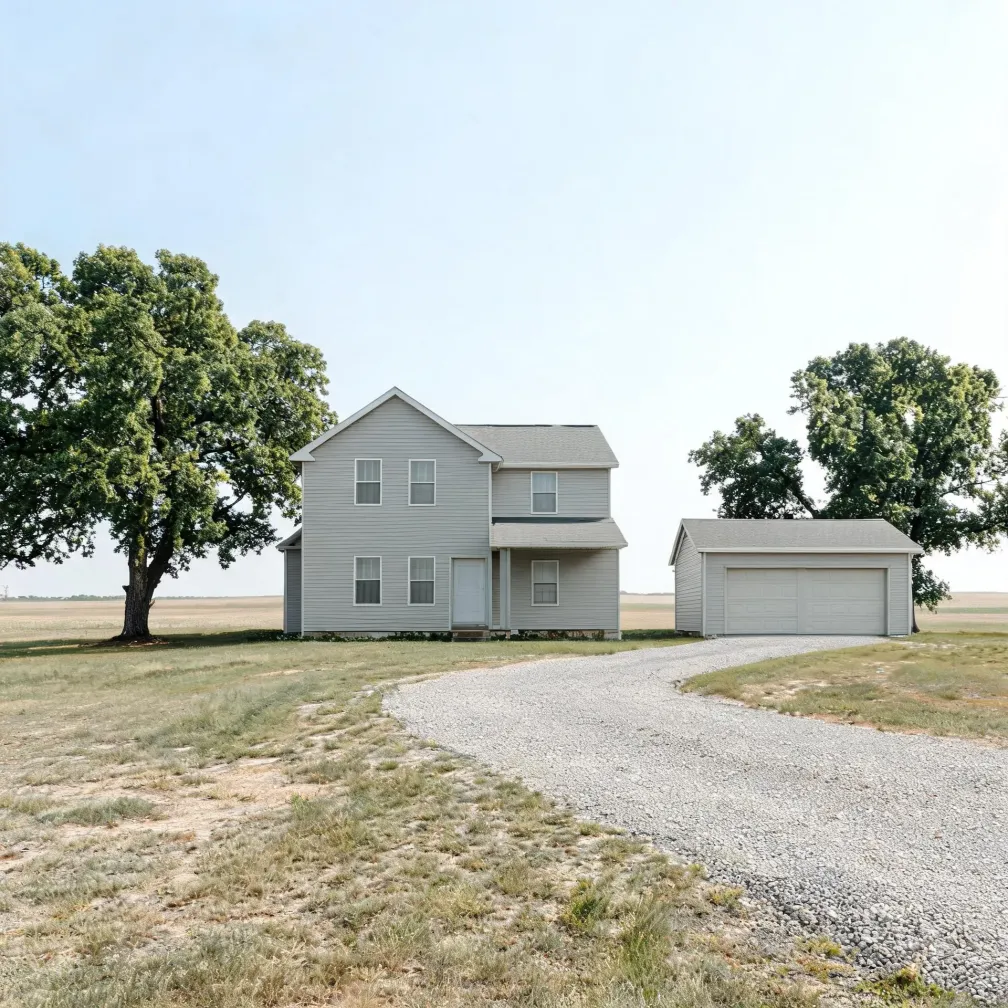
What Nebraska homes are up against.
NOAA National Centers for Environmental Information, Storm Events Database, bulk CSV export, events 2015-01-01 through 2024-12-31. · U.S. Census Bureau, 2020-2024 American Community Survey 5-Year Estimates

A furnace here does not get much rest. Homes in Nebraska run heat about eight months a year, from October through May. That leaves the burner and heat exchanger cycling on and off through fall, deep winter and well into spring, with only a short break before summer. A weak igniter or a cracked heat exchanger found early has almost no idle season left to hide in before it gets asked to work again. Waiting on a repair until the next cold snap means waiting on a part that is already close to its limit, in a house that still needs it.

Before a new furnace or air conditioner goes in, a contractor has to open up what is already there. The ducts, the wiring to the unit, the vent, none of it can be assumed to match what new equipment needs. Half the homes in Nebraska were built in 1975 or earlier (2020-2024 ACS 5-year). A contractor who has not seen a given house cannot know whether the ducts are sized right for a new system or whether the electrical panel has room for another circuit. That gets settled by pulling the panel cover, measuring the duct runs, and checking the vent, not by a number over the phone.
How does your county compare on severe weather?
2015–2024 · Source: NOAA National Centers for Environmental Information, Storm Events Database.
Where a county sits on this list is worth knowing before you size or place outdoor equipment. Wind can rock a condenser on its pad, hail can dent the cabinet and bend the fins that move heat, and heavy rain can flood a unit set too low to the ground. Have a contractor check where your outdoor unit sits, how well it is anchored, and whether the cabinet and coil already show damage.
Nebraska requires contractors to register with the state.
Contractors register with the Department of Labor.
Source: Nebraska Legislature