
Furnace Installation in Seward, NE
A new furnace here will run from October through May every year. Tell us about the house, and a licensed contractor who covers Seward County will get in touch.
Tell us about the job
It takes about a minute.
Eight months of heat in Seward County
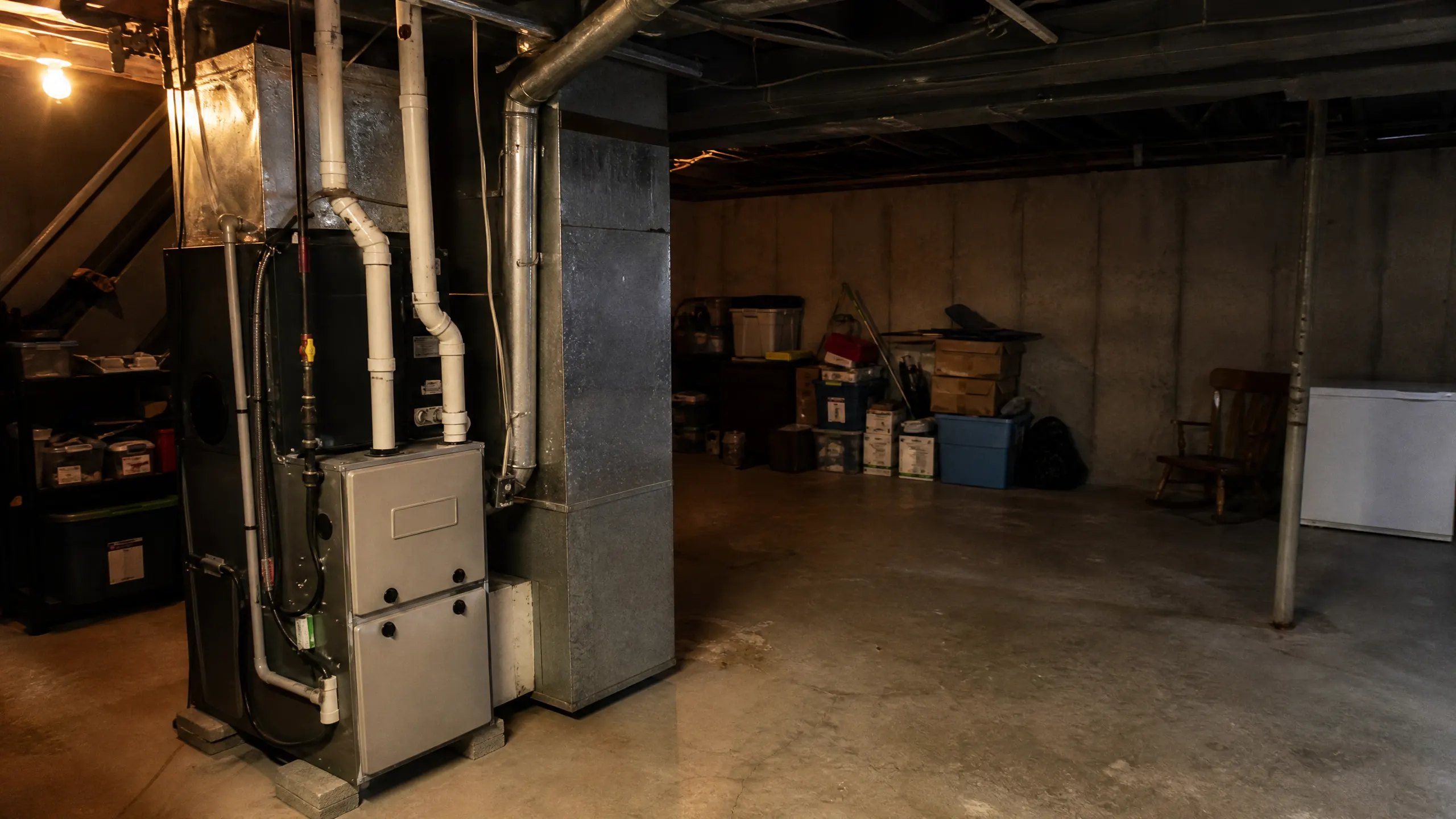
Furnaces here run from October through May, eight months out of the year. Winter nights average 17°F, so a new furnace needs to hold a house steady through real cold, not just take the edge off. Any non-weatherized gas furnace built since November 2015 has to reach at least 80 percent AFUE, and that's the floor to expect from a new install.
The county has seen 13 winter storms and 38 damaging wind events over the past ten years, and across Nebraska a quarter of households lost power for at least a day in 2024. A furnace that starts back up on its own once the power returns matters when a storm knocks it out.
- 8 months
- October through May, your furnace is on duty
- 17°F
- the average winter night it heats against
- 80% AFUE
- the federal minimum any new unit must meet
NOAA nClimDiv, 1991–2020 normals

A high-efficiency gas furnace would save about $80 a year to run in Seward County compared with a gas furnace.
Estimates for a typical Seward County home, from EIA household energy data, Nebraska fuel prices and NOAA climate normals. Your home will differ.
Nebraska requires contractors to register with the state.
That registration puts the business on file with the Department of Labor. Nobody tests the contractor's furnace work to get on that list, and no inspector checks their past jobs before they're added. It tells you the business exists and is on record with the state. It does not tell you whether they install a furnace correctly.
For a furnace installation, the protection in Seward County comes from the local building office instead. Most cities and counties require a permit for a furnace replacement, and an inspector checks the work once it's done. That inspection is where a bad gas connection gets caught, and that matters here since close to half the homes in Seward County heat with gas.
Source: Nebraska Legislature
- What size furnace does my house need?
- It depends on your square footage, your insulation, your windows, and how your house is laid out, so there is no number that works for every home. A contractor sizes a furnace with a room by room load calculation, not a chart based on square footage alone. That sizing matters here, since winter nights average 17°F and homes need heat from October through May. Too small and it will run constantly without keeping up on the coldest nights. Too large and it will short cycle, heating unevenly and wearing out sooner. Ask whoever quotes the job to walk you through the load calculation, not just the price.
- How do I know it's time to replace my furnace?
- Age is one sign, especially if yours has needed more repair calls lately, particularly if a technician has already replaced a major part like the heat exchanger or blower motor. Watch also for uneven heat between rooms, a burner flame that looks yellow instead of blue, or a furnace that runs longer than it used to just to hold the same temperature. With heat needed here from October through May, a furnace that struggles in fall is only going to struggle more once nights drop to 17°F. If you are seeing more than one of these signs, get it looked at before the cold sets in rather than after it fails.
- Is a high-efficiency furnace worth it?
- It depends on how long you plan to stay in the house and how much you run the furnace each year. Any furnace built since November 2015 has to reach at least 80 percent AFUE, so the real comparison is between that baseline and a high-efficiency model rated above it. With heat needed here 8 months a year and winter nights averaging 17°F, a furnace here runs more hours than one in a milder climate, which is exactly the condition where the efficiency difference adds up over the life of the unit. High-efficiency furnaces also vent differently, through PVC pipe instead of a metal flue, which can affect installation depending on where your furnace sits. A contractor can walk through both options against your house and tell you what each one costs to install.