Mini Split Installation in Seward, NE
A new system here will heat from October through May and cool from June through September every year. Tell us about the house, and a licensed contractor who covers Seward County will get in touch.
Tell us about the job
It takes about a minute.
A mini-split here works year round
Seward County asks for heat eight months of the year and cooling for four, and winter nights average 17°F from December through February. A mini-split installed here needs to hold its heat output at that kind of cold, not just on a mild fall evening. Summer afternoons average 85°F, so the cooling side matters too, but the harder test is the long winter.
Any mini-split manufactured from 2023 on has to clear a federal floor either way, 14.3 SEER2 for cooling and 7.5 HSPF2 for heating. That's the baseline, not a feature to shop for. What actually varies between units is how well each one keeps its heating capacity as the temperature drops toward 17°F, and that's worth asking about before you settle on one.
- 8 months
- October through May, your system heats
- 4 months
- June through September, it cools
- 17°F
- the average winter night it heats against
- 85°F
- the average summer afternoon it cools against
NOAA nClimDiv, 1991–2020 normals
Nebraska requires contractors to register with the state.
That registration puts the business on file with the state and nothing more. Nobody at the state tests how a contractor installs a mini-split or checks their work afterward. It means the business exists on paper, not that anyone judged whether they do the job right.
For this job, the check that matters happens locally. Installing a mini-split typically needs a permit from the local building office, with an inspection once the work is done. That inspection is what looks at how the unit was installed and whether it meets code, since the state registration never does.
Source: Nebraska Legislature
- Is a mini split worth it?
- For most homes, yes, especially if you're heating with something expensive or cooling a room your main system doesn't reach well. A mini split runs on a heat pump, so one unit handles both summer cooling and winter heat. With winter lows around 17°F here, ask the contractor about the unit's low-temperature performance, since some models hold their heating output much better in real cold than others. It won't replace a furnace built for whole-house heating unless it's sized and placed for that job.
- How many rooms can a mini split cover?
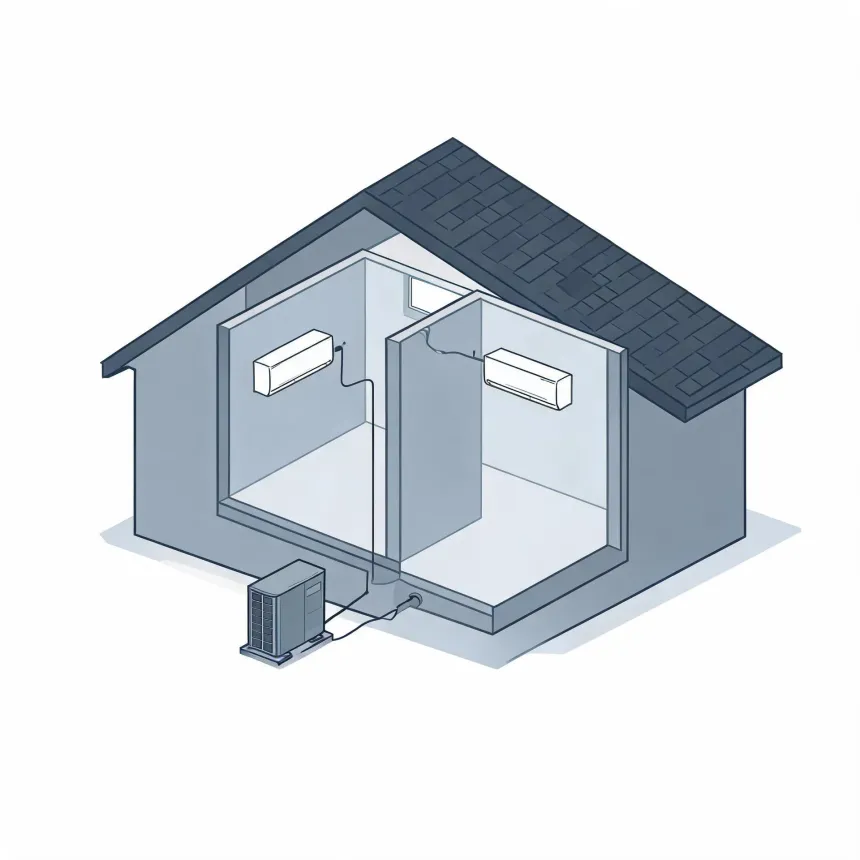
- A single outdoor unit can run one indoor head or several, depending on the system. Single-zone systems cover one room or open area. Multi-zone systems run several indoor heads off one outdoor compressor, each with its own thermostat, so you can heat or cool different rooms to different temperatures at once. How many rooms make sense on one system comes down to the size and layout of the house, which is something a contractor needs to look at directly.
- Can a mini split heat a whole house?
- It can, if it's sized and laid out for that from the start. A multi-zone system with indoor heads placed in each room can heat an entire house, and heat pumps keep working in cold weather, not just on mild days. With winters here running from October through May and nights averaging 17°F, the system has to be sized for that cold, not just for a mild fall day. That sizing depends on the house itself, so a contractor will need to work out what the place actually needs.