Mini Split Installation in Lincoln, NE
A new system here will heat from October through May and cool from June through September every year. Tell us about the house, and a licensed contractor who covers Lancaster County will get in touch.
Tell us about the job
It takes about a minute.
What a mini-split in Lincoln has to handle
Your mini-split needs to hold heat on winter nights that average 18°F, then switch over and hold the house against summer afternoons averaging 85°F. That is eight months of heating, October through May, and four months of cooling, June through September. There is barely a break between the two.
Any unit built on or after January 1, 2023 has to clear a federal floor. For a mini-split that means 14.3 SEER2 for cooling and 7.5 HSPF2 for heating. That is a baseline, not a target, and the unit still has to get through the cold stretch and the hot stretch that follow it. Lincoln has also logged 19 winter storms and 151 damaging wind events over the last ten years, so the outdoor unit needs a mount that holds through both.
- 8 months
- October through May, your system heats
- 4 months
- June through September, it cools
- 18°F
- the average winter night it heats against
- 85°F
- the average summer afternoon it cools against
NOAA nClimDiv, 1991–2020 normals
Nebraska requires contractors to register with the state.
That registration puts a contractor's business on file with the state. It does not mean anyone tested their work or their knowledge of the trade. Nebraska keeps the record. It does not grade what's behind it.
For a mini-split installation, what matters here is the permit. In most cities and counties, installing a mini-split needs a permit from the local building office, with an inspection once the work is done. That inspection is what checks the work, not the state registration.
Source: Nebraska Legislature
- Is a mini split worth it?
- For a lot of homes here, yes. A mini split heats and cools without ductwork, so it works in spaces where running ducts isn't practical. Your winters average 18°F overnight from December through February, and a cold-climate mini split can still pull heat from outside air at those temperatures. Whether it makes sense for your whole house depends on your layout, and a contractor can walk that with you.
- How many rooms can a mini split cover?
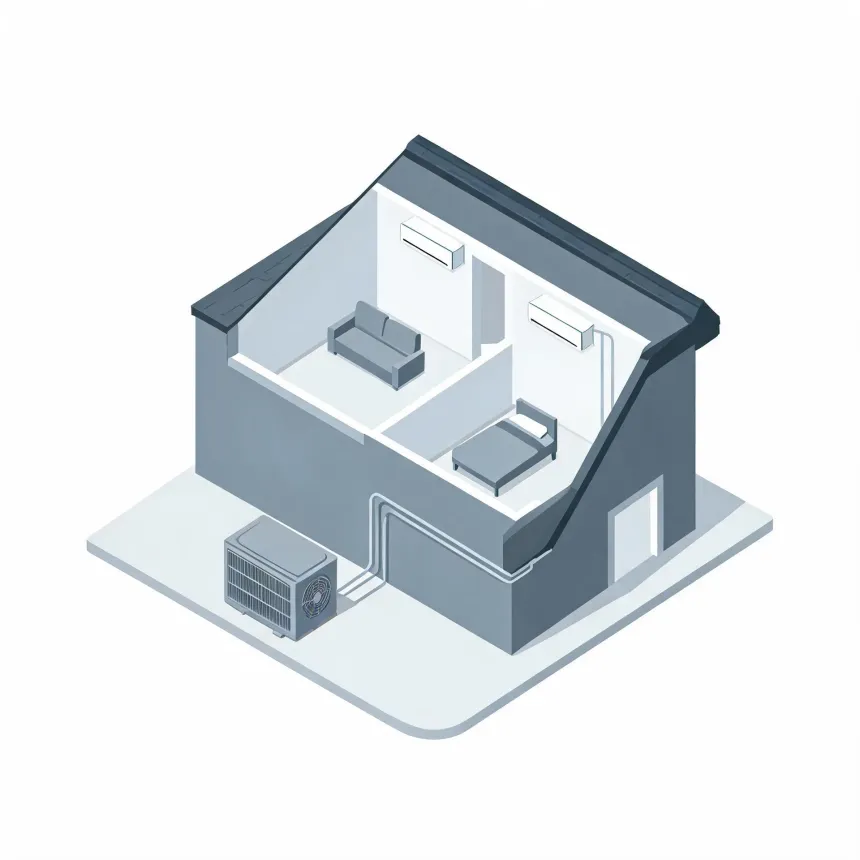
- A single outdoor unit can run one indoor head or several, depending on the system. Single-zone systems handle one room. Multi-zone systems run several indoor heads off one outdoor unit, each with its own thermostat, so you can heat or cool only the rooms you're using. The right number of zones comes down to your home's layout and how each room loses or gains heat, which is something a contractor needs to see in person.
- Can a mini split heat a whole house?
- It can, if it's sized and placed to cover every room, but that usually means multiple indoor heads rather than one. A single indoor unit heats the space around it well but won't push heat through closed doors or down a hallway to the rest of the house. Homes here need heat from October through May, so a whole-house system has to hold up on the coldest nights, not just the mild ones. A contractor can size the system room by room and tell you how many heads it takes to cover the house.