Mini Split Installation in Nebraska City, NE
A new system here will heat from October through May and cool from June through September every year. Tell us about the house, and a licensed contractor who covers Otoe County will get in touch.
Tell us about the job
It takes about a minute.
Nebraska City asks a mini-split to work most of the year
Eight months of heat, four months of cooling. That is twelve months of work for a mini-split in Nebraska City, with almost no season off. Winter nights average 18°F here, and the heat pump has to keep pulling warmth out of air that cold from October into May. Come summer, it switches over and holds against afternoons averaging 85°F.
Any mini-split installed new has to meet the federal minimum for a split-system heat pump, 14.3 SEER2 for cooling and 7.5 HSPF2 for heating. With storms in this area knocking out power in roughly one of every four households some year, and wind events far more common than not, it's also worth asking what happens to the unit when the power drops and comes back. Most restart on their own, but that's worth confirming for the specific system going in.
- 8 months
- October through May, your system heats
- 4 months
- June through September, it cools
- 18°F
- the average winter night it heats against
- 85°F
- the average summer afternoon it cools against
NOAA nClimDiv, 1991–2020 normals
Nebraska requires contractors to register with the state.
The registration puts the business on file with the Department of Labor. Nobody tests the contractor's trade knowledge to get on that list, and nothing about the work itself is checked before the name goes down. It tells you the business is registered. It does not tell you whether they install a mini-split correctly.
In most cities and counties, installing a mini-split needs a permit from the local building office, with an inspection once the work is done. That inspection, not the state registration, is what checks the work on your unit.
Source: Nebraska Legislature
- Is a mini split worth it?
- For most homes, yes, especially if you're heating or cooling a room that isn't on the ducted system, or you don't have ducts at all. Winters here get down to 18°F on average, and a cold-climate mini split is built to keep working at those temperatures instead of falling back on backup heat. In summer, when afternoons sit around 85°F, the same unit cools that space without running a separate air conditioner. Whether it makes sense for your house depends on the rooms you're trying to cover and what's heating or cooling them now, and a contractor can walk through that with you.
- How many rooms can a mini split cover?
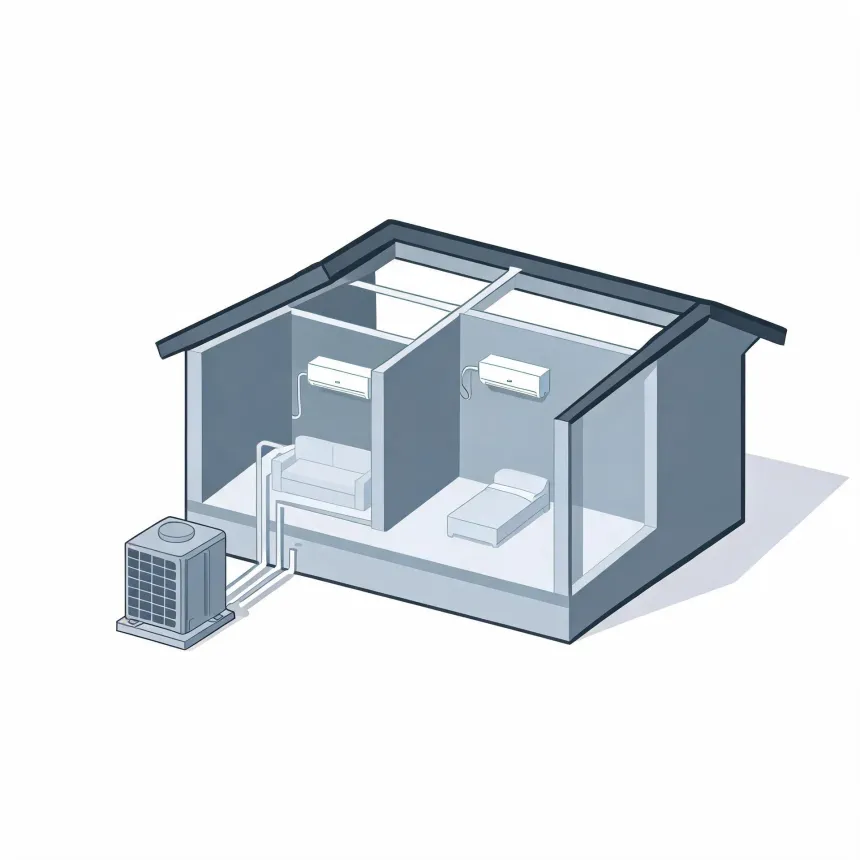
- A single outdoor unit can run one indoor head or several, depending on the system. Single-zone systems cover one room or open area. Multi-zone systems connect up to eight indoor heads to one outdoor unit, each with its own thermostat, so you can heat or cool different rooms to different temperatures at the same time. How many zones makes sense for your house depends on the layout, and that's something a contractor sizes room by room.
- Can a mini split heat a whole house?
- It can, if it's sized and placed for that. Multi-zone systems can put an indoor head in every room that needs heat, and cold-climate models keep producing heat even when it's 18°F outside, which covers a normal winter night here. Whether one system should carry the whole house or work alongside existing heat, gas heats close to half the homes here, is a question about your specific floor plan and how it's built. That's a call a contractor makes after seeing the house.