Mini Split Installation in Wahoo, NE
A new system here will heat from October through May and cool from June through September every year. Tell us about the house, and a licensed contractor who covers Saunders County will get in touch.
Tell us about the job
It takes about a minute.
Wahoo asks a mini-split to run all year
Winter nights here average 17°F from December through February, and a mini-split has to keep pulling heat out of air that cold for eight months, October through May. Summer flips that around, with afternoons averaging 85°F and the same system switching over to cooling for four more months. There is no real off season here. Twelve months a year the unit is doing one job or the other.
Any mini-split installed new has to meet the federal minimum for a split-system heat pump, 14.3 SEER2 for cooling and 7.5 HSPF2 for heating. That is the floor, not a separate ductless rating. Saunders County has also logged 17 winter storms and 67 damaging wind events over the past ten years, the kind of weather a mini-split has to keep working through, not just start up in.
- 8 months
- October through May, your system heats
- 4 months
- June through September, it cools
- 17°F
- the average winter night it heats against
- 85°F
- the average summer afternoon it cools against
NOAA nClimDiv, 1991–2020 normals
Nebraska requires contractors to register with the state.
Registration puts the business on file with the Department of Labor and nothing more. Nobody tests the contractor's trade knowledge to get on that list, and nothing about it says who is good at installing a mini-split and who isn't. It's a record, not a credential.
For this job, the protection comes from the local building office. In most cities and counties, installing a mini-split needs a permit, and the work gets inspected once it's done. That inspection is where someone besides the contractor looks at what was actually installed, in a state where the registration itself won't tell you that.
Source: Nebraska Legislature
- Is a mini split worth it?
- For most homes, yes, especially if you're heating with electric resistance or adding a room with no ductwork. A mini split moves heat instead of generating it, so it produces more heat energy than the electricity it uses to run. Winter nights here average 17°F from December through February, so ask about the unit's low-temperature performance before you decide, since cold-climate models hold their output better at those temperatures. A contractor can look at your home and tell you what to expect for your specific rooms.
- How many rooms can a mini split cover?
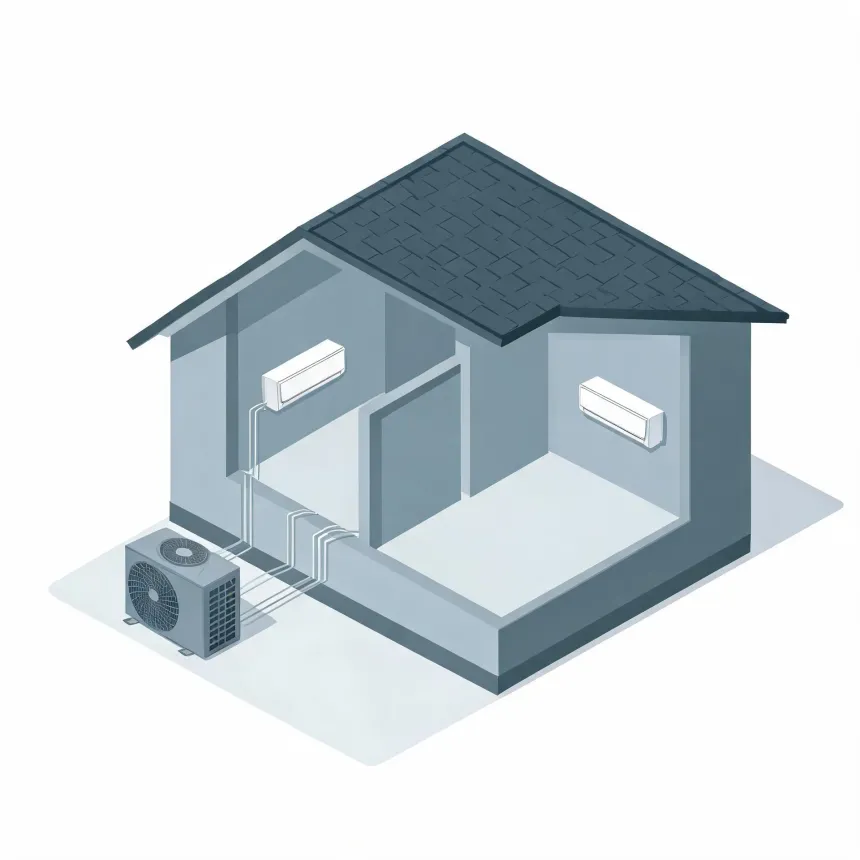
- A single outdoor unit can run one indoor head or several, up to eight on some multi-zone systems. Each indoor head heats and cools the room it's mounted in, so the right count depends on how many rooms you want covered and how they're laid out. A contractor sizes the system to the square footage and the layout of the house, not a fixed number of rooms.
- Can a mini split heat a whole house?
- It can, if enough indoor heads are placed to reach every room, but a single head only heats the space it's in. Homes here need heat from October through May, eight months of the year, so it's worth planning for coverage in every room you use rather than just one or two. A contractor can walk your floor plan and tell you how many heads it would take.