Mini Split Installation in Bellevue, NE
A new system here will heat from October through May and cool from June through September every year. Tell us about the house, and a licensed contractor who covers Sarpy County will get in touch.
Tell us about the job
It takes about a minute.
A mini-split here runs almost the whole year
Bellevue asks for heat from October through May and cooling from June through September. That is 12 months a year your mini-split is doing one job or the other, with barely a break between seasons.
Winter nights average 17°F, cold enough that the heat pump side has to work hard to keep pulling warmth from outside air. Summer afternoons average 85°F, so the cooling side gets a real workload too. Any new mini-split installed now has to meet the federal minimum of 14.3 SEER2 for cooling and 7.5 HSPF2 for heating, since a ductless system counts as a split system under that rule. Given how many months it runs here, the efficiency of the unit you choose matters more than it would somewhere milder.
- 8 months
- October through May, your system heats
- 4 months
- June through September, it cools
- 17°F
- the average winter night it heats against
- 85°F
- the average summer afternoon it cools against
NOAA nClimDiv, 1991–2020 normals
Nebraska requires contractors to register with the state.
Registration puts the business on file with the state, its name and address on record with the Department of Labor. Nobody tests the contractor on how to size a mini-split, run the line set, or wire the disconnect. There is no trade exam behind it, so registration tells you the business exists, not that the work will be done right.
For this job, the protection that matters comes from the local building office. In most cities and counties, installing a mini-split needs a permit, and the work gets inspected once it is done. That inspection is what checks the wiring and the line set, not the registration.
Source: Nebraska Legislature
- Is a mini split worth it?
- For the right house, yes. A mini split heats and cools without ductwork, so it works well in additions, converted garages, or older homes here that were never set up for central air. Bellevue needs heat from October through May and cooling from June through September, so the system has to carry the house nearly all year, not just take the edge off in mild weather. A contractor can look at your layout and tell you whether one or two units cover what you need.
- How many rooms can a mini split cover?
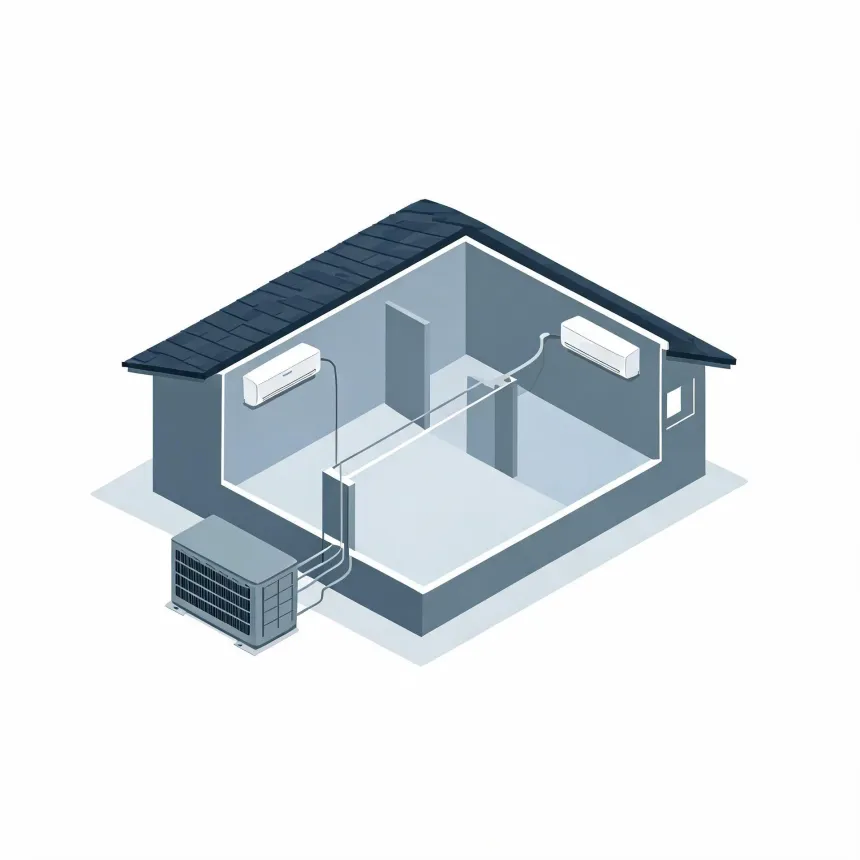
- A single outdoor unit can run one indoor head or several, depending on the system. Single-zone systems cover one room or one open area well. Multi-zone systems run several indoor heads off one outdoor unit, each with its own thermostat, so bedrooms and living areas can be heated or cooled separately. How many zones make sense for your house comes down to square footage and layout, which a contractor sizes on site.
- Can a mini split heat a whole house?
- It can, if there are enough indoor heads placed to reach every room. A single head heats the space it's mounted in well, but it won't push heat down a hallway into closed-off bedrooms. Whole-house coverage means a multi-zone system sized to the house, with a head in each area that needs one. Bellevue homes need heat from October through May, so whatever system goes in has to hold up through the full stretch, not just the mild months. A contractor can size the system against your home's layout and heat loss.