Mini Split Installation in Alliance, NE
A new system here will heat from September through May and cool from June through August every year. Tell us about the house, and a licensed contractor who covers Box Butte County will get in touch.
Tell us about the job
It takes about a minute.
Nine months of heat, three of cooling, and winter nights near 15°F
In Alliance, a mini-split runs most of the year. Heat is needed September through May, and the compressor has to keep working on nights that average 15°F. Summer only asks for three months of cooling, with afternoons around 84°F, so the unit spends far more of its life heating than cooling.
A new system installed here has to meet the federal minimums for split-system heat pumps, 14.3 SEER2 for cooling and 7.5 HSPF2 for heating, whether it runs on ductwork or not. With winter storms common in this part of Nebraska, it's also worth knowing that most mini-splits without a standing pilot will restart on their own once power comes back after an outage.
- 9 months
- September through May, your system heats
- 3 months
- June through August, it cools
- 15°F
- the average winter night it heats against
- 84°F
- the average summer afternoon it cools against
NOAA nClimDiv, 1991–2020 normals
Nebraska requires contractors to register with the state.
Registration puts a contractor's business on file with the Department of Labor. It does not mean anyone tested their work. There is no trade exam behind it, just a record that the business exists and is registered to operate in the state.
For a mini-split installation, the protection here comes from somewhere else. In most cities and counties, the job needs a permit from the local building office, with an inspection once the work is done. That inspection is what checks the wiring and connections were done right, not the state registration.
Source: Nebraska Legislature
- Is a mini split worth it?
- For most homes it is, especially if you're heating or cooling a room your furnace or central air doesn't reach well. A mini split runs on its own outdoor unit and indoor head, so it can carry a converted attic, a garage, or an addition without extending ductwork into it. Down at 15 degrees, a modern cold-climate mini split still puts out heat, though a contractor should confirm the specific unit is rated for winters here before you count on it as your only heat source in the coldest stretch. If you're covering the whole house rather than one space, that changes the sizing and the answer, so get a contractor to look at the house itself.
- How many rooms can a mini split cover?
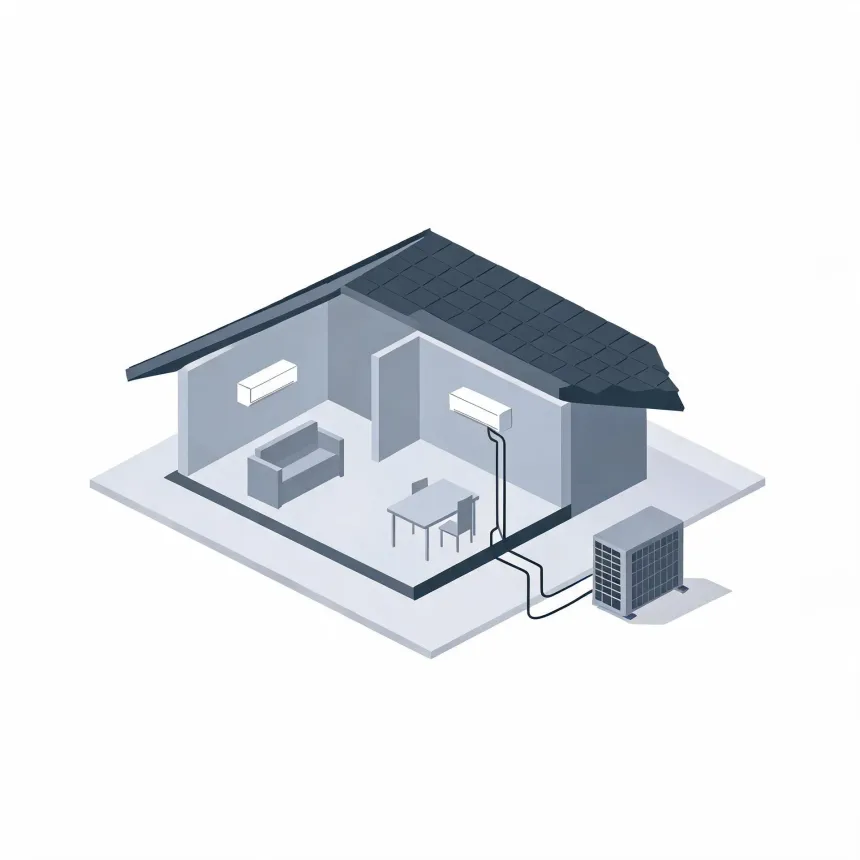
- A single outdoor unit can run one indoor head or several, depending on the system. Single-zone systems cover one room or one open area well. Multi-zone systems tie several indoor heads to one outdoor unit, with each head running its own room on its own thermostat. How many rooms makes sense on one outdoor unit comes down to the size of each room and how much heating and cooling the whole setup needs to deliver, which is why a contractor sizes it room by room rather than guessing at a number.
- Can a mini split heat a whole house?
- It can, if it's sized and placed for that from the start. A whole-house mini split setup usually means a multi-zone system with an indoor head in each main room or area, chosen and placed to cover the house the way a furnace and ducts would. Winters here run cold, averaging 15°F overnight from December through February, so the system has to be rated to actually produce heat at those temperatures, not just carry the label. That's a sizing and equipment question a contractor needs to work out against your actual house, room by room.