Mini Split Installation in McCook, NE
A new system here will heat from October through May and cool from June through September every year. Tell us about the house, and a licensed contractor who covers Red Willow County will get in touch.
Tell us about the job
It takes about a minute.
What a mini-split in McCook has to handle
Your mini-split needs to work almost the entire year here. Homes in Red Willow County need heat from October through May and cooling from June through September, which leaves it very little time off.
Winter nights average 17°F, cold enough that a heat pump is doing real work to keep the house warm, not just topping off a furnace. Summer afternoons average 88°F on the other side of the year. Any mini-split installed new has to meet the federal minimum for a split-system heat pump, 14.3 SEER2 for cooling and 7.5 HSPF2 for heating, and in a county that asks for both that much cold and that much heat, those numbers matter for the whole year, not just one season.
- 8 months
- October through May, your system heats
- 4 months
- June through September, it cools
- 17°F
- the average winter night it heats against
- 88°F
- the average summer afternoon it cools against
NOAA nClimDiv, 1991–2020 normals
Nebraska requires contractors to register with the state.
That registration puts the business on file with the Department of Labor. Nobody tests the contractor's trade knowledge to get on that list, and nobody checks their work history. It tells you the business exists on paper. It does not tell you whether they know how to size a mini-split or set a line set correctly.
What actually stands behind this job is the permit. In most cities and counties, installing a mini-split needs a permit from the local building office, and an inspector checks the work once it's done. That inspection is where someone with no stake in the sale looks at what was installed.
Source: Nebraska Legislature
- Is a mini split worth it?
- For most homes, yes, especially if you're heating or cooling a room your ducts don't reach well, or you don't have ducts at all. A mini split puts a heat pump in the room itself, so it heats and cools with one system instead of two. It also keeps working as a standalone unit if you're just conditioning an addition, a garage, or a finished basement. Whether it makes sense for your whole house depends on your layout, and a contractor can walk that through with you.
- How many rooms can a mini split cover?
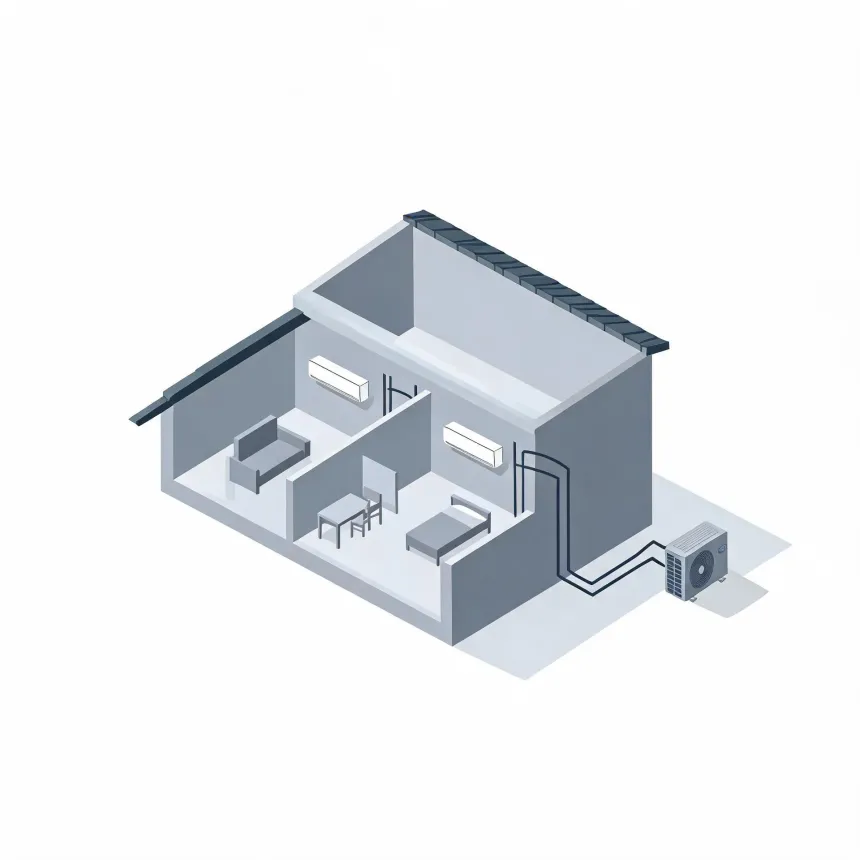
- One indoor unit heats and cools the room it's mounted in, but a single outdoor condenser can run up to eight indoor units at once, each in its own room. These multi-zone systems let you set each room to its own temperature. How many rooms you can realistically cover depends on the size of the outdoor unit and the square footage of each room, so a contractor will size it to your house.
- Can a mini split heat a whole house?
- It can, if enough indoor units are placed to reach every room, but winter nights here average 17°F, and a mini split has to be sized and chosen carefully to keep up on the coldest nights. Not every heat pump holds its output at that temperature. A contractor can tell you which units are rated for winters like this one and how many you'd need to cover the whole house.