Why your AC is blowing dust in Nebraska

Tune-up, service, or cleaningCentral ACNebraska
Step 1 of 2

What ZIP code is the job in?

Why is my AC blowing dust into my house?

You turn on the AC after a stretch of Nebraska heat and notice a fine layer of dust settling on the furniture, or dust actually puffing out of the vents when the system kicks on. It's unsettling, especially if no one has touched the ductwork or filter in a while. You want to know whether this is a quick fix or something wrong with the system itself.

A dirty or wrong-size filter is letting dust pass straight through

Your filter is supposed to catch dust before it ever reaches the air in your house. When it's clogged, some air finds a way around the edges instead of through the material, carrying dust with it. A filter that doesn't fit the slot right does the same thing, even brand new. Dust sitting in the ducts themselves gets stirred up every time the blower starts, especially after the system has sat idle since last summer. In Nebraska, central air usually runs hard for a few months and then shuts down most of the year, so dust has time to settle in the ductwork between seasons. The first thing worth checking is the filter, when it was last changed and whether it's the right size for the slot.

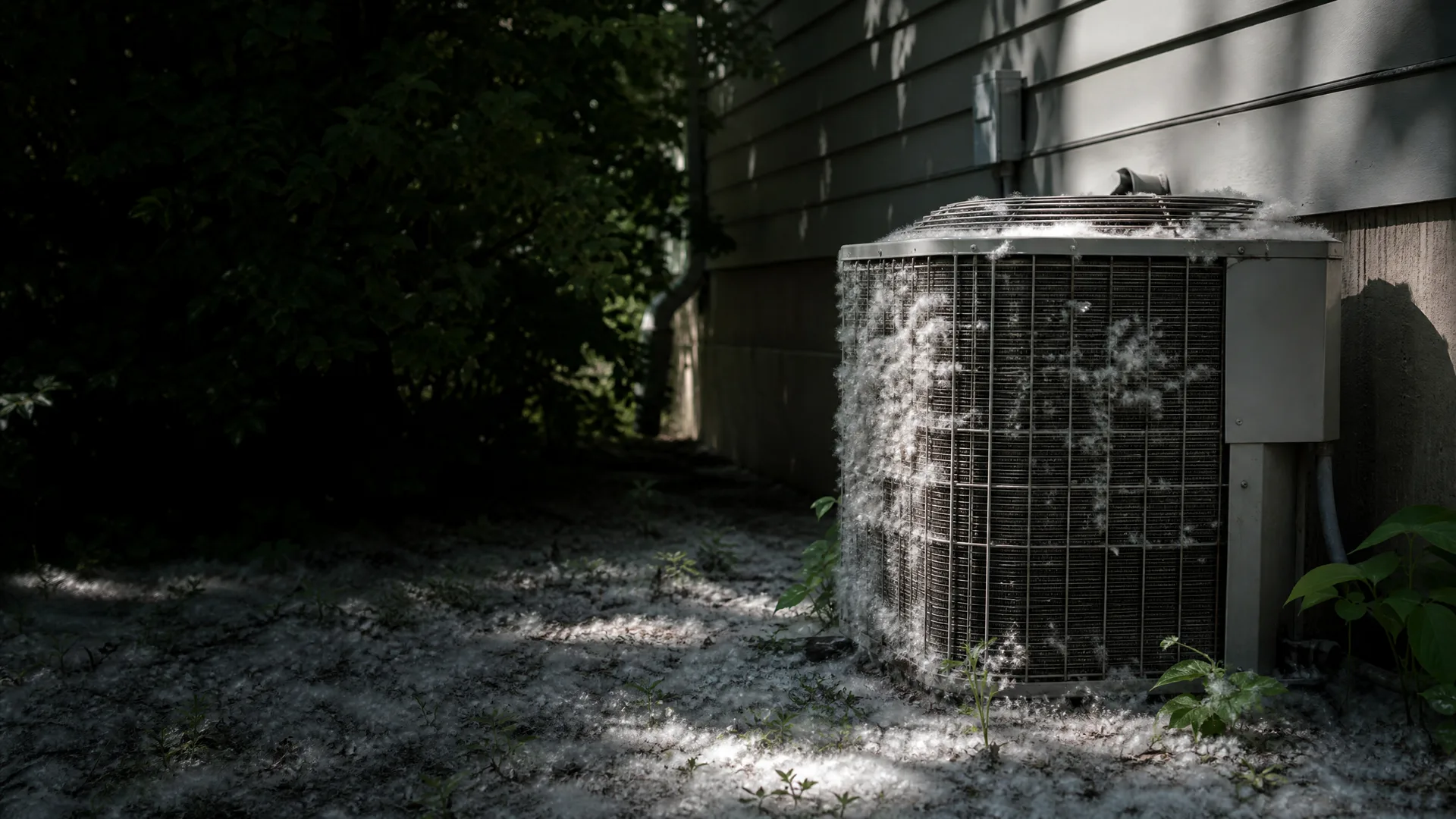
An outdoor air conditioner condenser unit beside a house with horizontal siding, its coil covered in white cottonwood fluff that also blankets the ground around it.

You're out in the side yard in late May, coiling the garden hose, when you notice it. The cottonwood trees have been shedding for a couple of weeks now, and a drift of white fluff has piled up against the condenser like dirty snow. You crouch down and see the fins underneath are matted solid with it, gray and packed in tight. The unit's running, you can hear it, but the airflow through those fins is fighting its way past a wall of fluff. You brush a handful off the top and more is already stuck behind it. Somewhere past that blocked coil, the air handling the dust in your house is pulling harder than it should.


Is this just dust, or is your system struggling

Walk through your house and check what's collecting. Dust on the register covers themselves, a film on windowsills near vents, or grit on the floor just past a supply opening. Run your hand along a return grille and see what comes off on your fingers. If you've noticed the house feels harder to keep cool even with the thermostat set the same as always, that's the dust working against you, not just a mess to wipe up. A clogged filter forces the blower to work harder, and a dirty coil can't pull heat out of the air the way it should. Left alone through a full Nebraska summer, that strain is what turns into a bigger repair instead of a simple fix.

A gray outdoor air conditioning condenser unit on a concrete pad beside a house with horizontal lap siding, with a conduit and electrical disconnect box on the wall and a green shrub in mulch to the right.

Clear coils, clean air

This condenser sits open on the pad, grille clear, no leaves piled against the sides. Air pulls through the coil the way it was designed to, and the blower doesn't have to fight for it. That balance is what keeps dust moving out through the return instead of settling in your ducts.

A weathered outdoor air conditioner condenser unit on a concrete pad beside a house with horizontal vinyl siding, with a conduit and disconnect box on the wall to the right.

Clogged and struggling

This unit has leaves banked up against its base and grime packed into the grille. Airflow through the coil is restricted, so the system works harder to move the same air, and the imbalance it creates inside your ductwork is what pulls loose dust into your supply vents.

A man in a blue sweatshirt reclines with closed eyes in a brown leather armchair in a living room with a bookshelf, houseplant, sofa, window, and a side table holding newspapers and a dark mug.
A bearded man in a gray pullover reclines with closed eyes on a brown leather sofa in a sunlit room with a window, framed picture, potted plant, and a wooden cabinet holding papers and a dark mug.
A man in a gray sweater leans back with closed eyes in a brown leather armchair beside a wooden side table holding a dark mug and a folded newspaper, with bookshelves and a window seat behind him.
A man in a green sweater reclines in an armchair with his eyes closed and a slight smile, beside a window with plants, a small table holding a mug and folded newspaper, and bookshelves behind him.

It's off your list after this

A dirty coil or a clogged filter doesn't fix itself once the cottonwood stops shedding. The grit already pulled past a loose filter seal is sitting in your ductwork right now, and every time the blower kicks on it moves a little more of it into your rooms. Nebraska summers run humid enough that a coil caked with fluff and dust holds moisture longer, and that's when the smell starts along with the dust. Someone who services AC systems in this area every summer has seen what cottonwood season does to a condenser and a filter rack, and knows where dust actually gets in versus where it just collects. Getting a local contractor out to look at the coil, the filter fit, and the duct connections now means one person handling it, not your name going out to five companies and your phone ringing all afternoon. Send the request and that search becomes someone else's job instead of yours.

What a dirty filter actually does

A filter only cleans the air that passes through it. When it's packed with cottonwood fluff and grit, air stops going through the filter and starts going around it, through the gaps at the edges of the frame. That air carries dust straight into the return duct unfiltered. The blower doesn't slow down or know the difference. It keeps pulling the same volume of air through the system, just more of it now skips the filter entirely. A filter that looks gray but still lets air through it is doing its job. One that's packed solid is just a wall with a bypass around it.

Why the coil matters too

The evaporator coil sits downstream of the filter, and when it's coated with dust and grime, it changes how air moves across it. Airflow that should pass through evenly starts finding the path of least resistance, pulling harder through any gap or loose seam in the ductwork near the unit. Those gaps are usually in unconditioned space, attics, crawlspaces, places with their own dust and debris. A clean coil keeps that pull steady and predictable. A fouled one turns the whole system into something that's drawing air from places it was never designed to pull from.

A gray-haired man with a beard in a blue button-placket shirt reclines on a couch with his eyes closed, beside a sunlit window with a green plant.
A woman in a cream knit sweater sits in an armchair with her eyes closed near a window showing yellow autumn foliage, with a mug on a round wooden side table beside her.

Filter checked every month

Through cottonwood season someone looks at the filter before it packs solid. Air keeps moving through it instead of around it, and the dust stays out of your ductwork.

Send my request

Filter forgotten until it's gray

Nobody checks it until airflow is weak and dust is already on the windowsills. By then the grit has had weeks to work into the ducts and onto your furniture.

Send my request

Power costs 12.05 cents per kilowatt-hour statewide

At 12.05 cents a kilowatt-hour, running the blower longer than it needs to doesn't hit your bill that hard. That's worth knowing, because the fix for dusty air here is airflow, not shutting the system down to save money. Let it run clean instead of running less.

EIA-861 2025 statewide residential average

What this comes down to

  • Dust blowing from your vents almost always traces back to a loose filter fit, a dirty coil, or ducts that pulled in cottonwood grit before anyone caught it.
  • Checking the filter monthly through cottonwood season keeps air moving through it instead of around its edges, which is where most of the dust problem starts.
  • A coil that stays clear of fluff and leaves lets the blower move air the way it was designed to, instead of straining and pushing dust further into your rooms.
  • None of this gets better on its own once the cottonwoods stop shedding, since the grit already in your ductwork keeps circulating every time the system runs.
  • A contractor who works on Nebraska systems every cottonwood season knows which filter sizes gap at the edges and which coils clog fastest, because they see it on this same equipment every year.
  • Sending one request means one licensed local contractor looks at your system, not a handful of companies competing for the job.

The dust in your vents isn't a mystery. It's a filter that's not sealing right, a coil that's caught too much cottonwood fluff, or grit that already worked its way into the ductwork before anyone noticed. Fix the fit and keep the coil clear, and the airflow does what it's supposed to do. Air moves through the filter instead of sliding past its edges, and the blower pulls clean air across a coil that isn't choked with debris. Skip that, and the system keeps circulating what's already inside it, cottonwood season or not.

You don't have to work out on your own which filter size actually seats flush in your return, or how bad your coil has gotten behind the grille. A contractor who services AC systems across Nebraska through every cottonwood season has already seen which filter brands run a little small for certain frames, and which coil designs clog first once the fluff starts drifting. That's the kind of thing that only shows up after years of working on the same systems in the same towns, and it's why a local contractor catches what a general checklist won't.

Send one request and it goes to one licensed contractor, not a line of companies bidding for your number. Someone local, who already knows what tends to fail on equipment like yours, takes it from there. You've done the part that was yours to do. The rest is theirs to sort out.

A curving paver walkway runs alongside a house with beige lap siding and a white-trimmed window, bordered by low shrubs, grassy plants, and trees in sunlight.
A dark-framed casement window with divided upper panes set in a stucco wall beside a stone-clad section, with hydrangeas, hostas and trimmed shrubs in a mulched bed above a lawn.
White horizontal lap siding wall with a single six-pane double-hung window, above a mulched bed of hydrangea shrubs with browning blooms, bordered by mown grass in low sunlight.
Interior corner with tan plaster walls, a potted olive tree in a large terracotta urn beside a floor-to-ceiling window, and a wooden bench with a beige cushion on a herringbone brick floor partly covered by a woven jute rug.
A wooden bench beneath a window holds a green linen cushion and a fringed cream throw, with a woven basket stored underneath on a wood plank floor.

Send one request and you're done looking

Your request goes to one pro, not a list of companies.

Find a licensed pro

You're not committing to anything by asking.