

Does duct cleaning help allergies in Nebraska
After this form, you can stop searching for a duct system pro.
Hand it offDuct cleaning can ease allergies if dust, pet dander or mouse debris has built up inside your ducts, but it won't fix an allergy problem on its own. Most Nebraska homes heat with gas furnaces that run the same blower and ductwork used for summer air conditioning, so whatever collects in those runs over the winter gets stirred up and blown through the house once the heat kicks off and the AC takes over in the sticky months. If your filter is undersized or you've skipped changes, more of that settles in the ducts instead of getting caught. Cleaning clears out what's already built up, which helps if your symptoms are worse indoors than out. It won't help if the real cause is pollen coming in through open windows or a pet that sheds in the living room. Think of it as removing one source, not the whole problem.

What actually collects in there
Dust and pet hair settle in the low spots of your ductwork, especially the runs near the floor registers. Mice get into ducts too, through gaps around the furnace plenum or where a duct passes through a crawlspace, and leave droppings that get stirred up every time the blower kicks on. None of this shows up until you pull a register cover and look inside with a flashlight.

Why your blower spreads it
Your furnace and your air conditioner share the same blower and the same ducts, so whatever sits in there moves through the house ten or more months a year in Nebraska. A gas furnace blower runs all winter, and the same fan pushes cooled air all summer once the muggy weather sets in. A duct full of dust gets circulated constantly, not just when the system is heating or cooling.
Why does the dust come back so fast after cleaning
You dust the shelves on Sunday and by Wednesday there's a film on them again. The register covers in the bedrooms show it first, a gray ring around the vent. If anyone in the house wakes up stuffed up or starts sneezing within an hour of the furnace kicking on, that's air moving dust straight out of the ducts and into the room. A musty smell when the blower starts, instead of just warm air, usually means something is sitting in there decaying. Left alone, it keeps circulating every time the system runs, which in Nebraska is most of the year between winter heat and summer air conditioning.
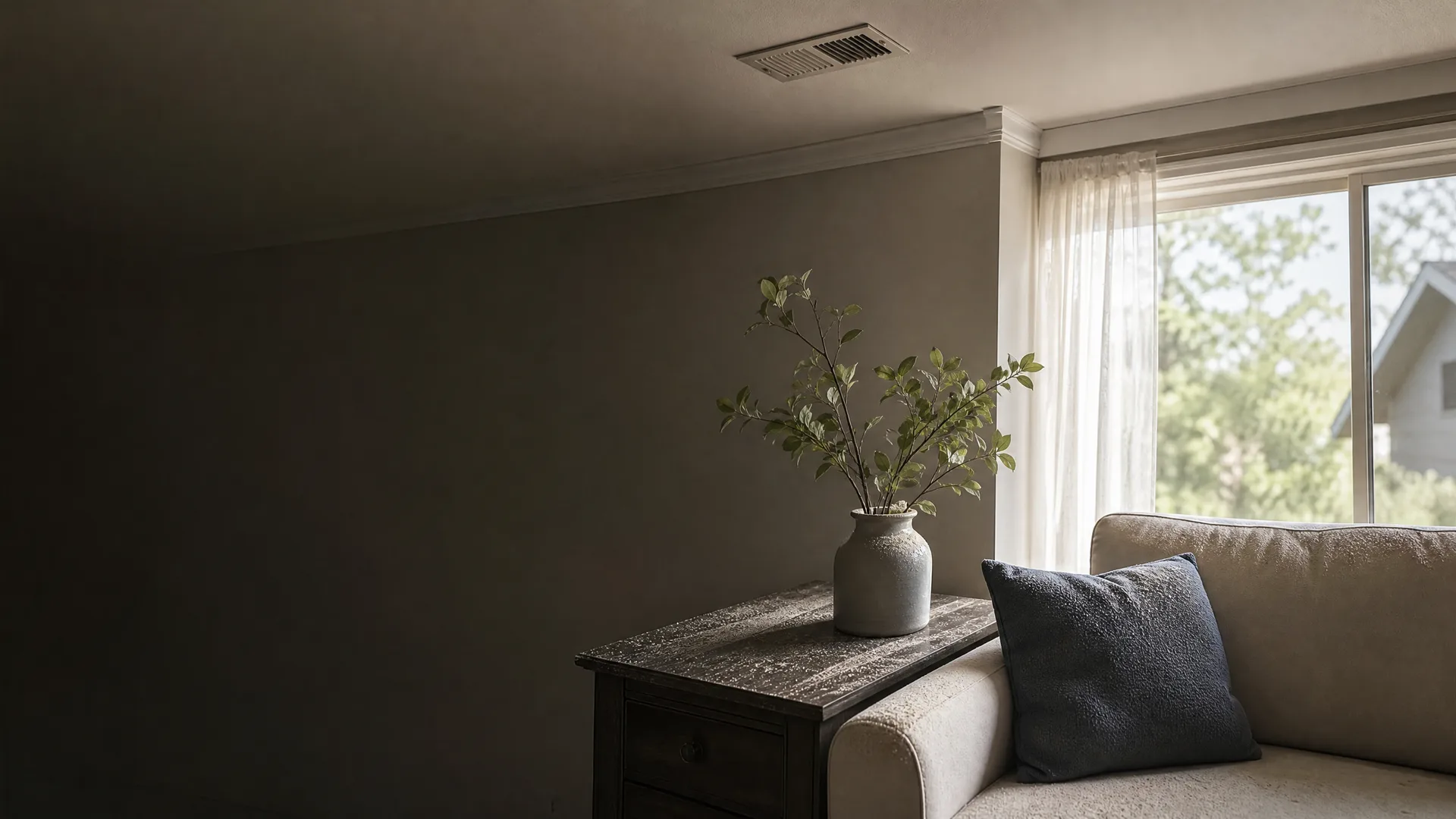
It's late April, warm enough that you've shut the furnace off for the year. Sun's coming through the living room window and it catches the ceiling vent just right, you see the dust on the grille, little gray tufts caught in the slats. You hadn't noticed it until now. The end table under it has a thin film too, the kind you figure is just from the windows being open. You run a finger along the louvers and it comes back dark. Nobody's cleaned up there in longer than anyone can say, and in a few weeks that same vent starts pushing cold air across the room every time the AC kicks on.


A tech checks each duct run with a camera before touching anything.
Vents get sealed off one by one so dust can't spread to clean rooms.
A vacuum attaches to the ductwork and pulls negative pressure through the whole system.
Brushes or air whips knock loose dust and debris from the duct walls.


Power costs 12.05 cents per kilowatt-hour statewide
At 12.05 cents a kilowatt-hour, running the blower longer to chase dust around the ductwork isn't what's driving your power bill up. A cleaning crew working through your system costs you nothing in electricity. The furnace and AC are what use the power, not the vacuum pulling dust out of your ducts.
EIA-861 2025 statewide residential average




Stop chasing a duct system pro
If dust and mouse debris have been building up in your ducts for a while, you already know the drill every allergy season. You wipe the registers, you run the furnace fan hoping to clear the air, you wonder if it's worth calling someone or if it's just your house now. Finding out means calling a few duct cleaning companies, explaining what you've noticed, waiting on quotes, and trying to tell which one actually knows what they're doing. That part you can hand off. Send the request and a contractor who does this work takes it from there, so you're not the one tracking down names or sitting on hold. Your ducts and your allergies are still your situation to deal with, but figuring out who to call about them doesn't have to be.
Where this leaves you
- Dust, pet dander and mouse debris sitting in your ducts can make allergy symptoms worse, but cleaning them won't cure an allergy by itself.
- Gas furnaces and summer AC in Nebraska homes share the same blower and ductwork, so whatever builds up gets pushed through the house both seasons.
- Dust reappears within days of cleaning because the source, whether that's shedding pets or a leaky duct seam, is still there.
- A camera check before cleaning shows whether what's built up is ordinary dust or something more, like mouse debris near the plenum.
- Running the blower longer doesn't drive up your power bill at 12.05 cents a kilowatt-hour, since the furnace and AC are what use the electricity.
- Finding out whether your ducts need cleaning means getting someone out to look, rather than guessing from a dusty register cover.
Clean ducts can take some of the load off someone with allergies in the house, but they are not the fix for the allergy itself. If dust, pet dander or mouse debris has been collecting in your runs, pulling it out means less of it gets pushed into the bedrooms every time the furnace or the AC kicks on. That is a real difference for a kid who wakes up stuffed up, or for anyone who notices the gray ring on a register before they notice anything else. It is not a difference that shows up on the power bill, since the blower runs on the same electricity either way, and it is not something you can judge from the outside. A dusty register cover might mean the whole system needs attention, or it might mean nothing more than a dusty cover. The only way to know is a camera run through the ducts, and that is not a guess you can make standing in the hallway. Right now your options are to keep wiping registers and wondering, or to find out. Finding out on your own means searching for a duct cleaning company near you, calling a few, explaining what you have seen in the vents, and then sitting with quotes trying to compare apples to apples. Send the form on this page instead and that legwork is done for you. Someone licensed for this work gets in touch, and you go from wondering what is in your ducts to knowing.

Ductwork Cleaning
Send one request and you're done looking

- A local pro who cleans ducts gets in touch with you.
- Your duct cleaning request goes to a local pro who does this work.

- One request and the duct cleaning stops waiting on you.
- Once you send the form, finding a pro is off your list.

- Answer a few questions instead of calling shop after shop.
- Describe your ductwork job once, to one pro.

- Your duct cleaning request goes to one local pro.
- Your request stays with one local pro.