










Signs your air ducts need cleaning in Nebraska

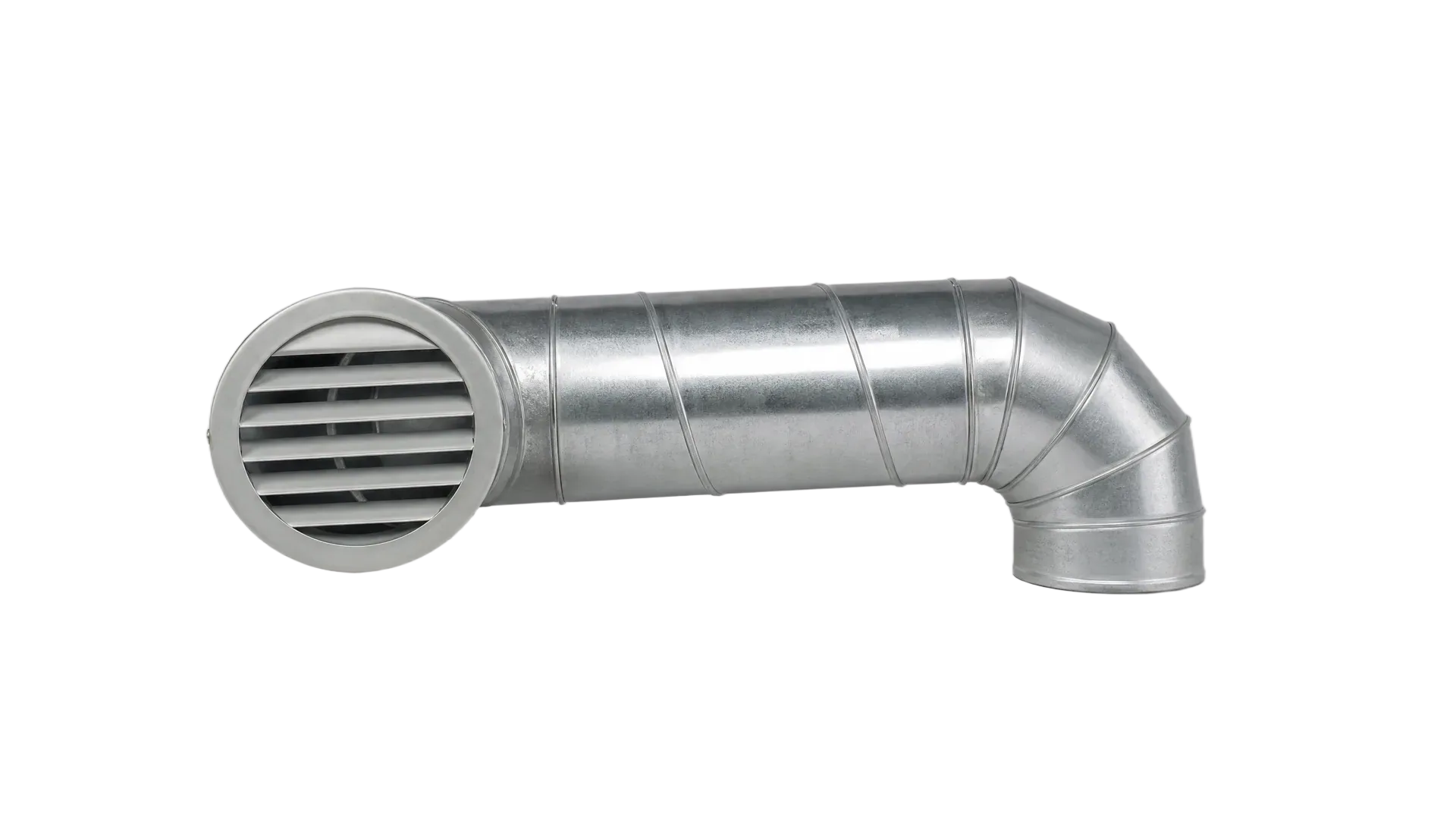
A galvanized steel round duct section with a 90-degree elbow at one end and a louvered vent grille at the other, photographed against a plain gray background.
Skip the calls

Dust that resettles on furniture within a day or two of cleaning, musty air when the furnace or AC kicks on, and rooms that stay stuffier than the rest of the house are the clearest signs your ducts need attention. In Nebraska, gas furnaces run hard for months and air conditioners work through sticky summers, and both push a lot of air through the same ductwork year after year. That air carries dust, pet hair and whatever gets stirred up in the house, and some of it settles inside the ducts instead of passing through. Over time it builds up enough to feed back into the rooms you live in. You might also notice more dust around vent covers, a family member's allergies acting up indoors, or a slight burning smell the first time the furnace runs each fall. None of these mean the ducts are unsafe, but they mean the system is recirculating more than it should, and cleaning is what clears it out.

A smiling woman with long dark hair in a gray sweater sits at a white stone counter with a glass of white wine, with a kitchen, fireplace and sofa visible behind her.
A smiling woman with dark hair in a cream sweater sits at a marble table with a glass of red wine, with a lit lamp, sofa, fireplace and kitchen counter behind her.
A woman in a cream sweater laughs while seated at a marble countertop with a glass of red wine, with a dimly lit living room and sofa behind her.
A woman in a beige turtleneck sweater with her hair up sits laughing and looking to the side at a white marble table with a glass of red wine, in a dimly lit interior with a lamp and seating area behind her.

Your duct system is a closed loop, so whatever collects inside it stays in motion every time the furnace or AC kicks on. Check the return vent cover first. If it's coated in dust, the trunk line behind it is holding onto the same buildup, and that's what gets pushed through the house with every cycle. Walk the registers and compare airflow room to room. One that's noticeably weaker than the rest usually means something is blocking the line that feeds it, not a problem with that single vent. Smell matters too. A burning or musty odor right when the furnace starts can mean dust has baked onto the heat exchanger or settled in a supply run where it sits until the air moves it. Look closely at the vents themselves. Dark streaks around a register are dust being pulled through the seams as air pushes past, and any debris or signs of insects or rodents means something has gotten into the duct, not just the room. A filter that's dirty again weeks after replacement often means the dust is coming from inside the system itself.

What's Actually Happening Inside Your Ducts

  • A heavy coat of dust inside the return vent cover usually means the same buildup is sitting in the trunk line behind it.
  • Registers that blow noticeably less air than others on the same system often point to a blockage further back in the ductwork.
  • A burning or musty smell in the first minutes after the furnace kicks on can mean dust is baked onto the heat exchanger or sitting in the supply run.
  • Visible debris or small pieces of insect or rodent activity around a vent means something has gotten into the duct itself, not just the room.
  • Dark streaking around a supply register is dust pulled through the seams of the duct as air pushes past it.
  • A furnace filter that looks dirty again only a few weeks after replacement can mean dust is circulating from inside the ducts rather than coming in from the house.
Empty unfinished basement with bare concrete floor, insulated walls with vapor barrier between wood studs, exposed wood joists, galvanized sheet-metal ductwork, a recessed light, and a steel support column.
Steel and flex ducts running clean overhead, no dust trails or dark streaks where they meet the joists.
Empty basement room with bare concrete walls and floor, exposed wooden floor joists overhead, large galvanized sheet-metal ducts with a vent grille, colored pipes, and a single lit bulb.
Rectangular trunk lines coated along the seams, the kind of buildup that feeds back into every room it serves.

How to Tell the Job Held

Clean when it finishes

  • A vent cover wiped down after the job stays mostly clear a week later instead of filming over again.
  • Air out of the registers smells like nothing in particular, not like the inside of the furnace cabinet.
  • Rooms that used to run warmer or cooler than the rest of the house start matching the thermostat reading.
  • A flashlight down the duct shows bare metal or bare flex liner, no gray coating left on the walls.
  • The furnace filter stays cleaner longer between changes because less dust is circulating back through the return.

Needs another look

  • Dust is back on the windowsills and furniture within a day or two, the same pattern that started the call in the first place.
  • One or two rooms are still stuffy while the rest of the house feels fine, which points to a blockage that wasn't fully cleared.
  • The musty smell returns as soon as the AC or furnace cycles on again, especially in a damp Nebraska summer.
  • A return vent cover picks up a visible layer of dust again within a few weeks instead of staying clear.
  • Registers near the far end of the trunk line still push noticeably less air than the ones closer to the furnace.
A smiling bearded man in a dark crewneck sweater sits at a dinner table with a lit candle, glasses of wine and water, and plates of food in the foreground, with a lamp, framed art and a potted plant behind him.
A woman with dark hair in a bun reclines on a gray sofa with her eyes closed and a slight smile, wrapped in a cream knit sweater and blanket, with an open book resting in the foreground and a lit lamp in the dim room behind.

Your gas furnace pulls return air through the same ducts all winter, every winter, from October through March. Whatever is sitting in that trunk line gets pushed into every room it serves, over and over, for months.

That is why the dust comes back fast after you wipe it down once. Cleaning the ducts themselves, not just the vent covers, is what stops it from resettling within a day or two.

Basement ceiling with large galvanized sheet-metal ductwork, round metal pipes and plumbing lines running beneath wood joists, above a bare concrete wall and floor.
Before you get your ductwork cleaning
Unfinished basement with bare concrete floor and walls, exposed wood joists, large galvanized sheet-metal ductwork, PVC and copper piping, and a gray furnace unit beside wood stud framing.
After you get your ductwork cleaning

No phone calls to make

Only one pro gets your request, so you hear from one company.

Asking costs nothing, and the choice to hire stays yours.

What this is doing to your bills

A furnace pulling air through ducts packed with dust and pet hair works harder to move the same amount of heat. Registers that put out less air than they should mean the blower runs longer to reach the thermostat setting, and in a Nebraska winter that is months of extra runtime. Power here is cheap, which keeps the damage out of sight, but the furnace still cycles more than it would with a clear path. Summers add the AC side on top of it, pulling warm, humid air through the same restricted lines during the stickiest stretch of the year.
Who ends up breathing it

Anyone in the house with allergies or asthma notices first. Dust and dander moving through the ducts land in the air every room pulls from, not just the one with the dirty vent cover. Kids and pets spend more hours close to the floor registers than anyone else, right where that air comes out. A bedroom that stays stuffier than the rest of the house, or someone waking up congested most mornings during the months the furnace runs hardest, points at what is circulating through the trunk line rather than anything about that one room.

Power costs 12.05 cents per kilowatt-hour statewide

At 12.05 cents per kilowatt-hour, the blower motor is the part of your system that keeps running whether your ducts are clean or packed with dust. A blower working against clogged trunk lines stays on longer to push air through, and that extra runtime shows up on the electric bill every month.

EIA-861 2025 statewide residential average

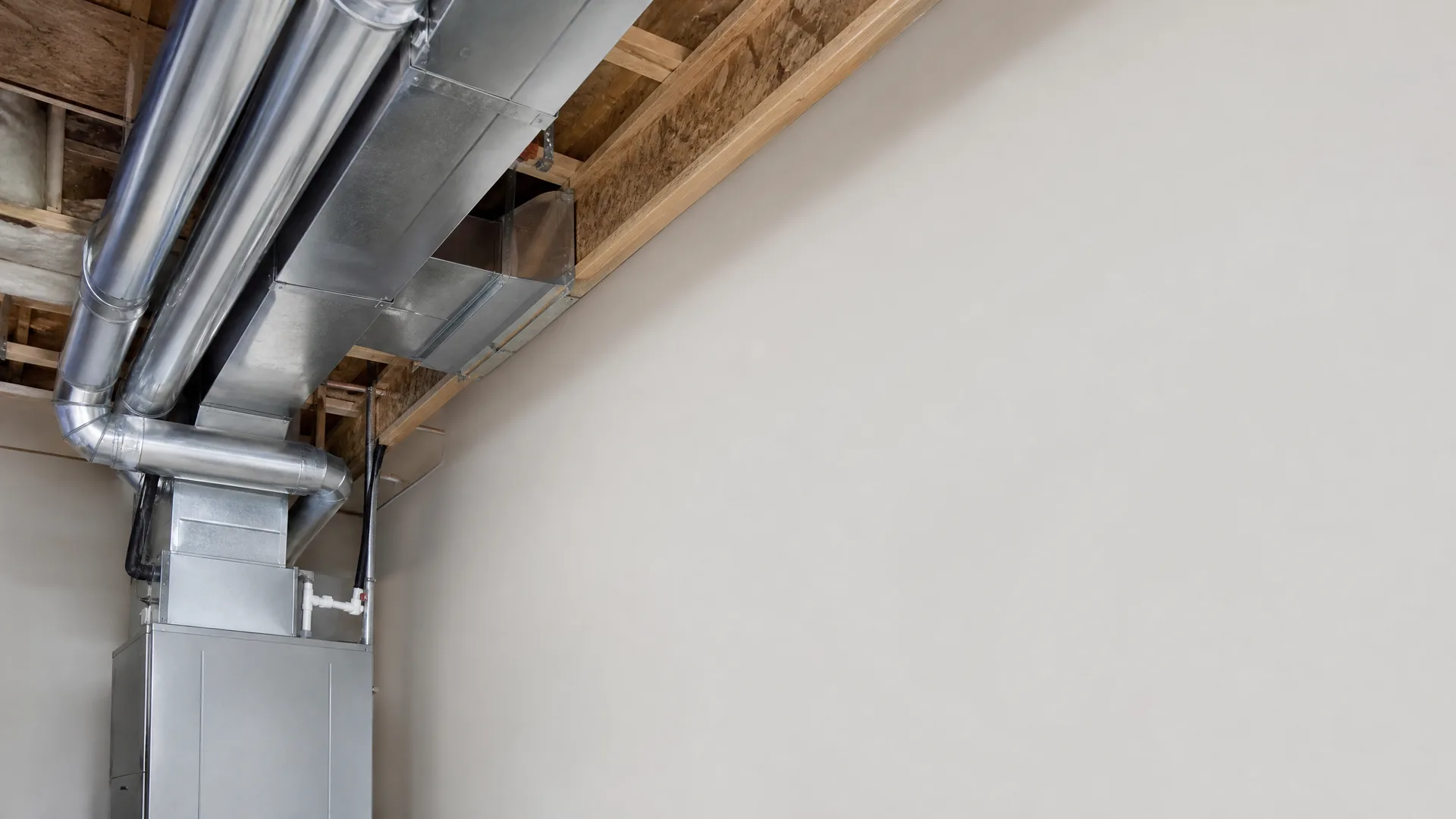
Galvanized sheet-metal ductwork and round pipes running along an exposed wood-joist ceiling with insulation, above a furnace unit beside a blank painted wall.

A home where ducts run clean

No sneezing fits when the furnace kicks on in January. No layer of dust back on the TV stand two days after you wiped it down. The bedroom at the end of the hall holds the same temperature as the rest of the house instead of running five degrees warmer. You stop noticing the ducts at all, which is the point. Nobody checks the return vent cover because there is nothing there worth checking. The air moving through the house in July and the air moving through it in January both smell like nothing.

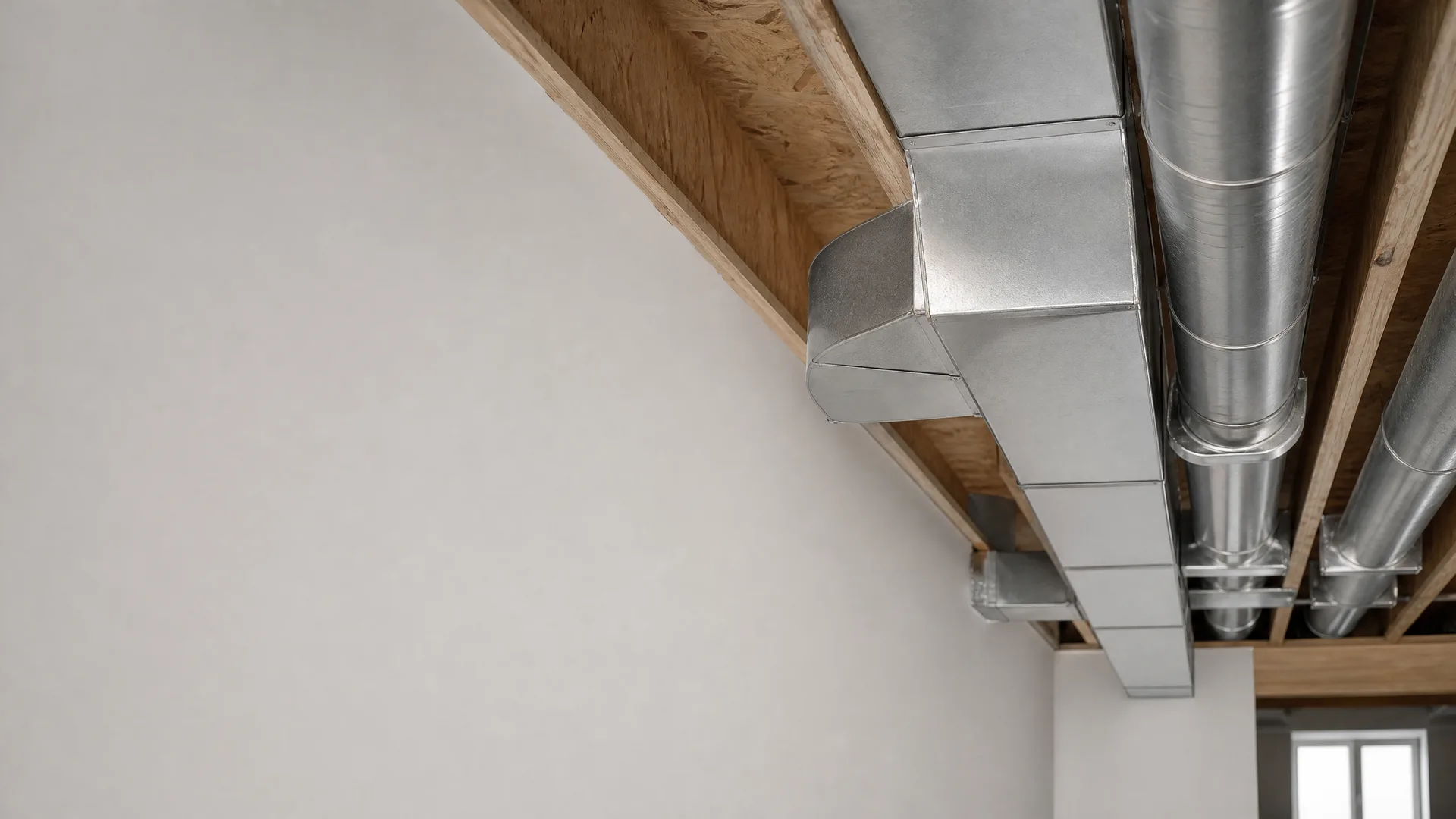
Galvanized rectangular and round sheet-metal ductwork mounted beneath an exposed wooden joist and OSB ceiling, next to a plain white wall and a window at lower right.

A home where they don't

The dust is back on the shelves before the weekend is out. Someone in the house is reaching for the inhaler more than they used to, especially overnight when the furnace runs longest. The office at the front of the house never quite cools off in August no matter where the thermostat is set. Every time the system starts up there's a few seconds of a stale, closed-in smell before it fades. None of it is dramatic enough to call anyone about on its own, so it keeps going, winter into summer into winter.

A closed silver laptop and a glazed ceramic mug on a wooden table, with a blurred kitchen counter, potted plant, cutting board and window in the background.

The signs are already in your house

Dust back on the furniture in a day or two, a musty smell when the furnace kicks on, one room at the end of the hall that never feels right. If you've noticed any of that, your ducts are telling you something. A look inside the return vent and a check of airflow at a few registers will confirm it one way or the other.

Finding someone to do that work usually means its own slog, searching around, calling a few companies, explaining the same thing to each one, then sitting with quotes trying to guess who actually knows ductwork versus who just lists it as a service. Request a quote through this page and that part is done. You're matched with one licensed Nebraska contractor who works on duct systems all year, through the months your furnace runs hardest and the stretch where your AC fights the humidity, and already knows what turns up in a trunk line after a few Nebraska winters.

A gray upholstered sofa with a beige cushion and knit blanket beside a curtained window, with a white mug and a book on a dark wooden table in the foreground and a lit lamp in the background.
Dimly lit interior showing galvanized sheet-metal HVAC ductwork running below a wooden joist ceiling above a dark gray wall.

One form, no calling around

Your request stays with one local pro.

Duct and vent cleaningDucts or ventsNebraska
Step 1 of 2

What ZIP code is the job in?


