
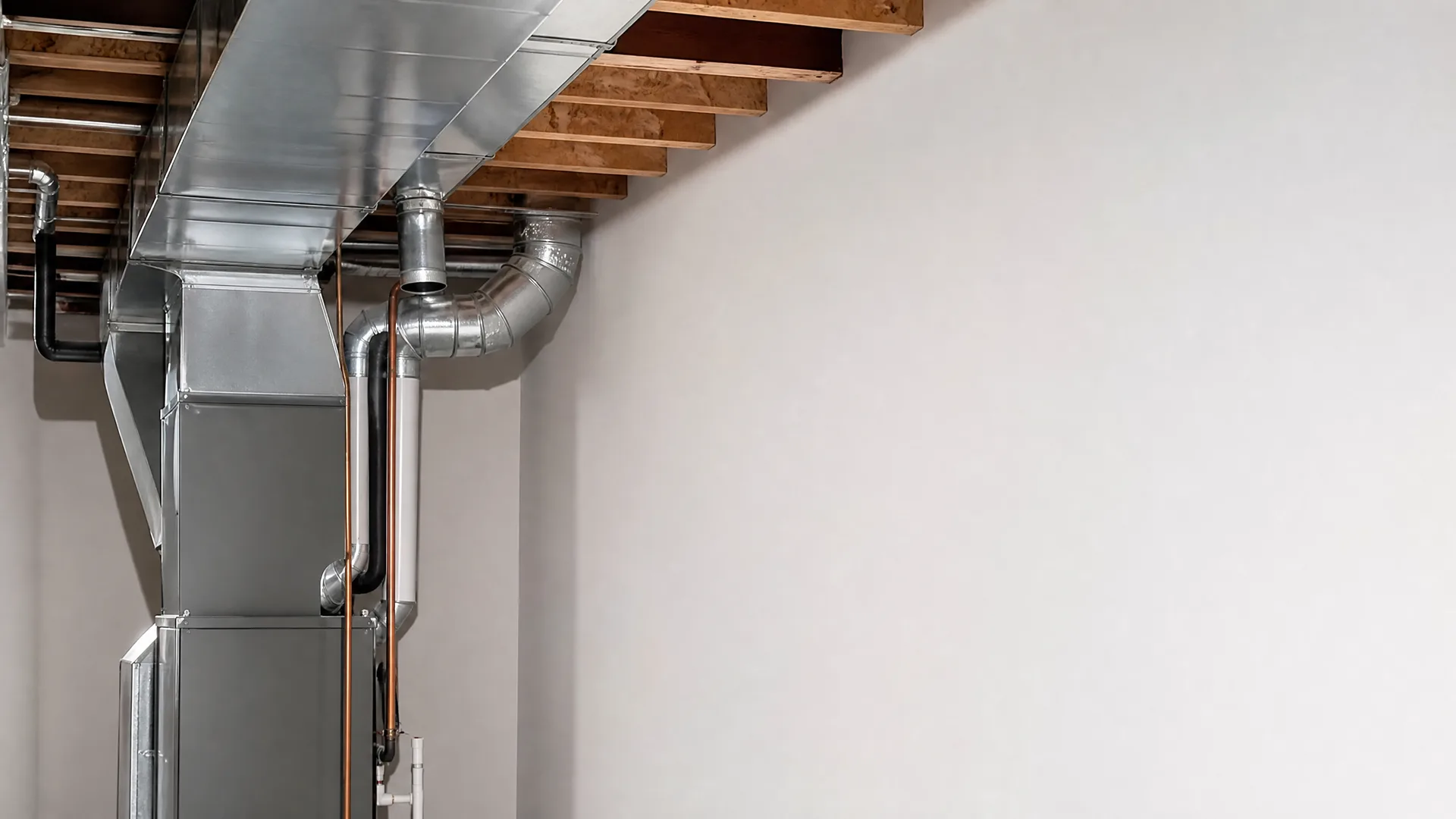
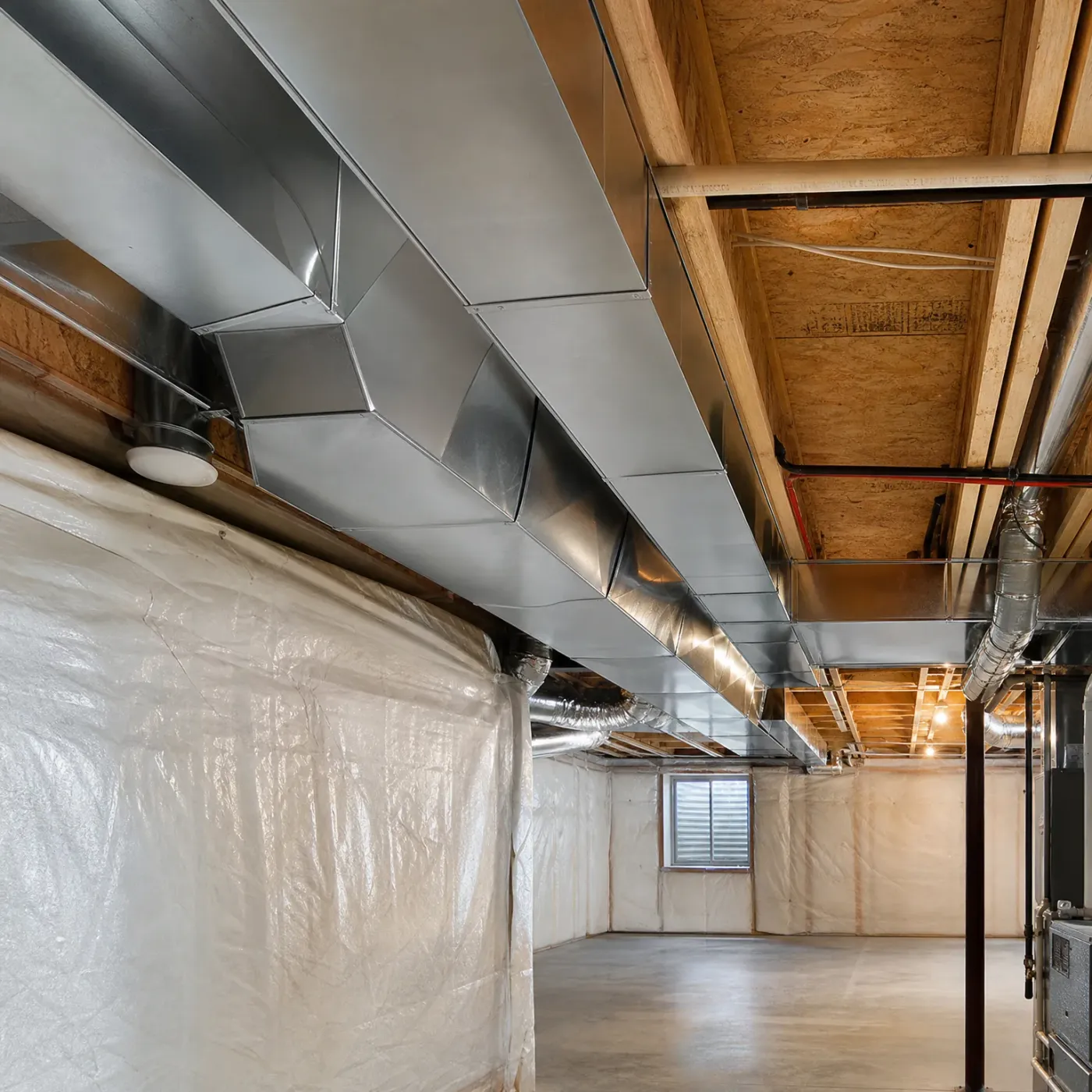
Clean duct run
This is what a duct system looks like doing its job. Metal trunk lines and flex runs carry air to every room without adding anything to it. A system like this just needs its filter changed on schedule, nothing more.

You keep an eye on small problems before they turn into bigger ones, and someone probably told you duct cleaning is either a waste of money or something every house needs. With gas heat running all winter and the AC working through sticky summers, you want to know if it actually does anything here, or if it's just a service companies sell because they can.
Duct cleaning doesn't improve your furnace or AC's efficiency, and it isn't something to do on a schedule. It's worth doing when there's a real reason: visible dust coming out of the vents, a rodent or pest problem in the ductwork, mold after a leak, or construction dust from a remodel. Nebraska's gas furnaces push air through the same ducts all winter, so whatever is sitting in them gets circulated into every room. If your ducts look clean and nobody in the house has new or worsening allergy symptoms, cleaning won't change your air quality or your bill. A contractor who looks inside the ducts first, before recommending the job, is giving you the right answer either way.
Dust and pet hair build up along duct walls over time, and in a gas furnace home, the blower pushes that air through the same runs every day from October through April. None of that buildup makes the air unsafe on its own in most homes. What it does is settle on coils and in the furnace cabinet, where it can affect airflow. A duct cleaning clears that out, but it does not fix a leaky duct or a bad seal, and a contractor can tell you if that's a separate issue.

Power is cheap here, so a few extra dollars from a clogged system rarely drives a homeowner to act. The bigger issue is the furnace itself. A thick layer of dust on a blower wheel or a coil makes the system work harder to move the same air, and that strain is what shortens a system's life. Summers get sticky enough that your AC already runs long hours, so starting that stretch with clean ducts means the coil isn't fighting dust on top of humidity.
This is what a duct system looks like doing its job. Metal trunk lines and flex runs carry air to every room without adding anything to it. A system like this just needs its filter changed on schedule, nothing more.

This is the buildup that makes people call around. Dark grime coats the metal and collects along every seam, thick enough to see from across the basement. A run like this is pushing that dust into the house every time the blower kicks on.




Your duct cleaning request goes to one local pro.
Sending the form costs nothing.
A duct cleaning crew works the system from both ends. They cut access points into the trunk line and run a brush or whip through it while a vacuum holds suction on the other end, so what gets knocked loose leaves the house instead of settling somewhere else. From there it's register by register. Every boot gets pulled, because the last few feet behind each register is where lint and pet hair actually collect, not out in the middle of the trunk line where people picture it. The return side gets more work than the supply side. That's the air coming back into the system from your living space, carrying whatever's on your floors and furniture, so it's usually dirtier than the air going out. Keeping the whole system under negative pressure while this happens matters. Without it, loosening debris in one run just pushes dust out the nearest open register into the room. Flex duct and metal trunk line don't get treated the same way either. Flex has a thin inner liner that tears if a brush made for metal trunk line gets run through it, so a crew that knows the difference switches tools or technique. The furnace cabinet and blower wheel usually get skipped. Dust sitting on a blower wheel can throw it out of balance, so pass on that unless there's a clear reason to go in there.


Your air moves clean, no musty smell, no room that stays dustier than the rest. A filter change on schedule is doing its job. Save the cleaning for when something actually changes.
Dust that returns within days, a smell when the furnace kicks on, a room that never stays clean. A local contractor who works on Nebraska duct systems every season can tell you what's behind it.


At 12.05 cents a kilowatt-hour, running the blower longer than it needs to doesn't hit your bill that hard. A clogged return or a closed-up duct still makes the furnace and AC work harder, so the fix is clearing the actual blockage, not worrying about what the fan costs to run.
EIA-861 2025 statewide residential average
Duct cleaning is worth it when there's a real reason behind it, not on a fixed schedule. Dust that keeps coming back, a musty smell when the furnace kicks on, a room that runs stuffier than the rest of the house, those are reasons. A system that's running clean with nothing but a filter change on schedule doesn't need it yet. If something does turn up, a local contractor who works on Nebraska duct systems all year, through the gas furnace months and the sticky summers, has seen what usually causes it and where to look first. You'll get matched with one contractor, not a handful calling at once, so the person who shows up is the one actually looking at your ducts, not reading a script. Either way, you know where you stand: wait and watch, or get it checked.
The pro who reaches out is licensed in Nebraska.
It costs nothing to send, and you don't have to hire anyone.
