Your request goes to a Sarpy County pro who takes ductwork jobs.
You dust the shelves on Saturday and by Wednesday there's a film on them again. That's not bad luck. In a duct system, every cubic foot of air in your house passes through the same ducts, over and over, dozens of times a day. If there's dust riding in that air, the system just keeps putting it back where you cleaned it.
Bellevue summers get sticky and winters here are hard, so your furnace and AC run most months of the year. More runtime means more air moving through the ducts, and more chances for dust sitting in there to get stirred loose and pushed into your rooms. A filter catches a lot of it, but not all of it, and not what's already settled in the duct runs themselves.
Where that dust comes from and how much is built up are things worth having a look at before anyone decides what to do about it. A loose duct joint, a return that's never been cleaned, a job the last owner put off, any of these can be behind it, and they don't look the same from house to house.
This is where a Sarpy County duct cleaning contractor earns their keep. Someone who works on homes around Bellevue can look at what you've actually got and tell you what's feeding the dust, not just guess from a list of usual suspects. Once you send the form, that part stops being something you have to figure out on your own. A contractor who handles this work will reach out to you directly, and the job of tracking someone down is off your plate from there.
You don't need to know the right words for what's wrong before you ask about it. Say what you're seeing, and let someone who does this for a living take it from there.
Why is my house so dusty all the time?
You run the vacuum, wipe down every surface, and a few days later the dust is back like you never touched it. It's not that your house is dirtier than anyone else's. With a forced air system, the same air keeps moving through the same ducts all day, every day, carrying whatever is loose in it past every room and back again. Something in that loop is feeding the dust, and it's worth knowing what.
Your ducts are recirculating dust faster than you can clean it up
A dirty filter is the most common cause. Once it's loaded up with debris, air starts pushing past it instead of through it, and whatever it was supposed to catch ends up back in your living room. Loose connections or small gaps in the ductwork do the same thing, pulling in dust from your attic or crawlspace and spreading it through every vent. Sarpy County summers run muggy, and a furnace or AC working harder in that weather moves more air across those gaps, more often. Winters are hard here too, so the system runs for months at a stretch with barely a break, giving dust a steady ride through the whole house instead of a few weeks of it.
Leaky ducts pull in attic dust
Duct runs through an attic or crawlspace have joints sealed with tape or mastic, and that seal doesn't last forever. Once it opens up, the return side pulls in attic insulation fibers and dust right along with the air headed back to your furnace. None of that gets filtered out until it's already circulating through your living room and bedrooms.
A clogged filter stops filtering
The filter is the only thing in the system actually pulling dust out of the air. Once it's loaded up, air starts finding the path around it instead of through it, and whatever it would have caught keeps going straight to your vents. A filter that looks gray and matted is already past the point of doing its job.
Why does dust keep coming back in Sarpy County homes?
Half the homes here were built by 1996
Half the homes in Sarpy County were built in 1996 or earlier, so half the ductwork out there has had decades to develop gaps at the joints.
Heat runs October through May
Furnaces here run about eight months a year, October through May, so dust gets pulled through the system and pushed back into your rooms most of the year.
Cooling runs June through September
Central air runs about four months a year, June through September, and the return side keeps drawing dust through the same ducts all summer.
ACS 2020-2024 · NOAA nClimDiv 1991-2020
Get matched with a duct system pro in Sarpy County
After this form, you can stop searching for a duct system pro.
Sending the form costs nothing.
Running the furnace fan nonstop
Some homeowners set the thermostat fan to "on" instead of "auto" so air keeps circulating and rooms stay more even in temperature. It does that, but it also means air is moving through the ducts and across the filter around the clock instead of only when the furnace is actually heating. If there's a gap in a duct joint or a loose return, that constant airflow is pulling in more dust over the course of a day than it would on auto. The filter loads up faster too, and a filter that's packed with dust starts pushing some of that dust past itself instead of catching it. Fan on auto means dust-pulling only happens when the system is heating. Fan set to on trades even temperatures for more hours of pulling dust through whatever gaps exist in the ducts.
A filter that fits but doesn't seal
Not every dusty house has leaky ducts. Sometimes the filter slot itself is the problem. Filter frames flex a little with age, and a filter that's slightly undersized for its slot leaves a gap at the edges. Air takes the path of least resistance, so instead of passing through the filter media, a portion of it slides around the edge unfiltered. You can't always see this by looking since the filter still sits in the slot and looks fine. The fix is checking that the filter's frame actually meets the slot on all four sides, not just that it's the right advertised size, since sizes printed on the box can run slightly different between brands.
Power here costs 12.85 cents per kilowatt-hour
At 12.85 cents per kilowatt-hour, running the blower more than it needs to doesn't hit your bill hard. If dusty ducts have you leaving the fan on "on" instead of "auto" to keep air moving, that habit is cheap to keep up here, but it won't fix dust that's getting pulled in through a leak.
EIA-861 2025
Every speck in that film on your shelves rode through your ducts to get there. If the ducts are feeding it dust, wiping the shelves only buys you a few days.
Cleaning the ducts gets at where the dust is coming from instead of where it lands. That's the difference between doing this chore every week and doing it a lot less.
Before you get your ductwork cleaningAfter you get your ductwork cleaning
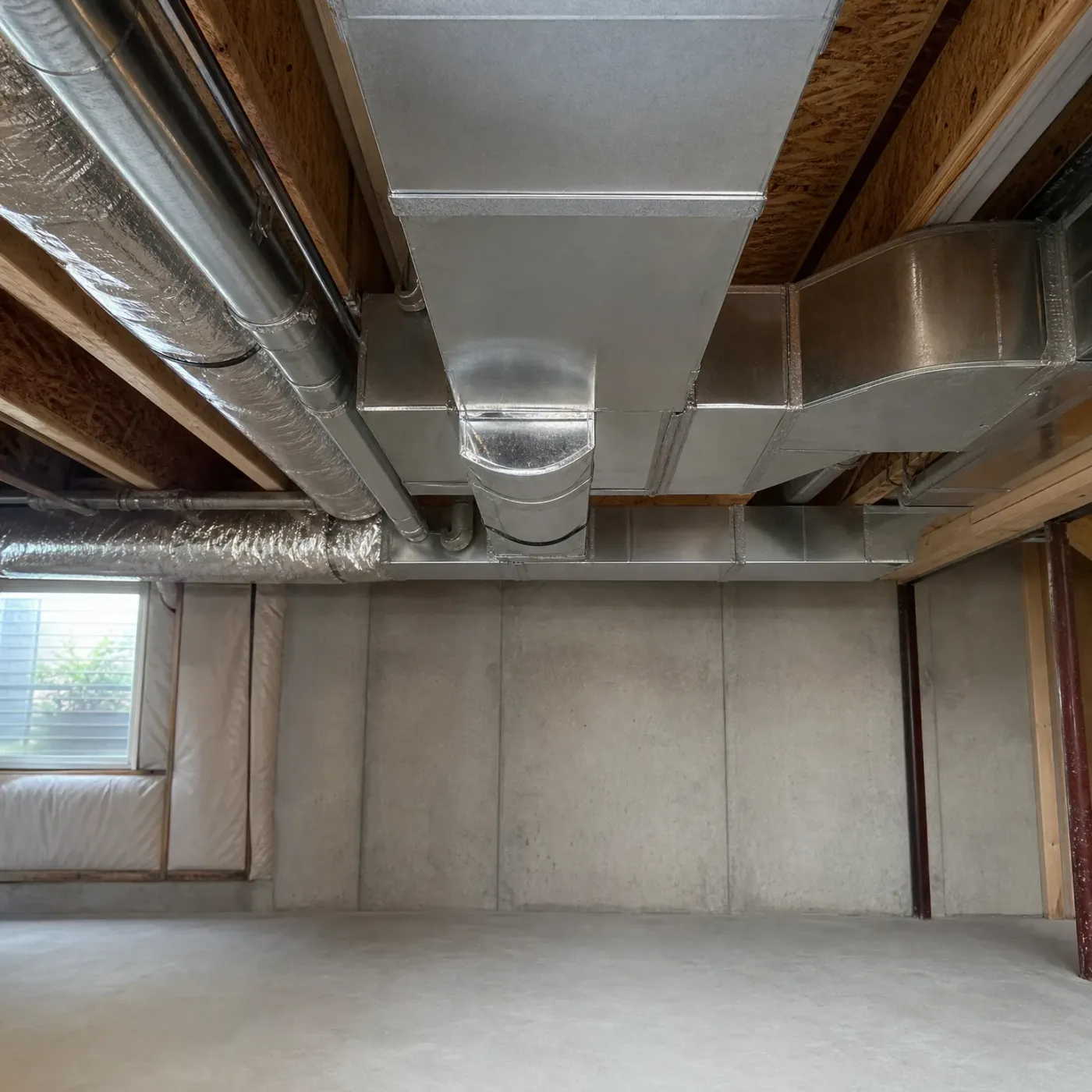
Ducts sealed and doing their job
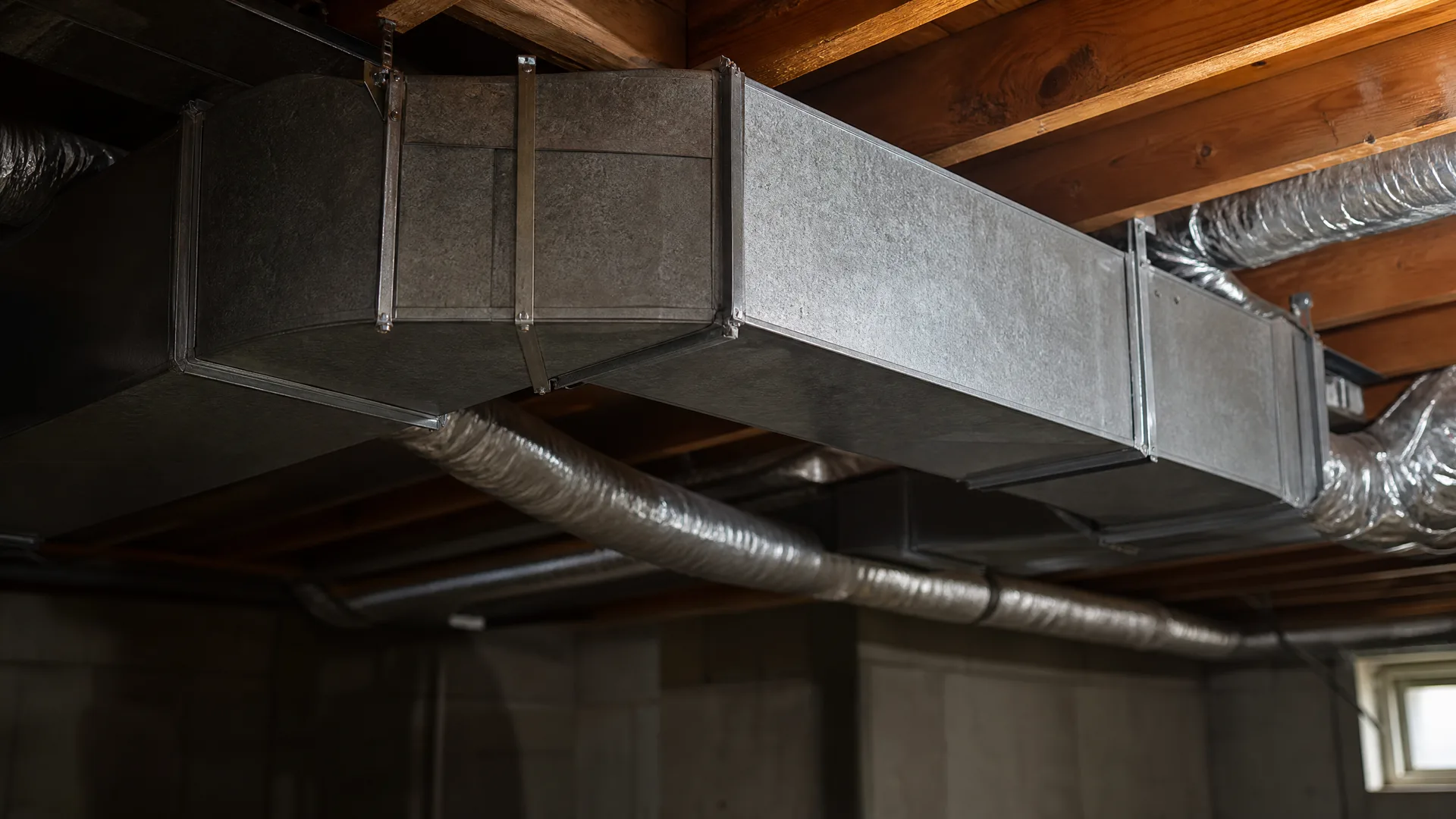
This is what a duct run looks like when the joints are still tight. Air moves through the sheet metal and galvanized pipe to each room without picking up anything from the basement or the insulation around that egress window.
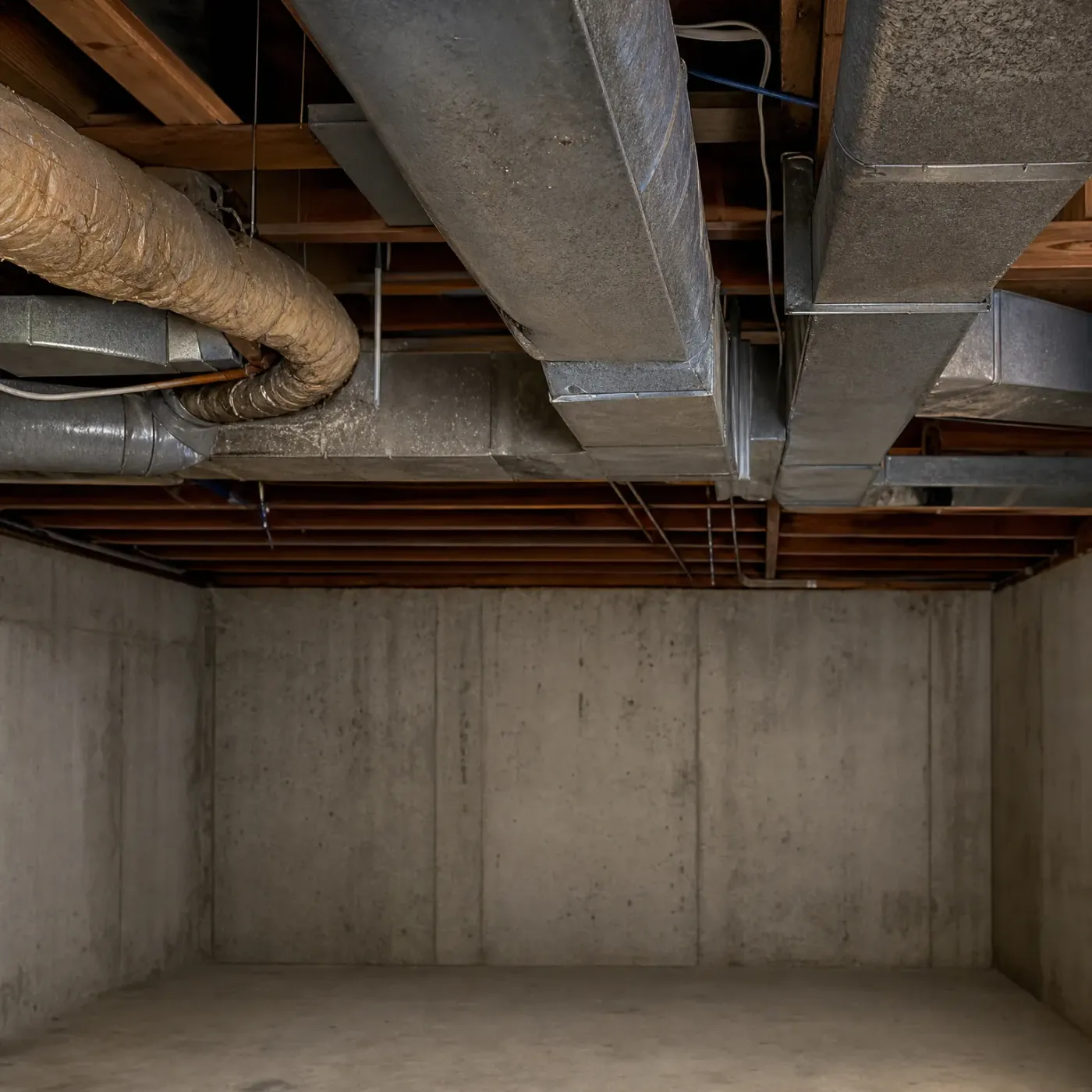
Ducts with gaps feeding dust back in
Here the metal trunk lines and flex duct run the same path, but a seam open at a joint pulls in whatever is sitting in the basement air. That gets carried straight out through the vents and back onto your furniture.
Clean the ducts or leave them be
Clean the ducts
A contractor runs a brush and a vacuum through every supply and return run, pulling out what's built up on the sheet metal walls.
It addresses dust that's already sitting in the ductwork, not just what's circulating right now.
Registers and the furnace cabinet get cleared out too, since dust collects there as much as in the runs themselves.
If a leaky joint is pulling in attic or crawlspace dust, a cleaning doesn't close that gap, so it can return.
Most homeowners notice less film on shelves within the first week or two after the vents are cleared.
Leave it alone
The dust already loaded into the ducts keeps riding the airflow every time the blower runs.
Nothing changes at the joints or the filter, so whatever is getting in keeps getting in.
Wiping shelves and vacuuming floors treats where the dust lands, not where it's coming from.
Furnaces here run eight months a year, so that same dust gets pushed through the house on that same schedule.
Running the fan on "on" instead of "auto" to even things out just moves more of that dust around faster.
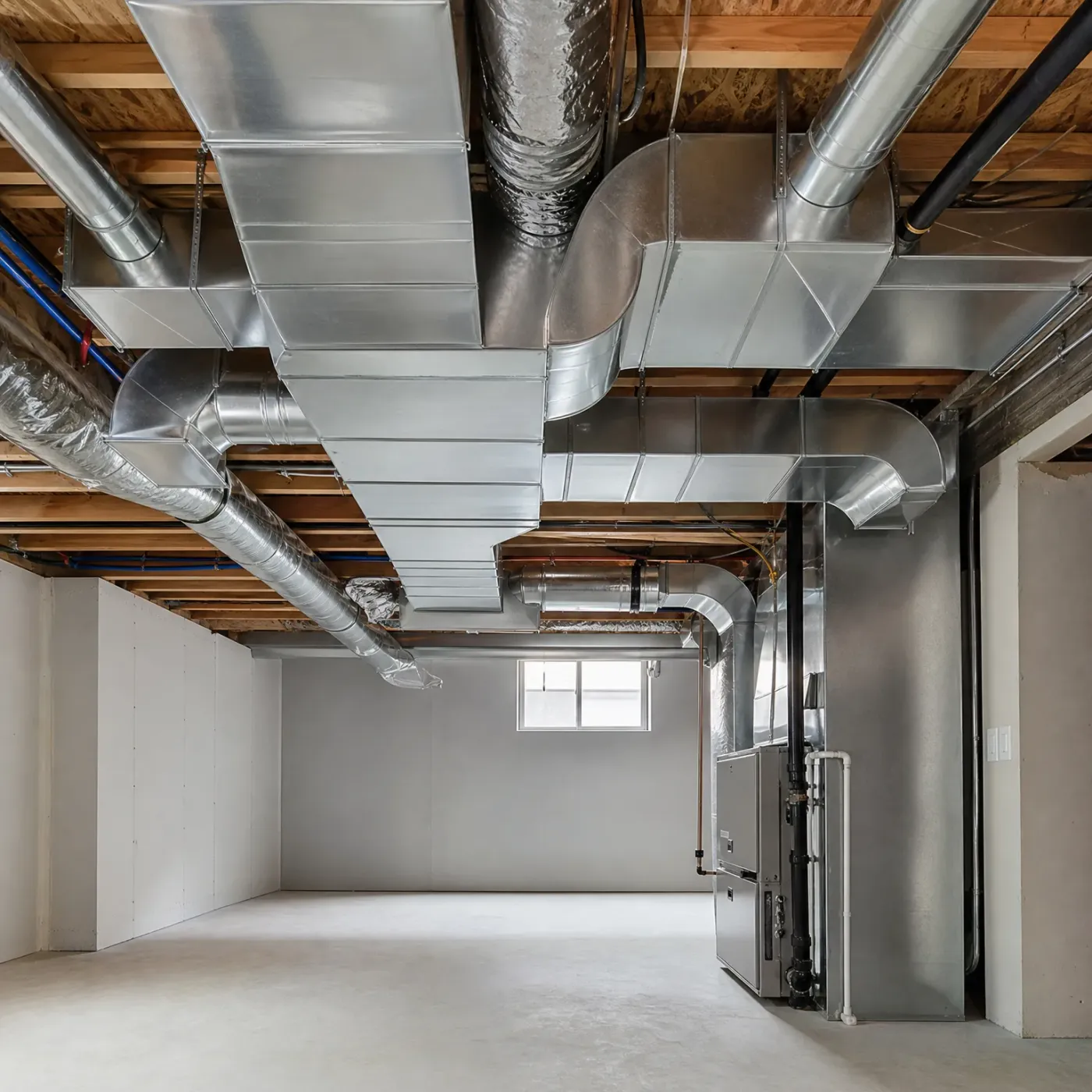
Ducts sealed and tight
This basement shows what you want to see: galvanized runs and flex duct feeding the furnace with clean joints throughout. Air gets where it's going without picking up anything along the way. The PEX lines and finished walls aren't the point, the sealed metal above them is.
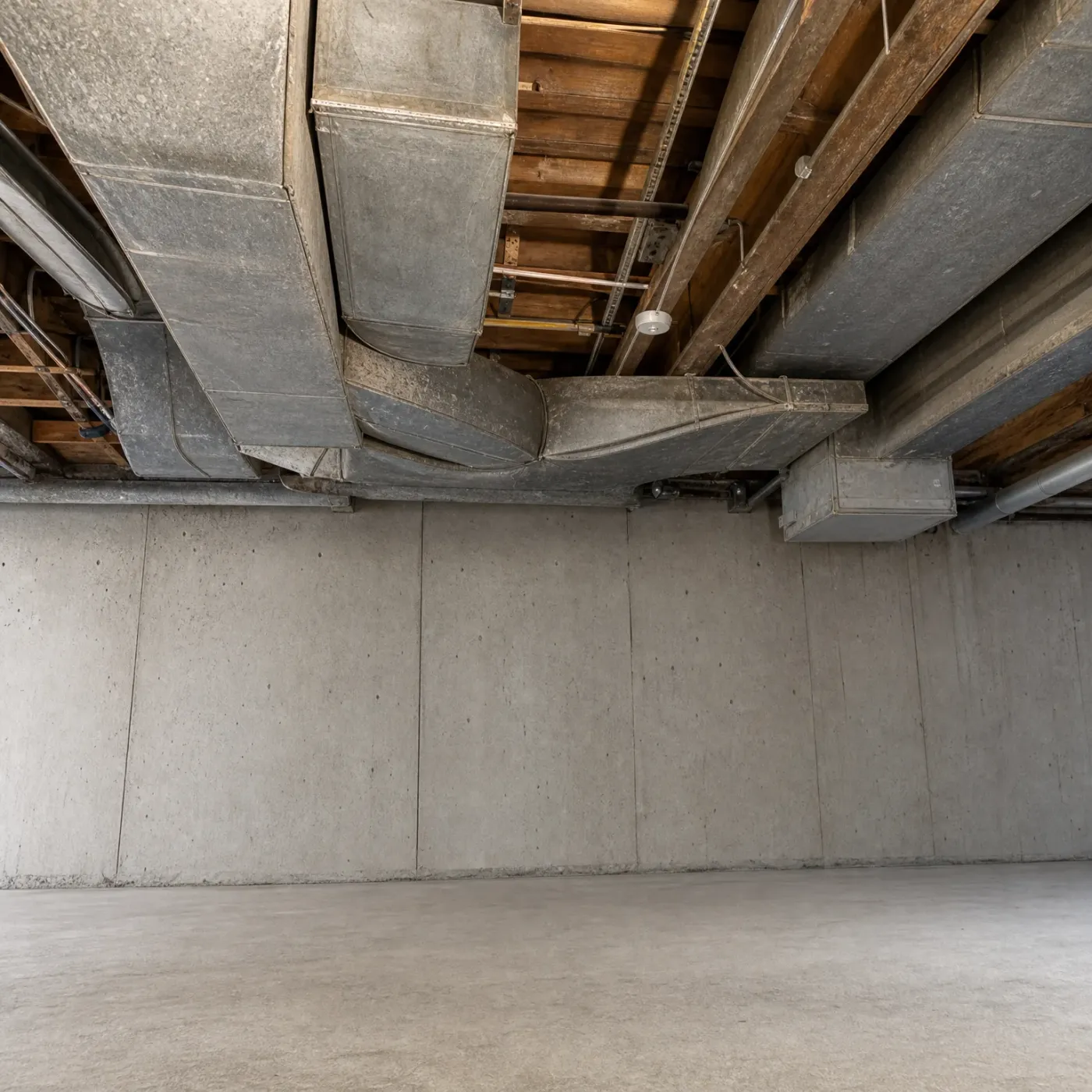
Ducts open to the joists
Here the sheet metal runs straight across exposed joists with no finished ceiling to hide what's happening at the seams. Any gap along that run sits open to the space around it, pulling in whatever settles there. That's dust riding into every room the duct feeds.
Where the dust is coming from
Dust that keeps coming back a few days after cleaning usually means the ducts are feeding it, not just the air in the room.
Leaky joints, a loaded filter, or a fan set to run nonstop all push more dust through the system than it should carry.
A contractor can pull up a register and check the supply and return runs to see how much is actually built up in there.
Cleaning the ductwork addresses what's already sitting inside the runs, which wiping shelves and changing filters never reaches.
Sealing gaps where the ducts pass through the attic or basement stops attic insulation and crawlspace dust from getting pulled in.
Once a contractor looks at your system, you'll know whether the dust is coming from the ducts or something else in the house.
The film on your shelves isn't a cleaning problem. It's an air problem. Every bit of it passed through your ducts first, and if the ducts are loaded with buildup, or pulling in dust through a gap at a joint, or pushing more air than they should because the fan runs nonstop, wiping the shelves just clears what already landed. More rides in behind it. A contractor can pull a register and look straight into the supply and return runs to see what's actually built up on the sheet metal, and whether a leak in the attic or basement is feeding it attic insulation or crawlspace dust along the way. That's the part a filter change or a weekend of cleaning never reaches, because it's not sitting on a surface. It's sitting inside the duct run itself, waiting for the blower to kick it loose again. Once that gets cleaned out and any open joints get sealed, the air moving through your house stops carrying what it used to. You stop fighting the same dust week after week. None of that takes guesswork on your end. A contractor who looks at your system can tell you plainly whether the ducts are the source or whether something else in the house is adding to it, and once that's sorted out, keeping the place clean goes back to being a normal chore instead of one you can't win. Submit the form and the search for who does that work is off your plate.