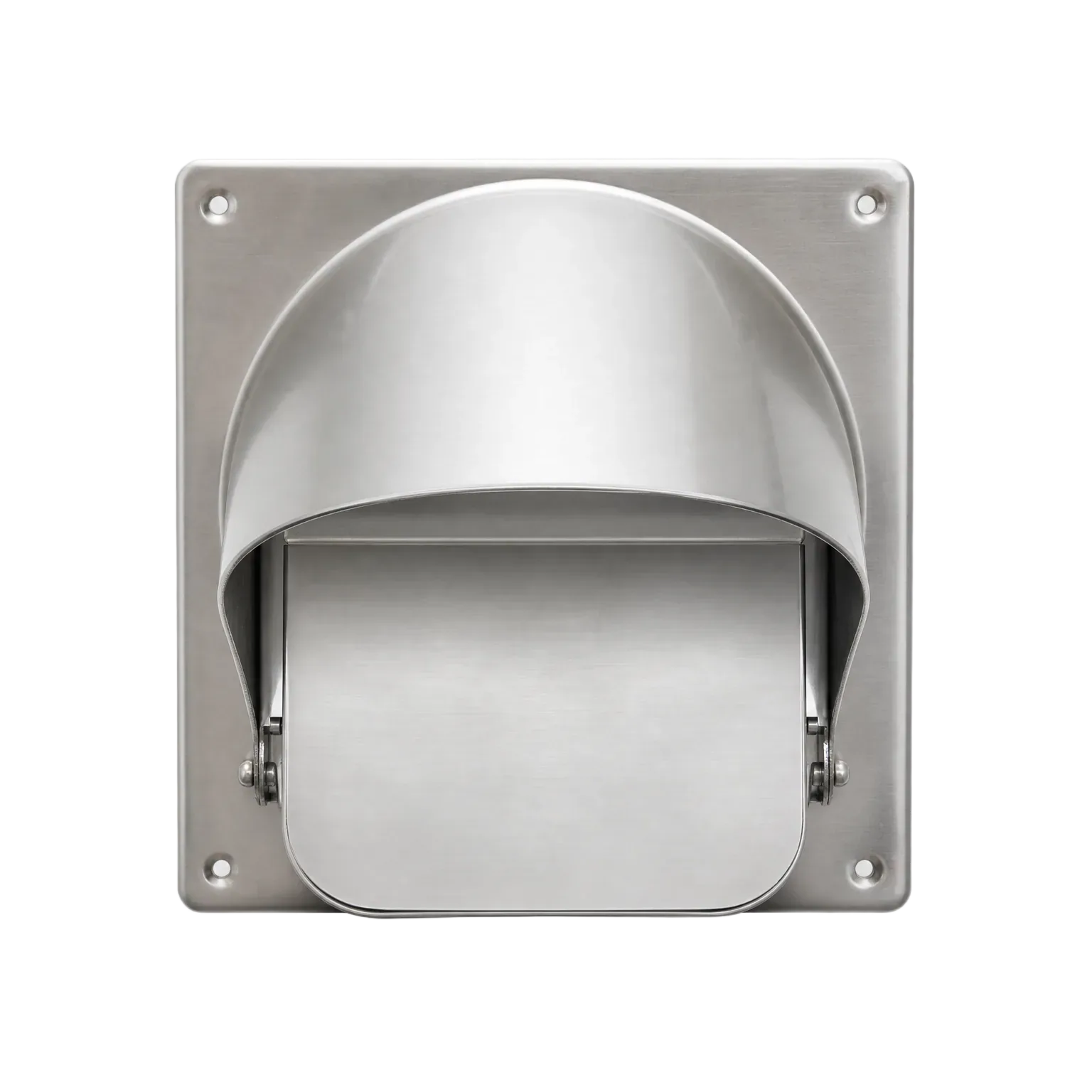
Once a year is the rule for a dryer vent in Lincoln, more often if you run loads almost every day or your vent run is long. Lint builds up along the inside of the duct and at the hood outside, and once it narrows that path, the dryer has to push air harder to get the same load dry. You'll notice it as clothes that come out hot but still damp, or a dryer that runs long. A clogged vent also makes the dryer's own heat build up inside the cabinet, which is how vent fires start. If your vent run is short and straight, once a year clears it. If it's long, has turns, or runs up through a wall or roof, lint catches at every bend, and it can need attention twice a year. Check the outside hood too. If the flap doesn't open freely when the dryer runs, that's lint talking.


How the Vent Actually Clogs
- The dryer pushes hot, damp air through the duct to a hood on the outside wall, and that hood has a flap that should swing open freely.
- Lint doesn't just collect in the duct itself; it builds up on the flap and screen at the outside hood, where it's easy to miss.
- A clogged vent makes the dryer run longer to dry the same load, since the heat and moisture have nowhere to go.
- Flexible foil or plastic duct traps lint at every bend, which is why a long or winding run needs cleaning more than a short straight one.
- A dryer that takes two cycles to finish a load that used to take one is often telling you the vent is restricted.
- Birds and rodents nest in outside vent hoods over the winter, which blocks the duct from the outside in even if the inside stays clear.
Warm, damp air leaves the dryer and travels through the duct to a hood mounted on the outside wall. That hood has a flap, and the flap only works if it can still swing. Lint doesn't stay put in one spot. Some of it rides all the way to the end and collects on the flap and the screen behind it, right where you can't see it from inside the house. If your duct run is long, or it bends to get around a wall or a corner, lint catches at every turn, so a winding run clogs faster than a short straight shot to the wall. Flexible foil or plastic duct makes this worse, since the ridges inside give lint more to grab onto. You'll usually notice the problem before you ever look at the duct itself. A load that used to dry in one cycle starts taking two, because the heat and moisture the dryer is pushing out have nowhere to go and back up into the drum. The outside hood causes trouble on its own, separate from anything happening in the duct. Over the winter, birds and small rodents look for a warm, sheltered place to nest, and a vent hood qualifies. A nest in the hood blocks airflow from the outside in, even on a day when the duct itself is clear from end to end.



It's almost nine on a Tuesday and you're still in the laundry room. Second load this week that's come out this way: towels damp at the fold, warm on top but not dry. You open the dryer door and the heat rolls out heavier than it should, like it's been sitting in there with nowhere to go. You pile the towels on top of the machine, figuring you'll run them again, maybe on a longer cycle this time. Behind you the vent hose runs to the wall, out toward the hood, and you haven't thought about that line since the house was built.
One request and it's handed off

One form replaces the calls you'd make to find a dryer vent pro.
You're not committing to anything by asking.
A clogged vent makes the dryer run longer to finish a load, and that extra runtime is the clearest sign something's wrong before lint ever becomes a fire risk.
Gas is cheap in Lincoln, but a dryer fighting a blocked vent still burns more of it than one that isn't, load after load, all year.
2.34 people per household on average
Most houses in Lancaster County hold a bit over two people, which usually means a few loads of laundry a week, not one a day. That's still enough for lint to build up in the duct over a year. Check the hood flap when the dryer's running, and plan on clearing it out at least once a year.
ACS 2020-2024

A short duct run
Some houses in Lincoln have the dryer sitting near an outside wall, so the vent run is short, maybe a few feet to the hood. Hot air clears out fast and has less distance to drop lint along the way. A short run still needs that once-a-year cleaning, but it's less likely to choke up between cleanings, and a load that's taking too long to dry shows up as the odd exception rather than the pattern.

A long run through the house
Other houses have the laundry room tucked in the middle, so the vent has to travel further, sometimes with a turn or two, before it reaches outside. Every foot and every bend is a place lint can settle. That's the setup where cleaning twice a year makes sense instead of once, and where a dryer that's suddenly running hot or taking two cycles to dry a load is worth checking sooner rather than waiting.
Why does laundry take two cycles to dry lately?
A dryer that used to finish in one cycle and now needs a second one is telling you the vent's blocked somewhere between the drum and the hood. Check the outside hood while the dryer runs. If the flap barely lifts, or you don't feel much air coming out, lint has narrowed that path. You might also notice the top of the dryer getting hot to the touch, or a burnt smell that wasn't there before. The lint trap can be clean and this still happens, because the real buildup is further down the line. Left alone, the dryer keeps working harder to push air through a space that keeps getting smaller, and that's the condition that leads to a dryer fire.


How many loads of laundry is your house really running?
2.34 people per household on average
Lancaster County households average 2.34 people, so most dryers here are running several loads a week, not one a day.
Half the homes here were built by 1983
Half the homes in the county were built in 1983 or earlier, old enough that the vent run may still be the original metal duct.
Power here costs 11.20 cents per kilowatt-hour
Electricity here runs 11.20 cents a kilowatt-hour, cheap enough that most people never notice a struggling dryer in the power bill.
ACS 2020-2024 · EIA-861 2025

Once a year, on the calendar
Clean the dryer vent once a year. If the laundry room gets daily use, or the hood sits far from the dryer, check it again partway through the year. That's the whole answer, and everything above just shows you why it holds true in Lincoln.
Finding someone to do it is its own chore. You'd be calling around, explaining the same thing about your vent run and your hood to each one, then sitting on quotes trying to tell them apart. Send the form instead and that work is off your plate. You'll know where you stand without doing the sorting yourself.





Dryer Vent Cleaning
Done looking for a dryer vent pro
Skip calling around for someone who cleans dryer vents.