120 degrees F
That's roughly the temperature of air leaving a working dryer vent. A nest packed with twigs and lint sitting in that heat is dry fuel against the siding of your house.
You went outside to check on the dryer and heard chirping, or you noticed the vent flap on the outside of the house won't close all the way anymore. Maybe lint is piling up around the hood, or the dryer is taking longer than it used to. Birds build nests fast, and a vent hood is an easy target for them, especially in spring when they're looking for a sheltered spot to raise a brood.
A dryer vent hood is dark, dry, and sheltered from wind and rain, and warm air blows out of it every time you run a load. To a bird house hunting in spring, that looks like a ready-made cavity. Sparrows and starlings are the usual culprits, and they will pack a vent full of twigs and grass in a day or two if the flap doesn't seal tight or the screen is missing. Once a nest is in there, the dryer has to push air through a blocked vent, which means longer dry times and more lint sitting in a duct that can't clear itself. In Lancaster County, spring nesting season lines up with the stretch when a lot of households are running the dryer hard after a wet winter.

You run a second load because the first came out still damp. Outside it's gone dark early, the kind of evening where you just want the towels dry and the day done. The dryer's been going almost an hour longer than it should. You open the lid, feel the towels, still heavy and cool at the center. On top of the machine sits the pile from before, pushed aside, waiting. You crack the back door to check the vent hood and hear it before you see it, a thin chirping from inside the wall. The flap hangs open an inch, held by something that isn't lint.
2.34 people per household on average
With 2.34 people in the average Lancaster County household, the dryer likely runs several loads a week, so a nest blocking the vent shows up fast as longer dry times.
Half the homes here were built by 1983
Half the homes in the county went up by 1983 or earlier, and a vent run that old has had decades for birds to find a gap in the hood or ductwork.
Power here costs 11.20 cents per kilowatt-hour
Electricity here runs 11.20 cents per kilowatt-hour, cheap enough that a dryer working harder to push air past a blocked vent won't spike the bill the way it might elsewhere.
ACS 2020-2024 · EIA-861 2025
Some homeowners pull the hood cover off, reach in with a gloved hand, and clear out what they can from the outside. If the nest is right at the vent opening and the duct run is short, this sometimes works. You'll want to do it when you know the birds have moved on for the season, not while eggs or chicks are still in there. Afterward you still have to check the full length of the duct, because loose nesting material further back won't show from the hood, and a dryer that vents through a long run or turns a corner inside the wall usually hides more than you can reach.
A contractor who cleans dryer vents runs a brush or a cable the length of the duct, not just the first foot behind the hood, and checks the hood flap seats and closes once the material is out. That matters because a flap that won't shut is itself an invitation for the next bird looking for a spot. Instead of searching for someone local, calling a few numbers, and describing the chirping and the slow drying all over again to each one, you answer it once and get matched with a contractor who works in Lincoln and the area around it, and they follow up with you.




That's roughly the temperature of air leaving a working dryer vent. A nest packed with twigs and lint sitting in that heat is dry fuel against the siding of your house.
If lint is building up around the outside hood instead of blowing clear, air isn't moving through the duct the way it should. That's worth having someone look at.
Towels and sheets come out warm but not dry, so you're running the cycle twice. The dryer itself feels hotter to the touch than it used to, and the room it sits in warms up more than it should. Check the outside hood. If the flap sits open even with the dryer off, or you can see twigs or grass poking out, that's the nest. Lint has nowhere to go once the vent is blocked, so it backs up into the duct and into the dryer's own housing. That trapped lint is what a dryer fire feeds on, and it's also what's making the machine run hot and long on every load.




Explain the job once and skip repeating it on every call.
You're not committing to anything by asking.

Birds build nests in the spring, usually March through May, when they're looking for a sheltered spot to raise a brood. A dryer vent hood is warm, dry, and off the ground, which makes it attractive compared to a tree branch exposed to wind and rain. Once a nest is built, it tends to stay even after the birds are gone, because the twigs pack into the duct and don't fall out on their own. By summer that nest is just dead weight blocking your vent.
Once the nest is packed in, the blockage doesn't go away with the seasons. It sits there through the muggy summer months and into the hard Lancaster County winter, catching more lint every time you run a load. A vent that was slow to dry towels in May can be a fire risk by December, especially once the dryer is working harder in cold weather to push air through a blocked line. The nest itself doesn't change. What changes is how much it's costing you by the time someone deals with it.
At 2.34 people, most houses here run a dryer almost daily, not once in a while. A blocked vent doesn't give the nest time to sit unnoticed. You'll likely catch the long dry times or the chirping within a week or two of it starting.
ACS 2020-2024
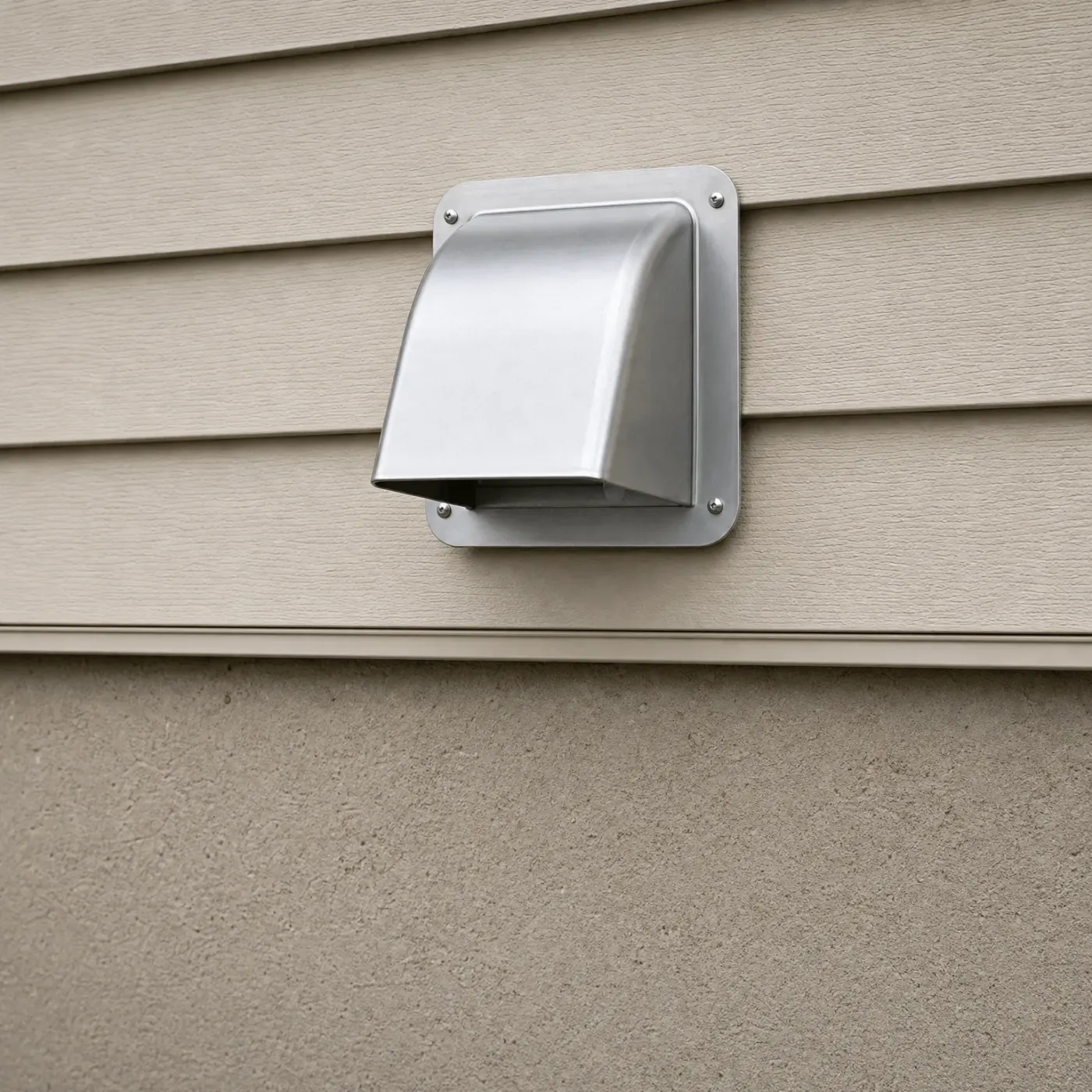
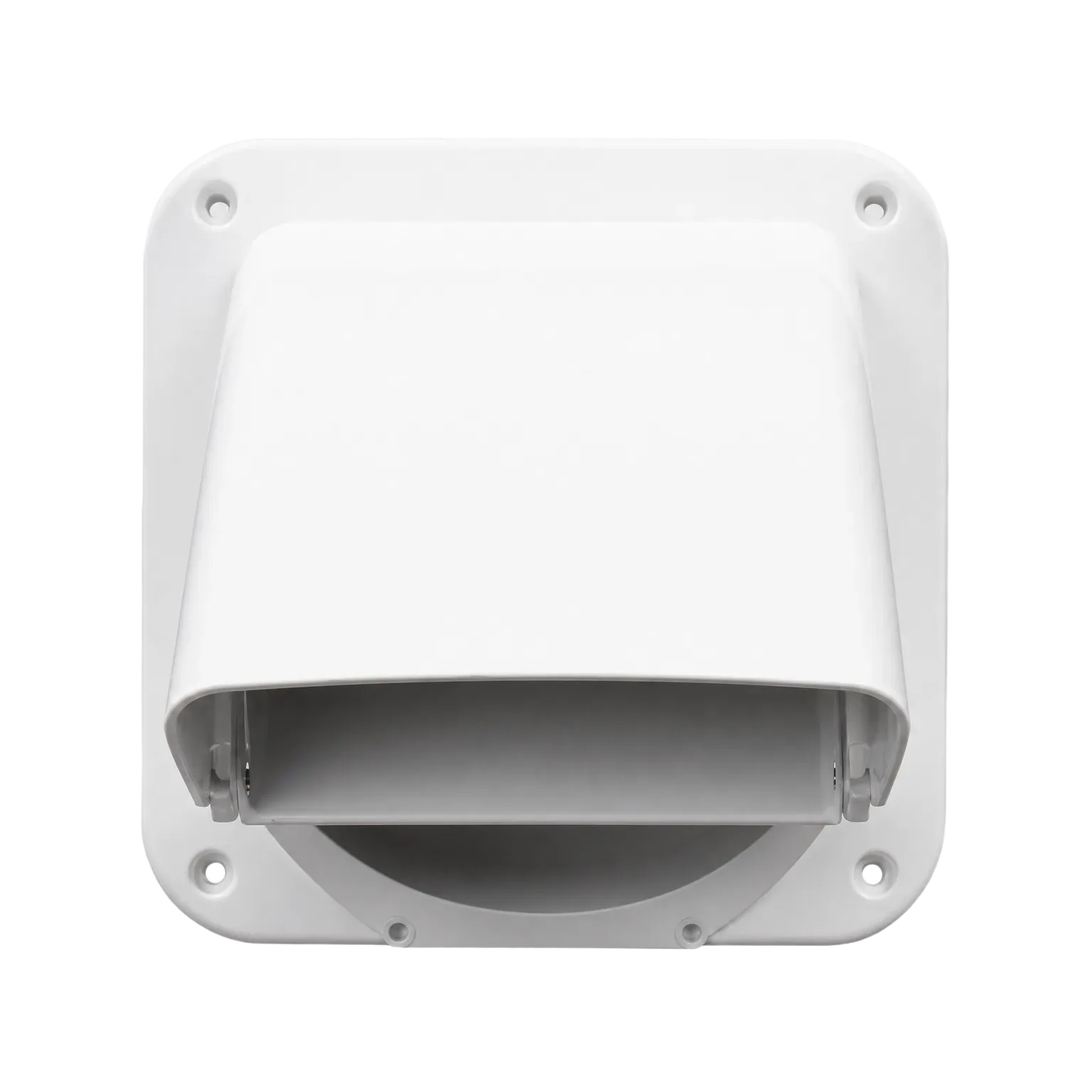
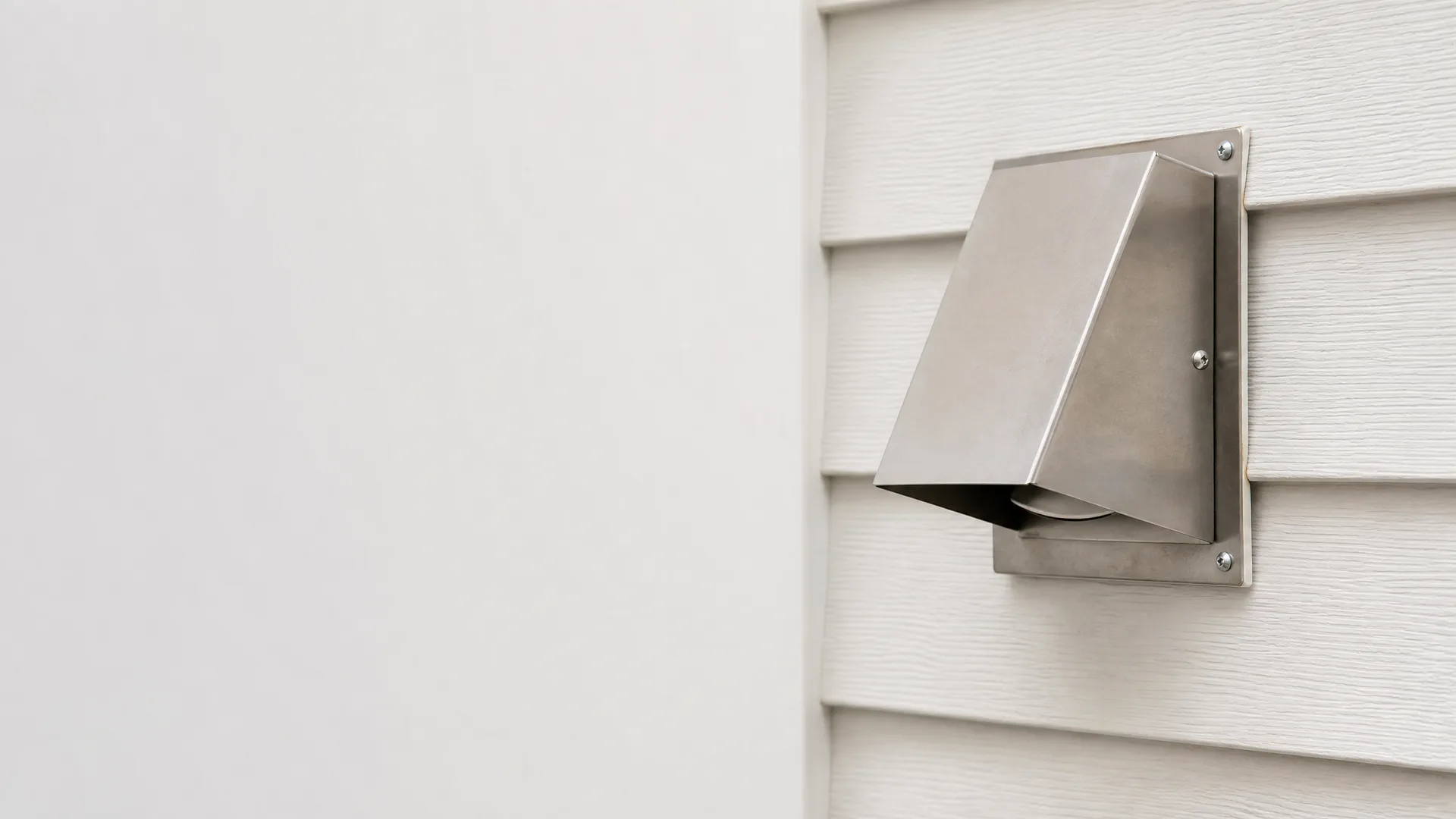
The hood sits flush against the siding, four screws holding the backplate tight to the wall. The flap hangs loose and ready to swing open the moment the dryer kicks on. No lint rings the edges, no debris in sight. Air passes straight through and out.
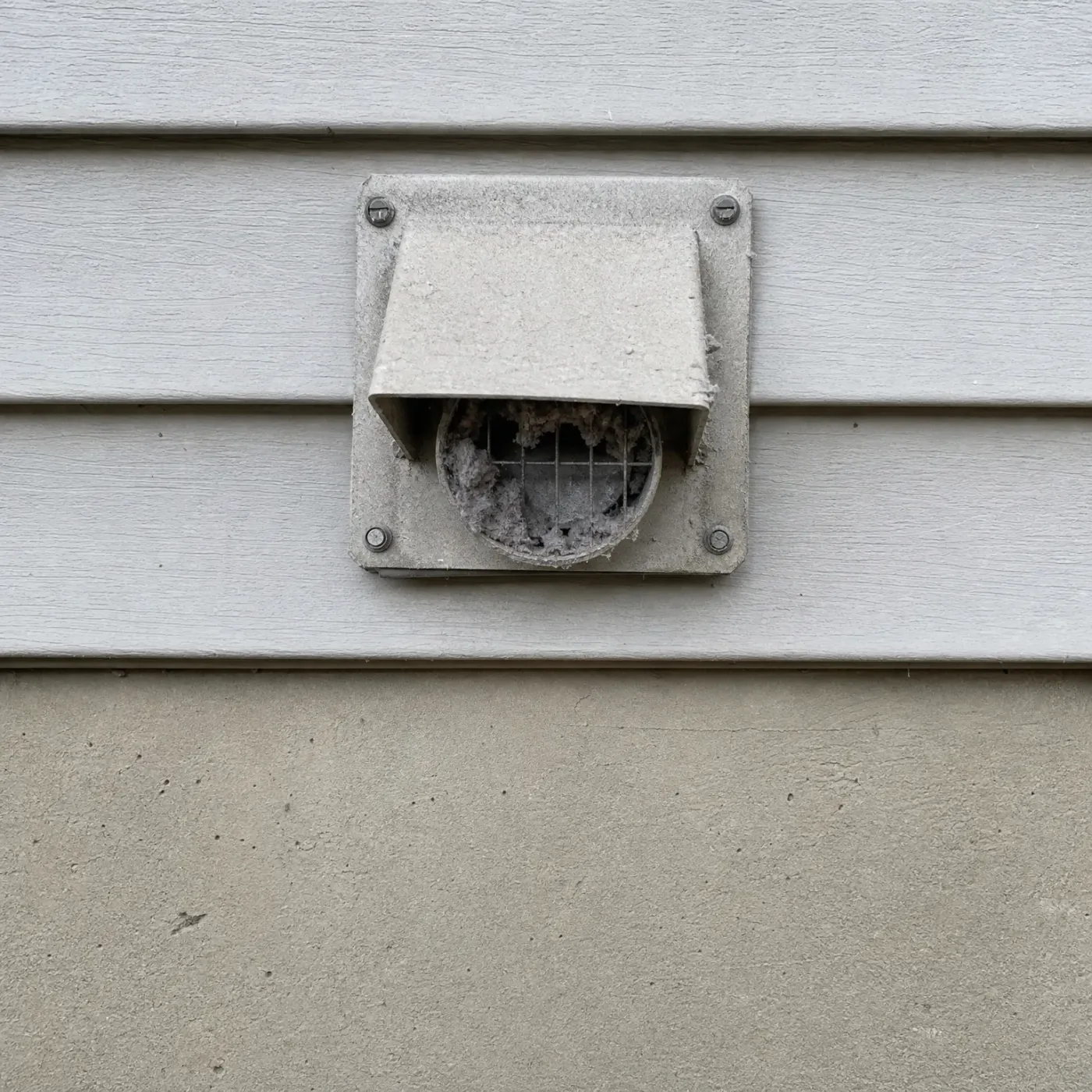
The screen behind the opening is packed solid with lint, matted thick enough to block the mesh entirely. Nothing about this looks like it's venting anything. A nest built on top of this kind of buildup turns a slow problem into one that can't move air at all.

A dryer vent run isn't just the hood on the outside wall. It's a straight or elbowed metal duct running from the back of the dryer through the wall to that hood, usually four inches wide. Birds don't build in the duct itself most of the time. They build right at the opening, where the flap and the louvers give them a ledge and a roof in one. Twigs go in first, packed against the inside of the hood, then grass and softer material on top. Once that's in place, the airflow that used to push the flap open each cycle has to fight through a wall of nesting material instead.
That's a different job than pulling lint out of a trap. Lint is loose and sits in the line of the airflow. A nest is built to stay put against wind and weather, which is exactly what makes it hard to clear with a shop vac from the inside or a quick grab from the outside. Knowing that difference is part of why a vent cleaning service is a separate call than a dryer repair, and why having someone come look who knows what they're dealing with means not guessing twice.

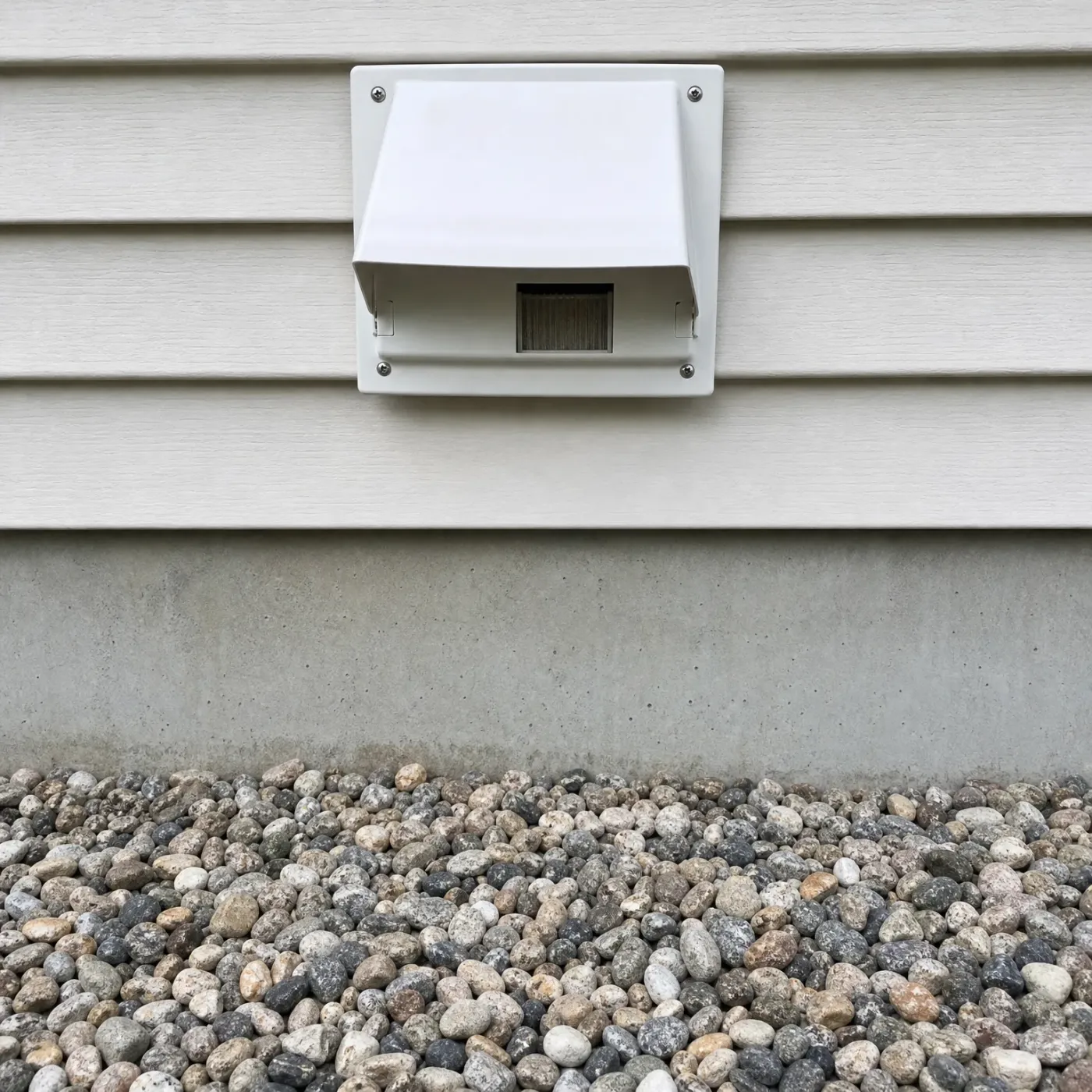
This is what the hood should look like year-round. The flap hangs loose against the siding, the louvers stay open, and the rock bed below stays free of lint. Air from the dryer pushes straight out with nothing in the way.
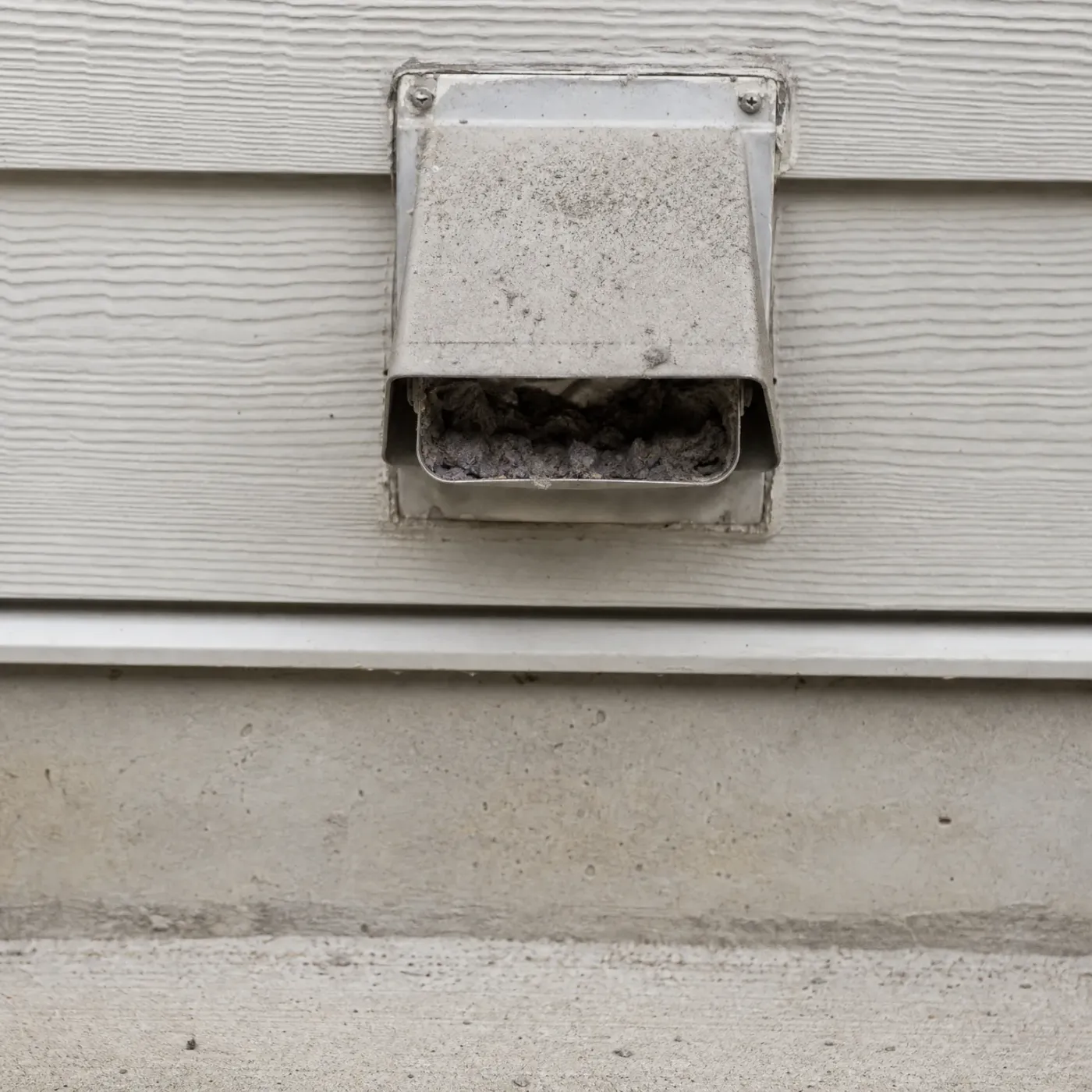
Here the flap can't close. Lint has built up thick around the opening and dulled the hood and the siding next to it. Once it looks like this, a nest has even less room to block before the dryer backs up fully.
A nest in the vent means the dryer isn't venting right, and that doesn't fix itself. The hood flap stuck open, the chirping, the longer dry times, all of it points to the same blockage, whether it's sitting right at the hood or further back in the duct. Clearing it means getting into the duct run itself, not just wiping off the hood, and that's not a job every homeowner wants to take on with a shop vac and a ladder. Instead of spending an evening searching for someone who works on dryer vents in Lincoln, calling a few numbers, and explaining the chirping and the hot dryer over and over to whoever picks up, you can get matched with a contractor who handles this and let them reach out to you. No more comparing quotes you can't tell apart or waiting on callbacks that don't come. The vent either moves air or it doesn't, and right now yours isn't. That's worth sorting before the nest, or what's left of it, turns into something worse against the side of your house.
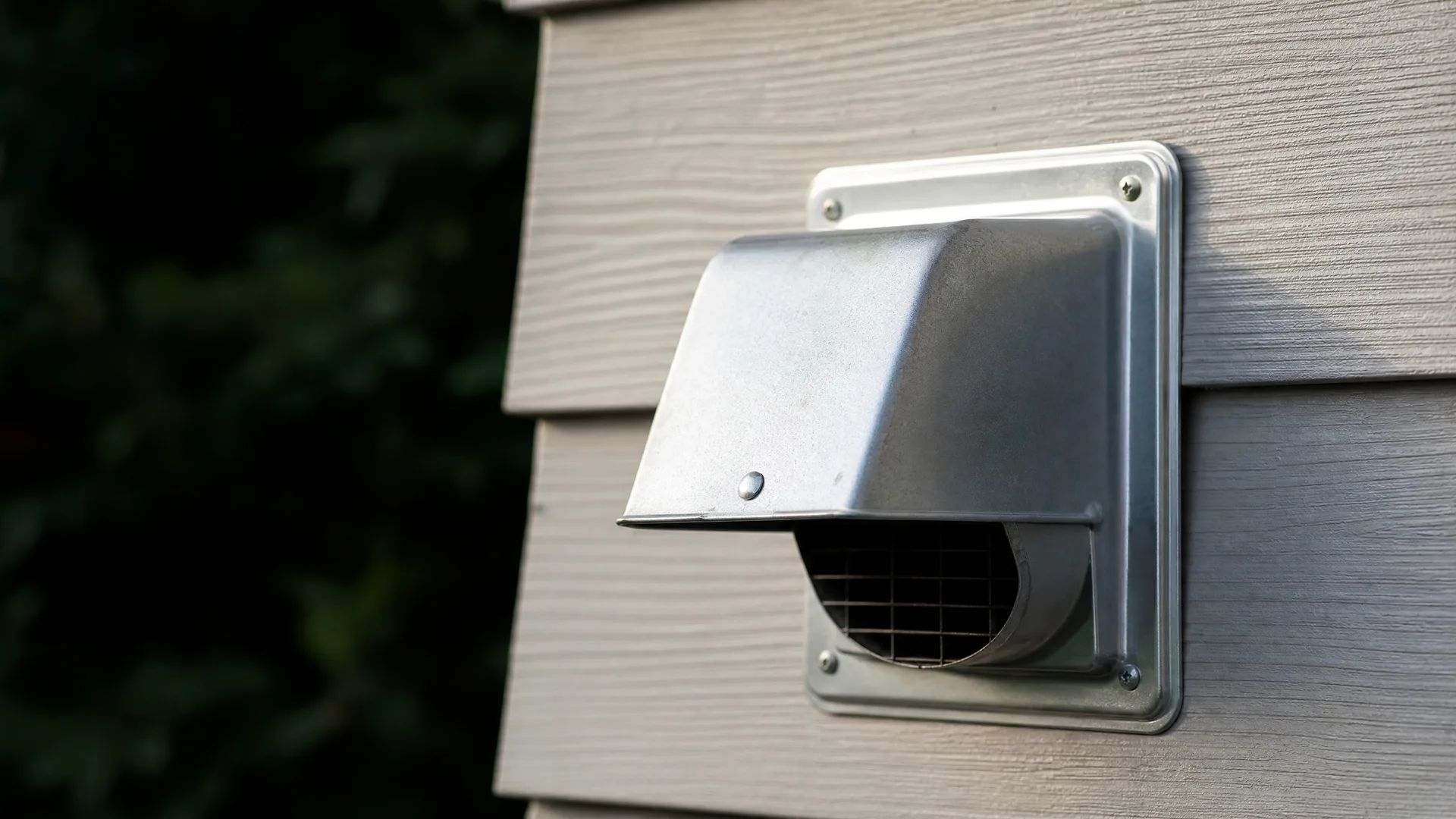
A pro who works on dryer vents
