

Once a year
A straight run to the outside wall with no more than one bend clears easily. One cleaning a year keeps it from packing tight between now and the next.
Skip searching for someone who cleans dryer vents in Buffalo County.
Start one formClean your dryer vent once a year. If it runs through a long duct or has more than one bend to reach outside, check it twice a year instead. Lint builds up along the way no matter how often you clean the lint screen, and once it packs the duct, your dryer has to push air through a narrower path. That means longer drying times, a dryer that runs hotter than it should, and more strain on the heating element. In Kearney, where winters are hard and dryers end up running more loads over more months, that buildup happens faster than people expect. A clogged vent is also the most common cause of dryer fires, so this isn't just about how fast your clothes dry. If you've never had it cleaned, or you've noticed clothes taking longer than they used to, that's your sign it's due now rather than later.

A dryer pushes warm, damp air out through the vent. In Buffalo County winters, that warm air hits cold duct metal and the moisture clings, catching lint instead of letting it slide outside. Summers here run milder, but the vent still works the same way every load. Homes with the dryer vented through a long duct or up through a roof see more lint settle along the way, since there's more surface for it to catch before it reaches outside air.

A blocked dryer vent makes the dryer run longer to dry the same load, since the moist air has nowhere to go but back into the drum. That shows up on the gas bill if your dryer runs on gas, and on the electric bill either way. Power here runs cheap, but a dryer fighting a clogged vent still uses more of it than one venting freely. Clothes come out hot to the touch and still damp, a sign the vent needs attention now rather than at the next scheduled cleaning.
2.42 people per household on average
With 2.42 people per household on average here, most homes run a load most days, which means lint moves through that vent constantly and gives it less time to sit clean between cleanings.
Half the homes here were built by 1980
Half the homes in Buffalo County were built in 1980 or earlier, so if yours falls in that half, check what the duct is made of before you assume it clears lint the way a newer one does.
Power here costs 10.72 cents per kilowatt-hour
At 10.72 cents per kilowatt-hour, power here is cheap, but a dryer working against a clogged vent still runs longer to dry the same load, and that adds up over a year of regular use.
ACS 2020-2024 · EIA-861 2025




A load that used to come out dry in one cycle now needs a second run, and the top of the dryer feels hot to the hand when you touch it partway through. The laundry room picks up a warm, faintly burnt smell, especially a few minutes in. Clothes come out hotter than they should, and sometimes still damp at the seams. Outside, the vent hood barely moves air when the dryer is running, where it used to flutter the cover open. None of this is the dryer wearing out. It is lint sitting in the duct, forcing the machine to push air through a smaller opening than it was built for. Left alone, that buildup is what causes dryer fires, and it is also what shortens the life of the heating element working harder than it should.


A straight run to the outside wall with no more than one bend clears easily. One cleaning a year keeps it from packing tight between now and the next.
A long run or more than one bend gives lint more places to catch. Checking it twice a year, say spring and fall, keeps it from choking the duct over a hard Buffalo County winter.
You clean the lint screen every load, so a clogged vent doesn't make sense to you. But the screen only catches what's in the dryer itself, not what gets through it, and that's a different problem than a dirty screen.
The lint screen in the dryer catches the bulk of what comes off a load, but it was never built to catch everything. Some lint rides the airflow right past the screen and into the vent itself. Over dozens of loads, that stray lint collects along the duct walls, especially at the bends, where moving air slows down and drops what it's carrying. A clean screen keeps the dryer running efficiently load to load, but it does nothing for what's already built up further down the line. That's why a vent still needs its own cleaning on a schedule, separate from whatever you do at the screen before each load.
A licensed pro who works in Buffalo County gets your request.
It costs nothing to send, and you don't have to hire anyone.
Open up most vents in Buffalo County and the trouble isn't just lint sitting in a straight tube. The duct itself usually has a say in how bad it gets. Flexible foil duct sags between the points where it's hung, and lint settles into those low spots and packs down with moisture until the gap is nearly closed. Rigid metal duct doesn't sag, so it holds up better over the years, but even rigid sections get put together with screws sometimes instead of foil tape, and every screw tip poking into the inside of that duct is a snag point. Lint catches on it load after load, and a run with several screws clogs faster than one that's taped clean. Outside, the duct ends at a flapper hood, and that hood tells you something if you know to look. Flapper arms that are bent or crushed usually got that way from something pushing past them, which is often a sign the vent's been struggling for a while. Summer brings its own problem out there too. Birds and mice find that warm opening appealing for a nest, and the material they bring in blocks airflow before lint is even part of the problem. A real cleaning works the whole run, every bend and low point, which is more than a brush pushed in from the dryer's end can reach.
At 2.42 people, most houses here run a load most days of the week, so the vent rarely gets a rest between loads. With that kind of steady use, lint has every chance to build up before the next cleaning comes around.
ACS 2020-2024

It's almost nine on a Tuesday and you're still in the laundry room. The second cycle just ended and the towels on top of the dryer are warm but not dry, heavy in your hands the way they shouldn't be. Outside it's already dark, one of those hard Buffalo County winter nights, and the room smells faintly warm, almost scorched. You press a hand to the top of the dryer and pull it back. You've got work in the morning and a load that's going to sit there until you deal with it, so you turn the dial back to start a third cycle and head to bed.



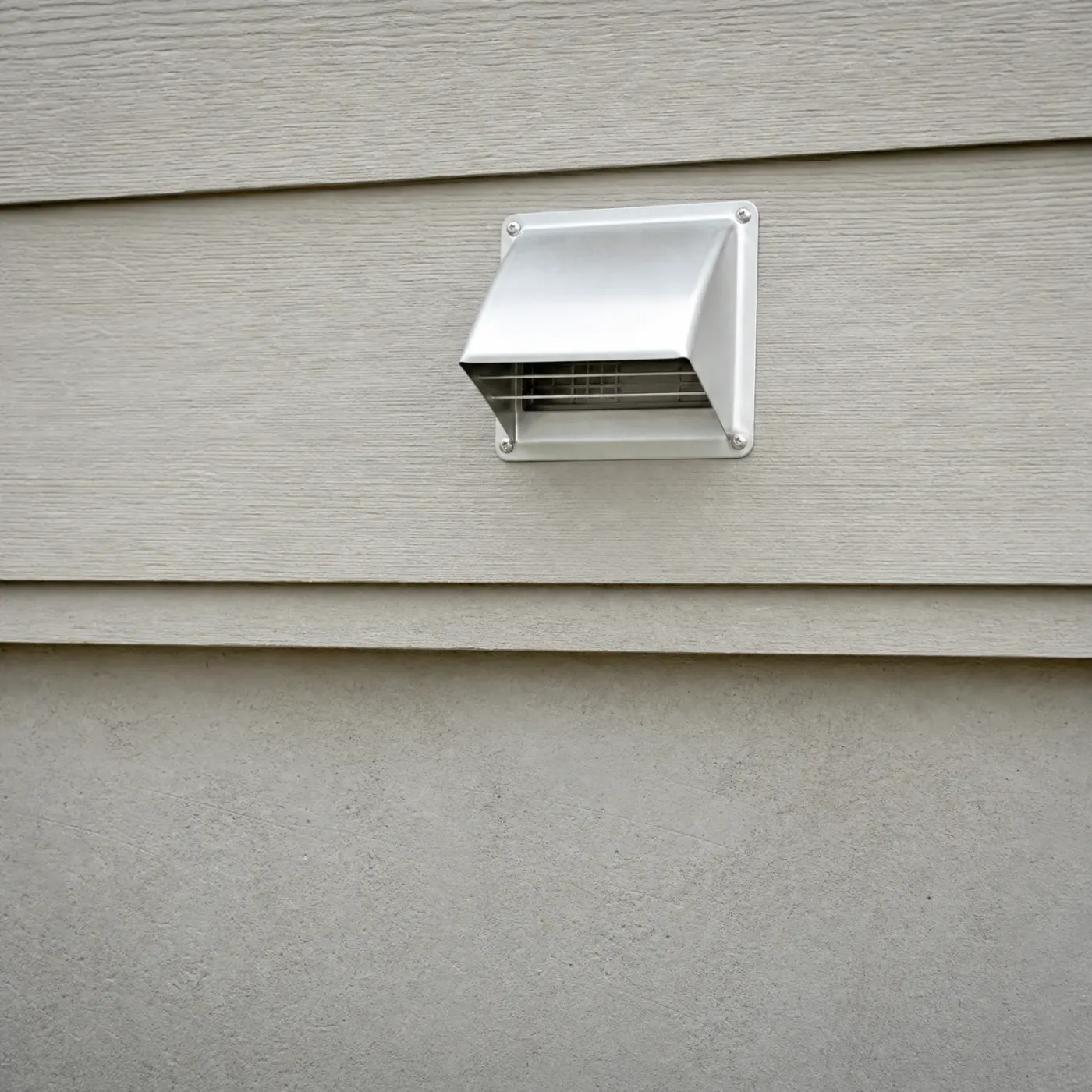
The cap sits flat against the siding and the flap hangs loose, ready to swing open. Air from the dryer pushes it open on every load and it falls shut again after. Nothing is holding it closed, so the moist air from a load of towels goes straight outside where it belongs.

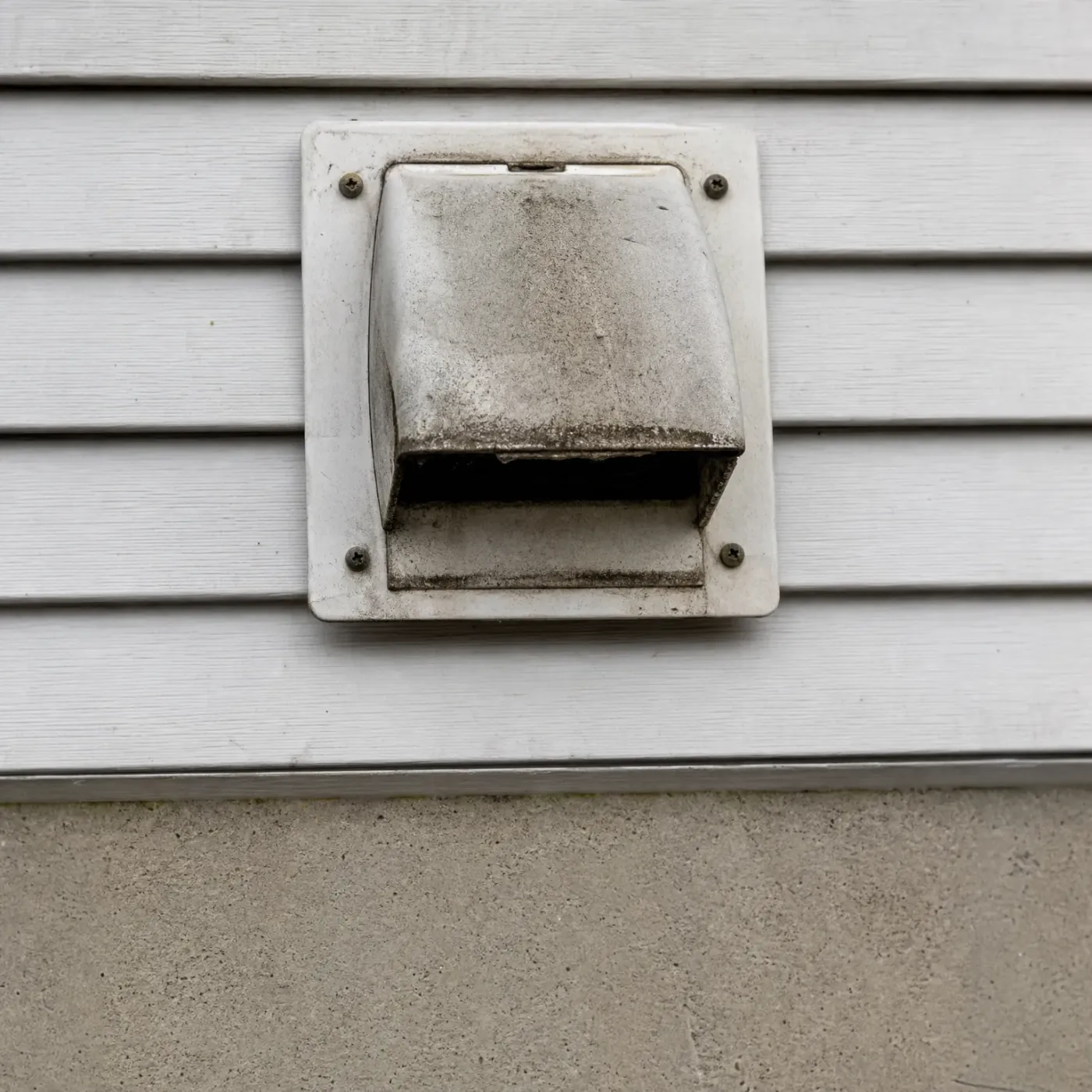
Lint has built up inside the louvers until it pushes out past the cover itself. The flap can no longer swing shut, let alone open and close freely with each load. Air from the dryer is forcing its way through a path that is most of the way blocked.

Once a year for a short, straight run. Twice a year if your duct bends more than once or travels far to reach outside. That's the answer, and everything else on this page is just why Buffalo County homes tend to need the second cleaning more than people expect.
Once you know which schedule fits your house, the only thing left is finding someone to do the work. A local contractor who cleans vents all winter already knows which setups around here clog fast and which flapper hoods freeze shut. You explain your situation once, to one company, instead of calling around and repeating yourself to three or four.


Your request stays with one local pro.
