






Signs of leaky ductwork in Omaha, NE

Get matched with a Douglas County pro who cleans ducts.

Get a duct system pro

A few rooms never feel right, your gas bill runs high, and the ductwork is the usual reason. Leaky ducts show up as one room that's always a few degrees off from the rest of the house, dust settling fast even right after you clean, and a furnace or AC that runs long stretches without catching up. You might feel warm air leaking out around a duct joint in the basement or attic, or notice a hissing sound near the vents when the system kicks on. In Omaha winters, that lost air means your furnace works harder to keep up, and since most homes here run on gas, that shows up as a higher bill before you've found the leak. A duct that's come loose at a seam or crimped behind a wall won't fix itself, and the longer it runs that way, the more it costs you in comfort and in gas.

A woman in a gray turtleneck sweater stands near a window with snow outside, in a dimly lit living room with a lit Christmas tree, table lamp, sofa and bookshelf.
A woman in a cream knit sweater with her hair in a bun stands in a dimly lit living room looking out a large window at snow-covered evergreen trees, with a lamp, sofa, framed picture and lit candle behind her.
A woman in a thick gray knit sweater stands beside a window looking out at falling snow, with a dimly lit living room containing a lamp, sofa, string lights and a candle behind her.
A woman in a gray turtleneck sweater stands in a dimly lit room with a lit table lamp, framed picture and sofa, looking toward a window with snow outside.
Unfinished basement with bare concrete walls and floor, exposed wood joists, and galvanized sheet-metal HVAC ductwork and pipes running across the ceiling.
Sealed joints and tight connections mean the air your furnace heats stays inside the duct all the way to the register.
Basement ceiling with galvanized sheet-metal ductwork, wooden joists and subfloor, black and white pipes, above a concrete wall and floor.
A gap at this junction lets heated or cooled air spill into the basement instead of reaching the rooms upstairs.

Why does one room never feel right no matter what you do

Go stand near a floor register in that room. If the air barely moves, a duct feeding it is likely losing its air somewhere between the furnace and that vent. Check the basement or crawlspace too, especially around the furnace and any duct joints you can reach. A rush of warm or cool air there, or a layer of dust on top of the ducts, means it's escaping before it gets where it's supposed to go. You might also notice your furnace or AC running longer than it used to, or a utility bill that's crept up without any change in how you use the house. Left alone, the system keeps working harder to make up for what it's losing, and that room stays uncomfortable through the Omaha winter and the muggy summer stretch alike.

Empty unfinished basement with bare concrete floor, insulated walls with vapor barrier between wood studs, exposed wood joists, galvanized sheet-metal ductwork, a recessed light, and a steel support column.

Ductwork sealed and sound

This is what you want under your floor. The metal trunk and the round flex runs stay joined tight, so the air your furnace just heated keeps moving toward the registers instead of warming the joists. The insulation in the walls does its job because the basement air around it isn't full of furnace output that never made it upstairs.


Empty basement room with bare concrete walls and floor, exposed wooden floor joists overhead, large galvanized sheet-metal ducts with a vent grille, colored pipes, and a single lit bulb.

Ductwork losing air

Here the ducts run the same path, but a seam has opened up somewhere along the sheet metal. Warm air pours out into the basement before it reaches a single vent, which is why that room upstairs stays cold while the furnace keeps running. Check the metal near the joints for dust streaking or a rush of air you can feel with your hand.

Why does ductwork in this area wear out and start leaking

  • Half the homes here were built by 1977

    Half the homes in Douglas County were built in 1977 or earlier, so if your house came from that era, check whether the duct system is original to it.

  • Heat runs October through May

    Heat runs about eight months a year here, October through May, so a leak in the trunk line is pushing warm air into the basement most of the year.

  • Cooling runs June through September

    Cooling only runs June through September, but the same leaky joint that wastes heat in winter wastes cold air in summer too.

ACS 2020-2024 · NOAA nClimDiv 1991-2020

What a duct leak does to your furnace

A furnace is sized to heat the square footage of your house, not the square footage plus whatever the basement and attic are losing. When ducts leak, the furnace has no way to know the air it just heated never reached the room. It just keeps running, because the thermostat upstairs still reads cold. That means longer burner cycles, more gas burned per degree of actual warmth you feel, and more hours on the blower motor and igniter than the equipment would otherwise see. None of that shows up as a single event you'd notice. It shows up as wear that adds up over a few winters and a gas bill that never quite matches how warm the house feels.

Why sealing pays off faster in Omaha

Supply ducts that run through an unheated attic or basement lose heat at both ends of the leak: the air itself escapes, and the metal duct around the leak radiates warmth into a space you're not trying to heat at all. In a Douglas County winter that runs eight months, that's eight months of a furnace fighting a leak instead of five or six. A house in a milder climate loses less to the same size gap simply because the furnace isn't running as often. Here, a leak that would be minor elsewhere gets exercised almost every day from October to May, which is also why sealing it back up shows results sooner.

Basement ceiling with large galvanized sheet-metal ductwork, round metal pipes and plumbing lines running beneath wood joists, above a bare concrete wall and floor.
Before you get your ductwork cleaning
Unfinished basement with bare concrete floor and walls, exposed wood joists, large galvanized sheet-metal ductwork, PVC and copper piping, and a gray furnace unit beside wood stud framing.
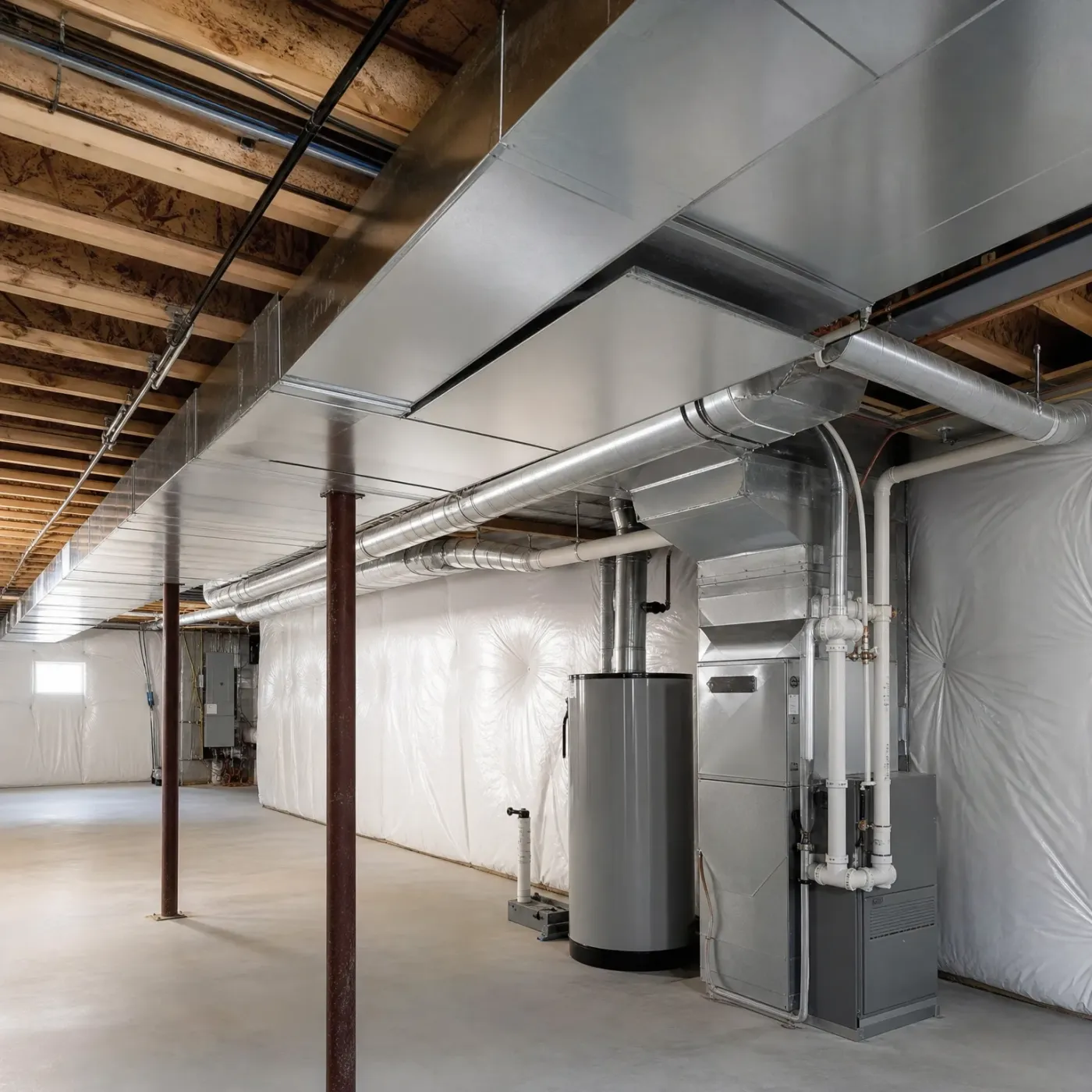
After you get your ductwork cleaning
Unfinished basement with concrete floor, plastic-sheeted insulated walls, exposed wood joists, metal support posts, sheet-metal supply ducts, a cylindrical water heater and a furnace with PVC piping.

A local pro for your ductwork cleaning

The pro who gets in touch is licensed in Nebraska and works in Douglas County.

Get matched with a pro who works on ducts in Douglas County.

Get a licensed local pro

There's no charge for the request.

Duct Leak or No Duct Leak

Duct leak

  • A room stays a few degrees off from the rest of the house no matter where you set the thermostat.
  • Your gas bill runs higher than a house this size should need, because heated air is escaping before it reaches the register.
  • You can feel warm air moving in the basement or crawlspace where the trunk line or a flex run meets a joint.
  • Dust builds up fast after cleaning, since a leak can pull in attic or crawlspace air and carry it through the house.
  • The furnace runs longer each cycle, because it keeps supplying air that never reaches the rooms it's meant to heat.

No duct leak

  • Every room reaches the temperature you set and holds it, including the ones farthest from the furnace.
  • Your gas bill tracks with what similar homes in Douglas County pay for a season this long.
  • Register airflow feels strong and steady in every room you check, not just the ones near the furnace.
  • Dust settles at a normal pace, since the air moving through the house is the air the furnace actually conditioned.
  • The furnace cycles on and off at normal intervals instead of running long stretches to make up for lost air.
  1. Furnace heats air and pushes it into the trunk line

  2. Air travels the metal trunk toward branch takeoffs

  3. A gap or torn joint lets heated air spill out early

  4. Less air reaches the register in that room

How can you tell if it's the ductwork and not the furnace itself?

Your furnace seems to be running fine, no strange noises, no error codes, but the heat still isn't getting where it should. Before you pay for a furnace repair call, it's worth figuring out whether the furnace itself is the problem or whether the air it makes is just never reaching the rooms. The two have very different fixes.

Check the air at the furnace, then at the register

Stand near the furnace while it runs and you should feel strong, warm air moving through the trunk line close by. If that air feels right there but weak by the time it reaches the register in the problem room, the furnace is doing its job and the duct between the two is losing air somewhere along the way. A furnace that's actually failing usually shows other signs too, short cycling, a pilot or igniter that won't hold, or heat that's weak everywhere, not just in one or two rooms. One room running cold while the rest of the house is fine points to the duct feeding it, not the equipment making the heat.

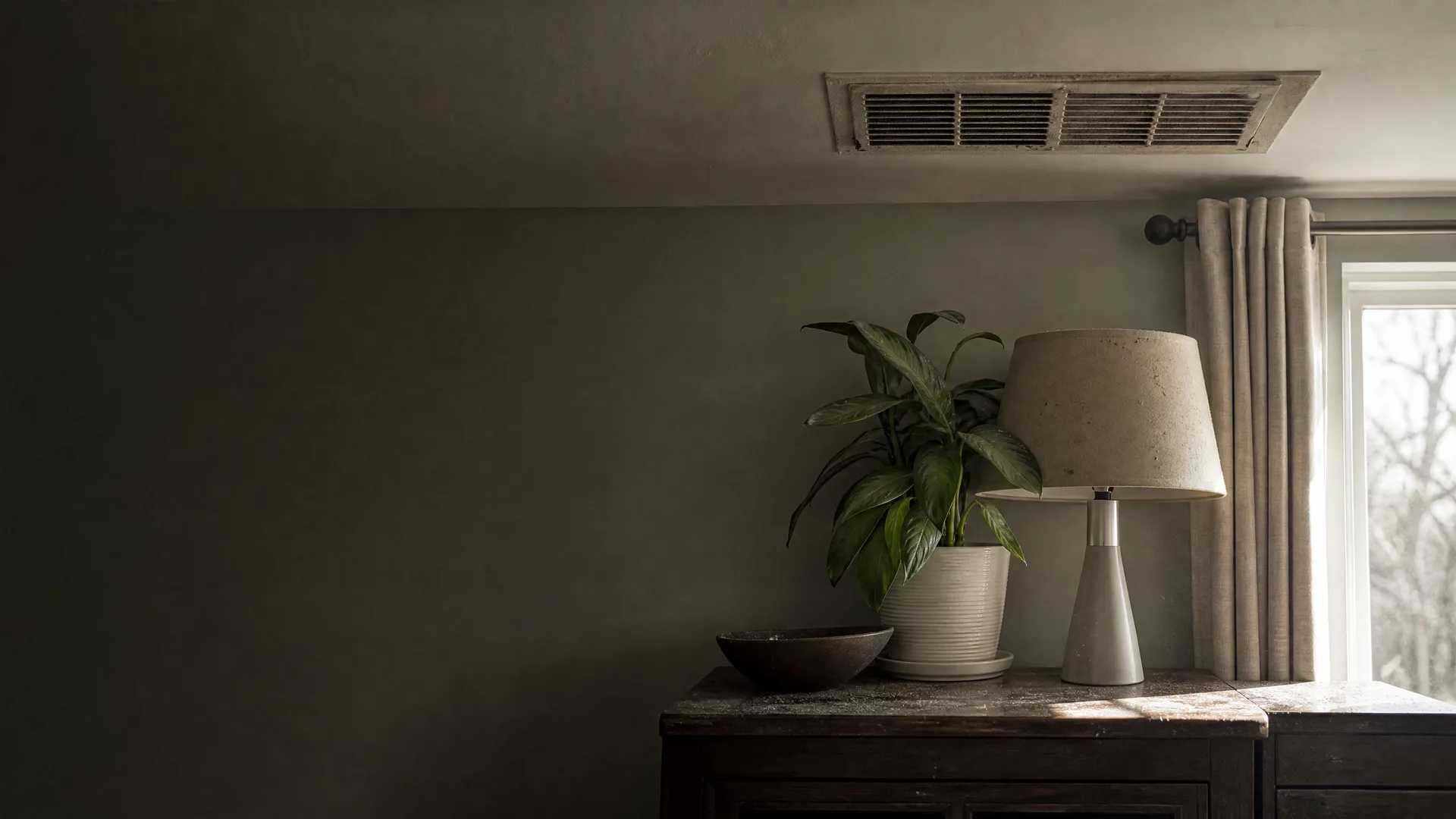
A dimly lit interior wall with a ceiling air vent above a wooden sideboard holding a potted plant, a shallow bowl, and a table lamp beside a curtained window.

The sun's already warm through the living room curtains, the kind of April afternoon when you finally open the windows after a long winter. You notice it on the coffee table first, a thin gray film you could write your name in, and you just wiped that table down two days ago. You look up. The ceiling vent grille is dusted gray around its slats, more than the room itself should be making. The furnace hasn't run in days. Somewhere between the duct and that register, air carrying dust has been leaking out before it ever reached the room, settling on everything below it, long before the gas bill ever told you something was wrong.

Power here costs 13.13 cents per kilowatt-hour

At 13.13 cents a kilowatt-hour, power here is cheap, so a leaky duct run doesn't hit you through the electric bill. It shows up in the gas bill instead, since the furnace is what's working harder to make up for air that never reaches the register.

EIA-861 2025

Empty basement with bare concrete walls and floor, a small window at left, and exposed wood joists with galvanized sheet metal ductwork and pipes overhead.

Ductwork that's still doing its job

This is a basement in a house where the ducts were just put in. The metal trunk and the flex runs sit clean and tight against the joists, every joint still sealed the way it left the shop. Air moving through stays inside the duct until it reaches the register.

Dusty sheet-metal HVAC ducts with a rectangular vent register run beneath wooden floor joists above an empty concrete-walled basement.

Ductwork that's been leaking for years

Here the duct is coated dark with dust, the kind that builds up where air is escaping along a seam and pulling basement dust in with it. A duct moving sealed, filtered air stays cleaner than this. When you see grime like this on the outside, air is getting out, and dust is getting in.

A man in a dark polo shirt and cap, seen from behind, walks up a paver path toward a woman standing in the open front doorway of a single-story stucco and stone house.

The signs point to the ducts, not the furnace

A room that never gets comfortable, dust that comes back fast, a gas bill that's too high for the size of your house. Those three together almost always mean air is leaking out of the ducts before it reaches the register. The furnace can be running exactly as it should and you'd still see this, because the problem is happening in the basement or crawlspace, not inside the unit.

A contractor who works on duct systems in Douglas County every winter can look at your setup and tell you what's actually going on, whether it's a torn flex run, a loose trunk joint, or something else. Once you request a match, you're connected with one licensed local contractor, not a handful of companies competing for your callback, and they'll reach out to go over what they find in your house.

Interior corner of a living room with a sheer-curtained window, a light wood console table holding a vase of greenery and a shallow bowl, a woven basket on the lower shelf, and a blurred upholstered sofa and dark wood table in the foreground.
A bearded man in a red and dark plaid flannel shirt looks out a frost-edged window at a snow-covered yard, with a gray mug on the sill in the foreground.
A bearded man in a dark gray T-shirt sits smiling on a light gray couch, with a houseplant and a framed picture on the wall behind him.

Ductwork Cleaning

Get the right pro for your ductwork

A licensed pro who works in Douglas County gets your request.

A black-framed smartphone standing upright against a plain light gray background, its screen filled with solid green.
Duct and vent cleaningDucts or ventsDouglas County, NE
Step 1 of 2

What ZIP code is the job in?