

Air moving through clean metal
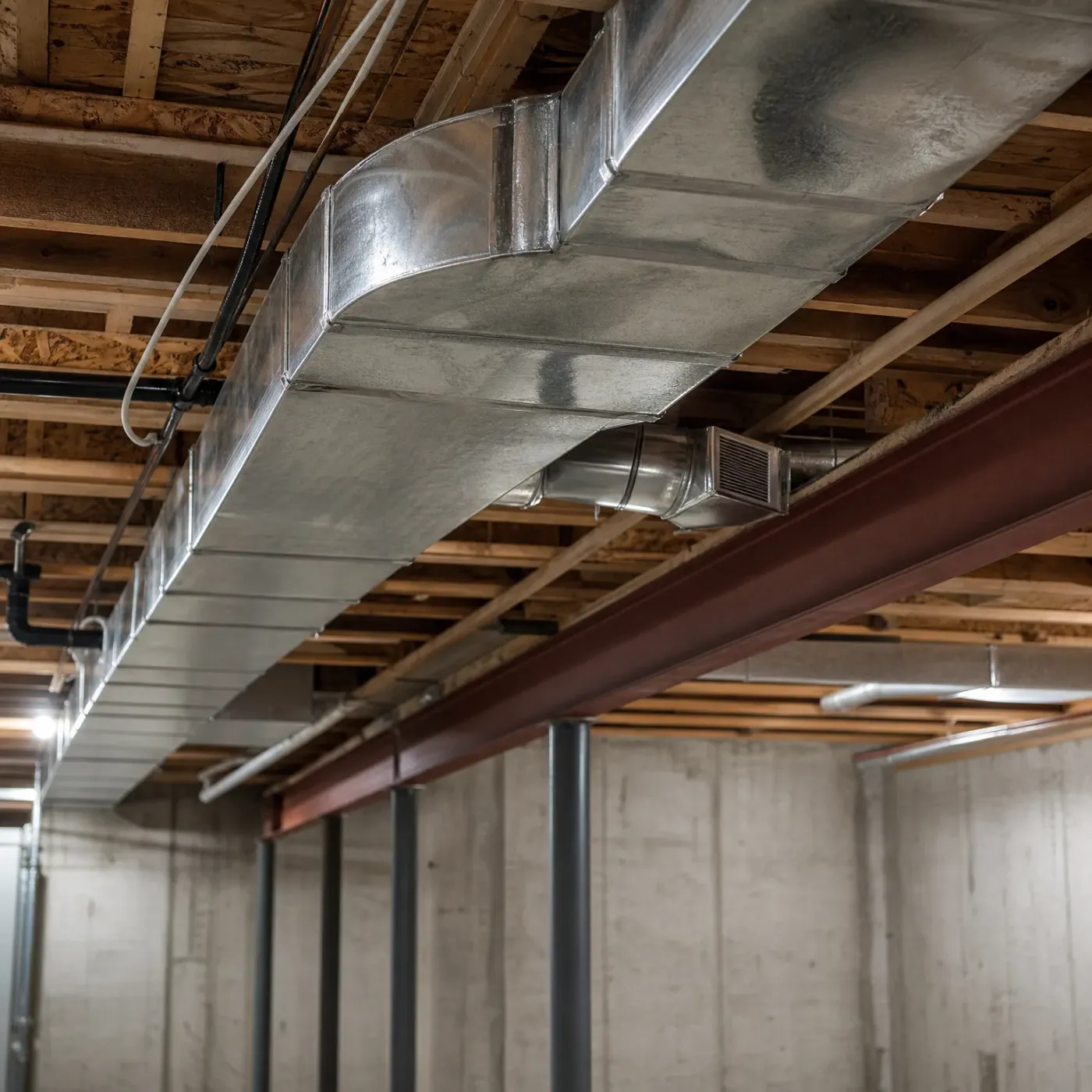
Ducts like these carry air without picking up anything along the way. The runs crossing this ceiling stay dry inside, so whatever comes off the coil upstairs just passes through on its way to the vents.
You walk past a vent and catch it, that damp basement smell, even though nothing's leaking. It's worse right after the AC kicks on, then seems to fade. You've checked the usual spots for mold and found nothing, which makes it harder to figure out where the smell is actually coming from.
Your air conditioner pulls humidity out of the air as it cools, and that water has to go somewhere. Some of it drains off, but some settles on the coil and the metal around it. Nebraska summers run sticky, so the coil stays wet for hours at a stretch most days. Dust in the ducts mixes with that moisture and mold starts growing on it, right where the air blows past on its way into your rooms. That's the musty smell. It's usually not in your walls or your basement. It's in the system itself, and it gets worse the longer the ducts have gone without a cleaning, since more dust means more for mold to take hold on.
Humid air hits the cold evaporator coil and leaves moisture behind
Water collects on the coil and drips into the drain pan
Dust and skin cells settle on the wet coil and pan
Standing moisture lets mold and bacteria grow on that film
The smell is strongest in the room where the return vent sits, and it eases off after the system's been running a while. You might notice it more on a muggy afternoon than in the morning. Check the drain line where it runs outside, near the condenser, and you may see a slow drip or a dark stain trailing from it. That line can clog, and when it does, the pan backs up instead of draining. Left alone, that standing water keeps feeding mold inside the ductwork, and the air moving through those ducts carries it to every room the system serves, not just the one with the vent you noticed first.






The blower doesn't run air past the coil all the time. It only does that when the thermostat calls for cooling, which is why the musty smell is strongest the moment the system kicks on and fades once it's been running a while. That's the coil clearing its throat, so to speak, pushing out air that sat over damp fins since the last cycle. A dirty filter makes this worse. It slows the air moving across the coil, so moisture has more time to sit on the fins instead of draining off with the airflow. Below the coil, the drain pan and drain line are built with a slight slope so water runs off on its own. A clogged trap undoes that. Water backs up instead of draining, and sits there long enough to grow something. Once that smell forms at the coil or the pan, the ducts do what ducts do. Supply and return lines carry it to every vent on that system, not just the room nearest the air handler, which is why you're catching it in rooms that have nothing wrong with them. A cleaning deals with all three spots at once: the coil, the pan and the duct interior, since cleaning just one of them leaves the other two to keep feeding the smell back in. July and August humidity here gives mold more to work with than the system sees the rest of the year, which is part of why this shows up now.


Your duct cleaning request goes to one local pro.
Send the form and the duct cleaning stops sitting on your list.
No fee to send it, and nothing to sign.
At 12.05 cents a kilowatt-hour, running the blower longer to chase that smell out doesn't punish your bill the way it might elsewhere. Worth knowing before you assume fixing this means higher power costs all summer.
EIA-861 2025 statewide residential average

It's a Saturday afternoon in April, warm enough that you finally switched the system over to cooling last week. You're carrying a laundry basket past the hallway when you glance up at the ceiling vent and see it, a soft gray ring of dust on the grille, and more of it settled on the bookshelf underneath. The AC kicked on a few minutes ago and you can smell it again, that damp basement smell drifting down into the room. You run a finger along the top of a picture frame below the vent and it comes away gray. The light through the window shows just how much has collected there, fine and undisturbed, like it's been building since last summer.

Ducts like these carry air without picking up anything along the way. The runs crossing this ceiling stay dry inside, so whatever comes off the coil upstairs just passes through on its way to the vents.

Same layout, same runs overhead, but the inside of this metal is holding dust and film it's collected over time. Air moving through here carries that along with it, out through every vent in the house.
The musty smell coming through your vents is moisture and dust built up on the coil, the drain pan, and the duct walls, and it shows up worst right when the AC kicks on because that's when air first moves across that damp film. It isn't a leak and it isn't mold spreading through your house. It's buildup sitting in a system that gets heavy use once Nebraska summers turn sticky. A duct cleaning clears that film out so the air moving past the coil has nothing to carry into your rooms. You'll know it worked because the smell that used to hit you at startup won't be there anymore. From here, a local contractor who works on this kind of system all summer can take a look, tell you what's actually built up in your ducts, and get it cleared out. You've already caught this early, which is the part that matters. Send the request and the search for the right contractor stops being something you have to do yourself.


It's off your list after this
Only one pro gets your request, so you hear from one company.
