
A hot laundry room usually means the dryer is pushing heat into the room instead of outside. Every dryer sheds heat and moisture through the vent, and if that vent is clogged with lint, most of it backs up into the house instead of leaving through the hood outside. Nebraska summers already run sticky, so a room that traps extra heat and humidity on top of that feels worse than it should, and takes longer to cool back down between loads. A clogged vent also makes the dryer run longer to dry the same load, since it is fighting to push air through a restricted path, and that longer run time is what's adding the heat. The fix isn't the dryer itself. It's the vent, which needs to be cleared out so the heat and moisture it carries actually make it outside.
Power costs 12.05 cents per kilowatt-hour statewide
At 12.05 cents a kilowatt-hour, running a dryer twice as long to get clothes dry costs you more every month. A clogged vent makes the dryer work harder and run longer to finish the same load, and that extra time shows up on your power bill as well as in a hot laundry room.
EIA-861 2025 statewide residential average
A clear vent sends the hot, damp air straight outside, so the laundry room stays close to the same temperature as the rest of the house no matter how many loads you run.
A blocked vent has nowhere to send that air but back into the room, so the space gets hotter and more humid with every load, especially once summer is already working against you.




How the Vent Actually Backs Up
- A dryer vent runs from the back of the machine through the wall or ceiling to a hood on the outside of the house.
- Lint builds up along the inside of that duct, narrowing the path the hot air has to travel.
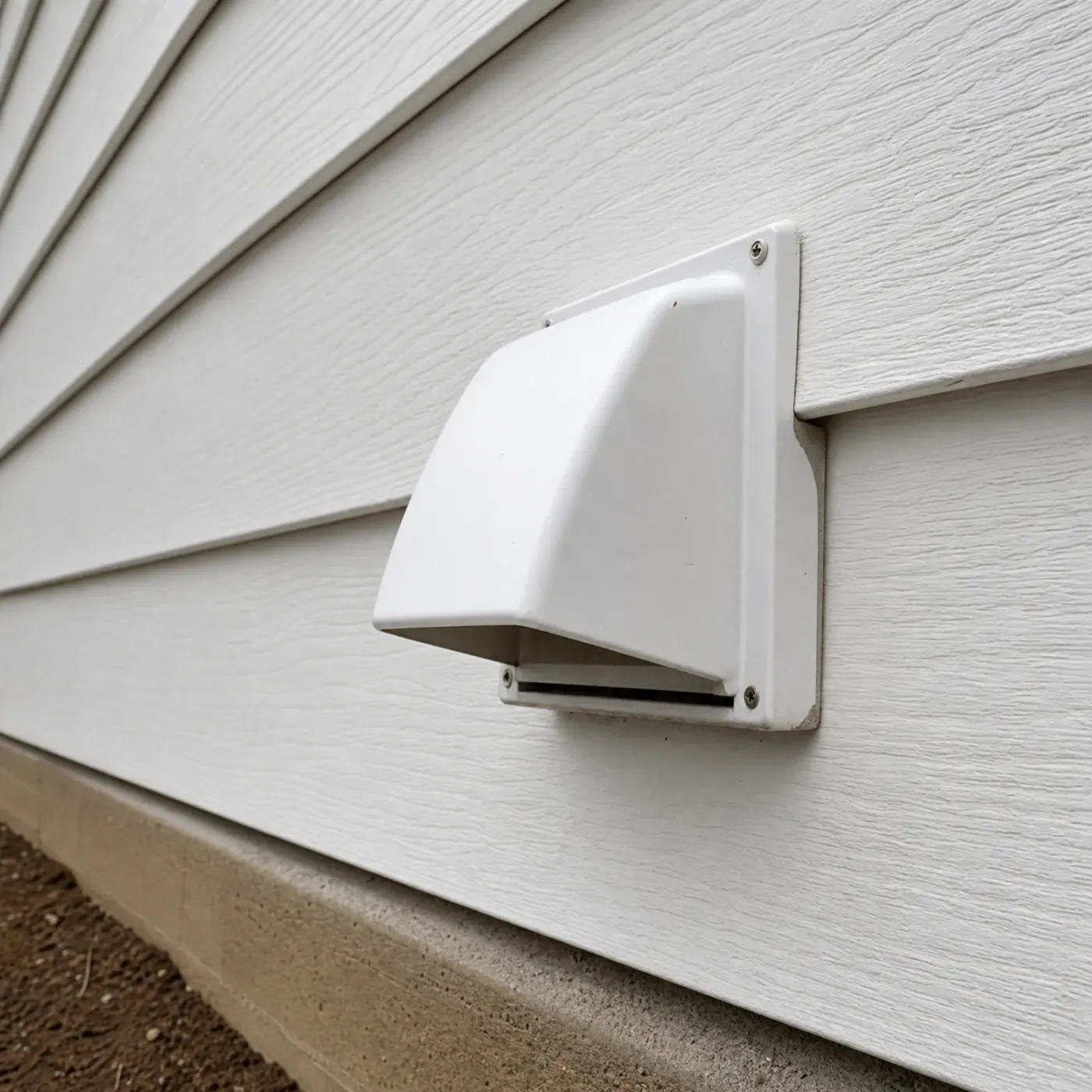
- The flapper on the outside hood is supposed to swing open with airflow and shut when the dryer is off.
- A duct packed with lint slows the air enough that the flapper barely opens, so heat has nowhere to go but back toward the machine.
- Long runs, tight turns, and crushed sections in the vent all make lint collect faster in those spots.
- A dryer with a blocked vent runs a full cycle or more past when the clothes are actually dry, and that extra run time is what heats up the room.
The dryer vent is a straight job on paper. Hot, damp air leaves the drum, travels through the duct, and pushes the flapper on the outside hood open on its way out. Lint makes that harder every time you run a load. It clings to the inside of the duct, especially where the metal is dented or where the run bends to get around a stud or a joist. Over time that buildup narrows the path until the air moving through it slows down. A flapper that used to swing wide open now barely lifts, because there is not enough airflow behind it to push it. Once that happens, the dryer is still generating the same heat and moisture, but it has nowhere to put it. Some of it leaks back around the drum seal and into the laundry room instead of going out the hood. The dryer senses the load is still damp, so it keeps running. A cycle that should take forty minutes stretches well past an hour, and every extra minute is more heat added to a room that already cannot vent itself. Vents with long runs, several turns, or a section that got crushed when the machine was installed clog faster than a short, straight shot to the outside wall, because lint has more surfaces to catch on along the way.


Does your laundry room stay warm after the dryer shuts off
Walk in an hour after the last load and the room is still warm, sometimes warmer than the rest of the house. The air feels thick, and you can smell lint or a faint burnt dust smell instead of clean clothes. Towels take longer to dry than they used to, and you might be running the dryer twice to get a load done. With gas heat and cheap power here, you're not fighting a big bill on top of it, but a vent that stays blocked keeps pushing hot air and lint back into a closed room, and that's the setup for a dryer fire.


Get the right pro for your dryer vent
Your dryer vent cleaning request goes to one local pro.
Your dryer vent cleaning request goes to a local pro who does this work.
There's no charge for the request.
Clean It Yourself or Call Someone
Clean the vent yourself
- A vacuum with a hose attachment reaches the first few feet of duct from the back of the dryer, but most runs go ten feet or more before reaching the hood.
- You can check the outside hood yourself and clear the flap and screen of lint by hand in a few minutes.
- A long lint brush kit can push further into the duct, but it won't tell you if the duct has a crushed section or a bad joint behind the wall.
- Running the dryer right after and timing how long a load takes to dry is the only way to check your own work without tools.
- If the vent run has more than a bend or two, or climbs through a ceiling, reaching the middle of the duct from either end gets hard.
Have a contractor clean it
- A local contractor who services dryer vents every season brings equipment built to run the full length of the duct, not just the ends.
- They can tell you if the duct itself is the problem, a crushed section, a loose joint, or too many bends, not just whether lint is in it.
- Sending one request means one contractor who works in Nebraska homes calls you back, instead of fielding calls from several companies.
- They check the outside hood and the flapper as part of the job, since a flap that won't close lets outside air in as well as letting heat escape.
- A contractor can tell you whether your current vent run is undersized or too long for the dryer, something a homeowner usually can't judge without seeing other setups.



A technician runs a rotary brush the full length of the duct.
The brush knocks packed lint loose from the duct walls.
A vacuum pulls the loosened lint out through the hood end.
The technician checks the flapper and screen open and close freely.

A hot laundry room has one cause worth checking
A warm room after the dryer shuts off means the vent is restricted somewhere between the machine and the hood. That's the whole answer. Gas or electric, the dryer still has to push its heat outside, and a packed duct sends that heat back at you every time you run a load.
A local contractor who clears vents in Nebraska homes every summer has seen which runs clog fastest and where lint tends to pack in a wall or ceiling duct. Getting matched with one means a single contractor who works on this, not a handful of companies competing for your callback, reaching out to look at your setup and tell you what they find.


Dryer Vent Cleaning
A pro who works on dryer vents

- Say what's going on with your dryer vent, and a pro who works on them reaches out.
- A local pro who knows dryer vents gets your details and gets in touch.

- Send the form and the dryer vent cleaning stops sitting on your list.
- Send the form and finding a dryer vent cleaner is handled.

- Skip calling around for someone who cleans dryer vents.
- Answer a few questions about the dryer vent cleaning and skip the search.

- Only one pro gets your request, so you hear from one company.
- Your request stays with one local pro.