A dark gray furnace with two access panels stands in a basement, connected to galvanized sheet-metal ductwork and PVC pipes, with exposed wood framing and a bare bulb light in the background.

One form, no calling around

How to lower your heating bill in a Nebraska winter

Your furnace runs hard through a Nebraska winter, and a gas bill that jumps in January has you looking for where the money's going. This page gets into what actually drives that cost and what maintenance can do about it. Skip the runaround of calling around town and repeating yourself to five different companies. One local contractor who services furnaces all winter can tell you what's worth doing.

Skip the calls

The biggest thing you can do is get your furnace serviced before it has to run hard, because a furnace losing efficiency doesn't announce itself. It just burns more gas to put out the same heat. A dirty flame sensor, a clogged filter, a blower that's out of adjustment, none of these stop the furnace from running, they just make it work harder to do the same job. Over a Nebraska winter, that difference shows up on your gas bill in December and January, the months your furnace runs the longest. Maintenance catches those losses early, while they're cheap to fix, instead of after a few cold months have already run up the bill or a part has failed outright. Gas is what you're burning for heat here, so gas is where the waste shows up first.

A gray furnace with white PVC vent pipes stands beside sheet-metal ductwork in a basement with a smooth concrete floor, exposed wood framing, and plastic sheeting on the walls.

Furnace running clean

A serviced furnace fires, burns gas, and shuts off without you noticing any of it. The flame sensor stays clean, the filter lets air through, and the blower moves heat into the ducts without strain. Gas use matches the weather outside, not the wear inside.


A beige furnace with two access panels stands against a concrete basement wall, with galvanized sheet-metal ductwork, a white PVC pipe, flexible conduit and insulated ducting around it.

Furnace losing ground

Rust on the cabinet and a worn flue pipe mean the furnace is working harder to do the same job. It cycles longer to heat the same rooms, and the gas bill climbs even on a mild week. Left alone, a part like this tends to fail when you need it most, some night in January.

Why does your furnace run longer just to keep up?

You notice it in the sound before anything else. The furnace kicks on more often and stays on longer, even on days that aren't much colder than last week. Some rooms feel fine while others never quite warm up. The air coming out of the vents feels cooler than it used to, so the blower just runs and runs trying to close the gap. You might catch a burnt dust smell when it starts up, or notice the pilot light area looks sooty instead of clean blue. None of this shows up on a gauge anywhere. It shows up in January when the gas bill comes and the furnace has been working harder all month to do what it used to do without strain.

A gas furnace with two gray access panels stands against a plain wall in a basement, connected to sheet-metal ductwork, white PVC vent pipes, and a yellow gas line.

What a dirty flame sensor costs you

A flame sensor coated with a thin layer of residue still works, but it tells the furnace the flame is weaker than it is. The control board compensates by cycling the burner differently than it was designed to, and that uneven firing burns more gas to produce the same warmth in your house. A furnace tech cleans this part in minutes during a routine visit. Left alone, it's one of the more common reasons a furnace starts locking out or short cycling partway through a Nebraska winter.

A gray high-efficiency furnace in a basement corner with white PVC vent pipes, copper and black gas piping, and sheet-metal ductwork beside a plain white wall and wooden stair framing.

Why the blower motor matters here

The blower moves heated air through your ducts, and if it's pulling against a dirty filter or dragging on worn bearings, it has to run longer to push the same volume of warm air into your rooms. Longer run time means more gas burned per degree of heat delivered. A motor running clean moves air the way it was built to, which is the difference between a furnace that keeps up with a cold snap and one that falls behind it.

A closed dark laptop and a ceramic mug of coffee on a wooden dining table, with wooden chairs, a dark kitchen cabinet with cutting boards and a potted plant, and a leafy plant by a window in the background.

What happens inside the furnace when it fires

Gas enters the burner and the igniter lights it. The heat exchanger picks up that heat, and the blower pushes air across it into your ducts. The exchanger is metal, and metal expands when it's hot and contracts when it cools. Every cycle, it flexes a little. Over years, that flexing is what eventually cracks it, and a cracked exchanger is why furnaces get replaced instead of repaired.

A technician checking your furnace is looking at that whole chain: the igniter's flame, the exchanger for cracks or rust, the blower for how freely it spins. None of that shows up by looking at the thermostat. You'd need someone who works on furnaces all winter to know what a slightly off reading on the flue or a slightly slow blower actually means for your gas bill. Finding that person usually means calling a few companies, explaining the same thing to each one, and waiting on quotes to compare. A local contractor who already knows the equipment skips that part.

A living room corner with a beige sofa and cushion, a round wooden coffee table holding a pale ceramic vase of eucalyptus stems and a wooden bowl, and a curtained window with a potted plant above a latticed radiator cover in the background.
A dark high-efficiency furnace on a concrete pad in a basement, connected to galvanized ductwork, white PVC vent pipes, and copper and black gas piping, with concrete walls and wood framing nearby.

The furnace that's been looked at

This is what a serviced furnace looks like sitting in the basement: clean cabinet, tight connections, the PVC and gas lines doing their job without any sign of strain. Nothing about it demands attention, which is the point. A tech who's been inside it knows what's supposed to be there and what isn't.

A gas furnace with a louvered upper panel stands on a concrete pad in a basement, flanked by sheet-metal ductwork, white PVC and metal pipes, and insulated columns.

The furnace nobody's checked

Older units like this one keep running long after they've started working harder than they should. Nothing on the outside tells you the flame sensor's coated or the blower's struggling. The same flex conduit and drain line are there on both furnaces. What's different is whether anyone's traced them lately.

An older beige furnace with a louvered vent panel stands on a concrete basement floor beside galvanized sheet-metal ductwork, a metal flue pipe and vertical pipes along a concrete wall.
Before you get your furnace maintenance
A beige high-efficiency furnace with white PVC vent pipes stands beside galvanized sheet-metal ductwork in a basement with a concrete floor, exposed wood studs, and metal piping along the wall.
After you get your furnace maintenance

Skip the search

You could call around the valley looking for someone to look at the furnace, explain the same rattle and the same gas bill to three or four different shops, then sit with the quotes trying to guess which one actually knows furnaces instead of just selling them. That's the part this skips. One request goes to a licensed contractor local to you, someone who's in furnaces like yours all winter and knows what a Nebraska heating season does to a flame sensor or a blower that's starting to strain. You're not fielding calls from five companies trying to win the job. You're dealing with one, and they already know what they're walking into before they open the cabinet. The furnace still has to run hard through January either way. What you're saving yourself is the work of finding someone who knows it well enough to make that January easier on the gas bill.

Skip maintenance this winter

A furnace left alone through a Nebraska winter will probably keep running. It'll heat the house most days without drama. But a flame sensor with a film on it, a filter packed with dust, a blower wheel caked up, none of that stops the furnace from working. It just makes the furnace work harder to do it, and every bit of that extra work shows up as gas burned for heat you're not getting. By February you've paid for a lot of gas that went nowhere, and you still don't know why the bill crept up, because nothing ever broke. Nothing ever forced the question.

Get it serviced before January

A furnace that's been checked over in the fall runs the way it was built to run. The flame sensor reads the flame correctly, the filter lets air move the way the blower expects, and the heat exchanger isn't fighting restricted airflow to do its job. Gas use tracks the weather instead of creeping up on its own. You're not guessing at what's wrong when the bill looks off, because someone who works on furnaces all winter already looked at the parts that tend to cause it. That's the difference: one furnace running the way it's supposed to, one working harder than it needs to for the same heat.

A smiling woman with dark shoulder-length hair in a cream V-neck sweater sits at a marble counter with a glass of red wine, with a kitchen and softly lit living room behind her.
A woman in a dark green sweater laughs while seated at a marble kitchen island with a glass of red wine, with open shelving, cabinets and a living room visible behind her.
A woman with long dark hair in a cream knit sweater laughs while looking off to the side, seated at a counter with a glass of red wine, in a dimly lit living room with a sofa, lamp, framed pictures and houseplant behind her.
A smiling woman with long dark hair in a beige sweater sits at a marble kitchen counter with a glass of red wine, with a dimly lit living room behind her.
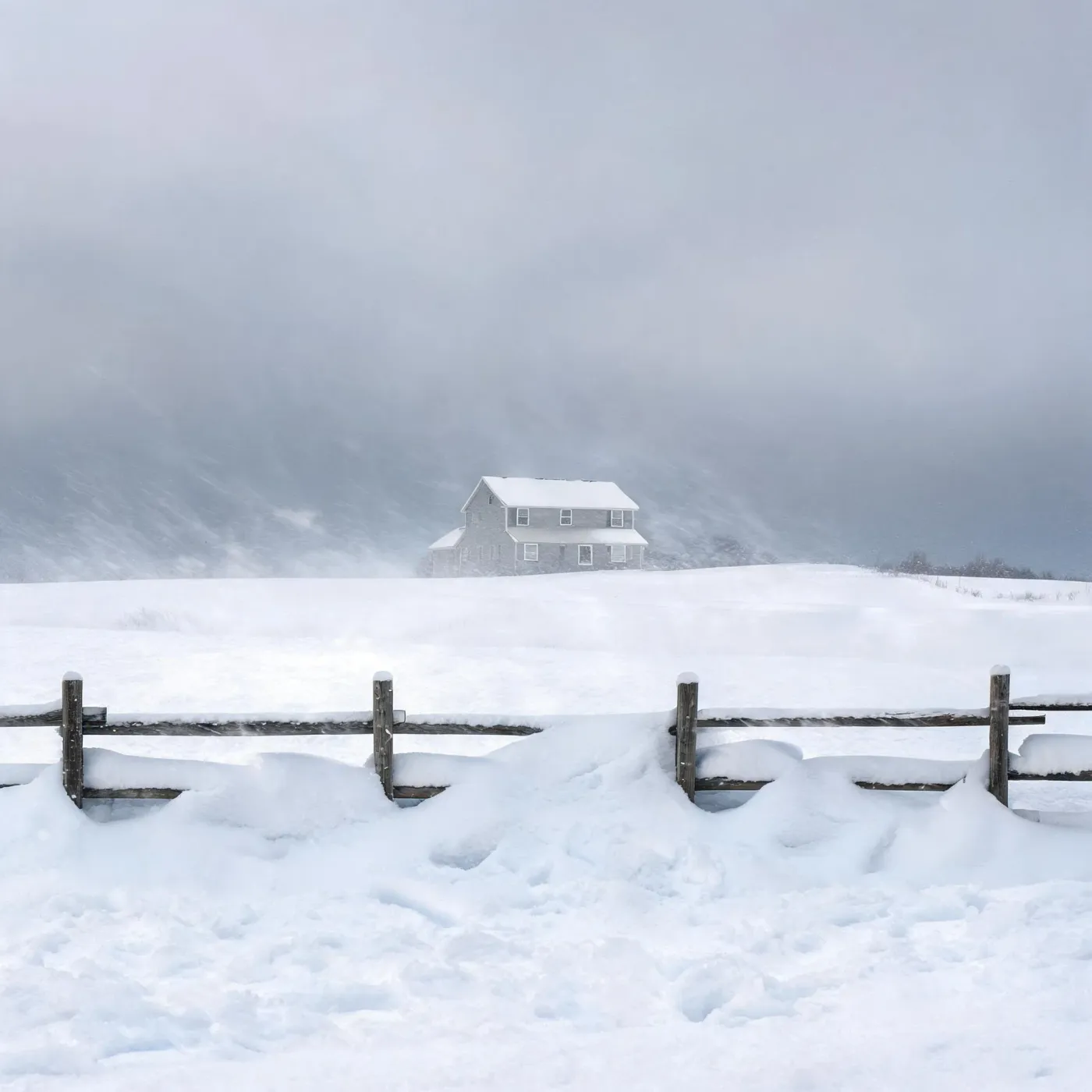
A two-story light-colored house stands on a snow-covered rise under a gray sky during blowing snow, with a partially buried wooden post-and-rail fence in the foreground.

Winter nights average 17°F across Nebraska, according to NOAA climate data. That's the temperature your furnace is working against most of the night, not just on the one cold snap you remember. At that kind of cold, the burner stays on longer to replace the heat leaking back out, and it cycles more often to hold the house steady while you sleep. A furnace that's clean and tuned handles that steady demand without using more gas than the night actually calls for. One that's fallen behind on maintenance just runs longer to make up for it, and you end up paying for the difference without ever seeing what caused it.

NOAA nClimDiv 1991-2020 county normals weighted by homes

A gray high-efficiency furnace with two PVC vent pipes stands in an unfinished basement beside sheet-metal ductwork, a framed and plastic-covered wall, and a bare concrete wall with vertical pipes.
Clean cabinet, tight gas and PVC lines, ductwork running straight overhead, nothing straining to keep the basement warm.
A gray furnace cabinet in a basement, connected to galvanized sheet-metal ductwork and white PVC pipes, against a concrete wall with exposed metal piping and insulation overhead.
Set on a pallet with no service history, this furnace is left to run however it runs until something fails outright.

Winter nights average 17°F statewide

At 17 below your thermostat setting, your furnace isn't just working, it's working all night, every night, from December through February. That's three straight months of long burner cycles, which is exactly when a dirty sensor or a clogged filter costs you the most gas.

NOAA nClimDiv 1991-2020 county normals weighted by homes

A smiling bearded man in a navy crewneck sweater sits at a dinner table with a glass of red wine, plates and glasses in the foreground, in a dimly lit room with a lamp and framed picture behind him.
A woman in a dark gray sweater reclines on a light sofa with eyes closed and a slight smile, under a textured gray blanket with an open book resting on her lap, with a lit table lamp and plant in the background.

What this comes down to

  • A furnace that's been serviced burns gas to match the weather outside instead of fighting its own buildup.
  • Lower gas bills through December, January and February come from the furnace running the way it was built to, not from anything you change day to day.
  • A local contractor who services furnaces all winter knows which part on your model tends to go first.
  • One contractor takes the call, looks at your furnace, and tells you what it needs, without three different shops giving three different answers.
  • The fix is the same one this page has walked through: a clean sensor, a clear filter, a blower that isn't straining.

A furnace that's clean and adjusted burns gas to match a Nebraska winter, not to fight itself. That's the whole answer. Everything on this page, the flame sensor, the filter, the blower, the heat exchanger, points back to the same thing: a furnace running the way it was built to costs less to run than one left alone. You don't get there by changing how you live through December, January and February. You get there by having someone look at the furnace before those long overnight cycles start asking more of it than it can give without strain.

That someone matters. A contractor who services furnaces all winter in this area has seen your model before, or one close to it, and knows which part tends to fail first and what a bill that's climbing usually means. You call once. That contractor looks at your furnace, tells you what it needs, and does the work, instead of you explaining the same rattle and the same gas bill to three different shops and weighing three different answers against each other.

None of this changes what's true about the cold outside. Nebraska winters are going to ask a lot of your furnace no matter who services it. What changes is whether your furnace is meeting that cold at full strength or working around a dirty sensor and a clogged filter the whole time. Serviced, it does the first. Left alone, it does the second, and the gas bill shows which one happened.

A dark gray high-efficiency furnace with two white vent pipes and connected sheet-metal ductwork stands in an unfinished basement with concrete walls, a support pole, and a small window.

Explain it one time

Tune-up, service, or cleaningFurnace or heatingNebraska
Step 1 of 2

What ZIP code is the job in?